
Sunday, September 24, 2023
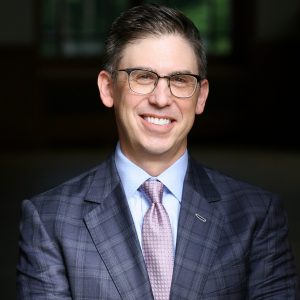
Rabbi Jonathan Blake, Westchester Reform Temple
Did you know that, with the newest iPhone software, you can undo a text message for up to two minutes after sending it?
Now, don’t take out your phones. Trust me. It works. But, it’s not foolproof. For starters, it notifies the recipient that your message was recalled. And, it can’t prevent the recipient from seeing the message when it first comes through. So, actually, it’s pretty useless.
The desire to hit “undo” strikes me as fundamental to human nature and fundamental to this Day of Atonement. Aren’t we all here because of things we wish we could undo?
Unfortunately, in real life, all sorts of things can’t be undone. Yom Kippur things. Words that can’t be unsaid, promises that can’t be unbroken, feelings that can’t be unhurt.
And so we arrive at Kol Nidre:
….כל נדרי ואסרי Kol Nidre ve’esarei …
All vows and oaths… that we have undertaken are hereby undone…. Our vows are not vows; our pledges are not pledges; our oaths are not oaths.
The Kol Nidre prayer is a preemptive “undo” button: it’s a Medieval legal formula designed to annul, to undo, any vows that we might take upon ourselves from now until next Yom Kippur. Most prayers plead with God. This prayer pleads with us to think carefully about our future actions, to stop ourselves before we do something we’ll regret. Something we can’t undo.
I offer this interpretation because we have arrived at what I have come to think of as a “Kol Nidre moment,” a point beyond which there is no going back, for which there may exist no opportunity to “undo.”
Many of you remember where you were, 50 years ago this day on the Hebrew calendar, October 5-6, 1973, when the Yom Kippur War broke out. It is not uncommon these days to hear Israelis comparing this moment to that moment. Many have concluded that this moment is no less existentially consequential.
For the last 37 weeks, every Saturday night, including last night, mass protests have filled Israel’s streets. To give you a sense of scale, if Israel were the US, its population of about 9.5 million scaled to our population of about 330 million, this would be like 10 million people taking to the streets in every major American city, week in and week out.
What has generated such a maelstrom of civic unrest is the pervasive sense that Israel is on the brink of decisions that have no undo option, no Kol Nidre to avert fundamental changes to the nature of Israeli democracy and Israeli society.
I want to make it clear that what I share with you tonight will not be a foreign policy talk but rather a family conversation. When we talk about Israel, we aren’t having a “foreign policy” discussion, because, for us, Israel isn’t “foreign.” Israel, for us, is home, identity, mishpacha. As my friend and colleague Rabbi Tarlan Rabizadeh recently put it: “Talking about Israel is like talking about your Momma.”1
Here’s the crux of what’s happening: in late 2022, after four elections that failed to establish a government, Israel’s citizens democratically elected a government that, because of the way in which coalition politics works, is comprised of one big right-wing party, Likud, plus five smaller parties, all of which are considerably more right-wing, most of which don’t really care whether or not Israel remains a democracy, even after 75 years of democracy. The simplest (and, forgive me, oversimplified) explanation for this lurch to the far right stems from the uncomfortable fact that only these parties, and their ideologically extreme leaders, will offer Prime Minister Netanyahu, currently under multiple indictments, the political protection he seeks. The moderates simply won’t join a coalition with Bibi.
In February, I visited Israel for the first time in four years. Among the highlights of my trip was a chance to catch up over coffee and pastry at a charming Tel Aviv café with the Zaidenberg family, natives of Israel, who had affiliated at WRT for several years before moving to Switzerland and then back to Tel Aviv with their children and grandchildren. Amnon Zaidenberg, a soft-spoken and sensible financial executive, greeted me with a warm embrace before launching into this speech:
“I have watched this country grow for nearly 70 of its 75 years, have served my homeland in uniform, and I am telling you, Jonathan, you have arrived at the most critical juncture in Israel’s history.”
And then, without taking a breath, he leaned in and said, “So, what are you going to tell your congregation?”
I said, “Nice to see you too. How’s the danish here?”
For two hours we all sat and talked. I heard their anxiety, their heartbreak, and, to a lesser but still discernible extent, their hope.
That Saturday night I attended a mass demonstration in downtown Tel Aviv, marching with a delegation of over 200 Reform Rabbis. I had tried to coordinate a meet-up with the Zaidenbergs, but our bus got snared in traffic and we had to walk about a mile to join a group already 170,000 strong. All of a sudden, in the middle of the crowd, I turn around and Amnon, Zafy, their son Itay, who was in my first Confirmation class at WRT and who is now married with a baby girl, their son Amit, at whose Bar Mitzvah I officiated, and Amit’s girlfriend, are standing three inches from me, grinning.
I said, “How’d you find me?” They pointed to the giant banner overhead, which read, “The Reform Movement Stands for Judaism and Democracy,” and said, “We followed the sign.”
There we were: standing in a throng where virtually every adult has served in the IDF. We marched with military reservists and high-tech executives. We marched with people old enough to remember Israel’s founding, many with children and grandchildren. We marched with Jews who call themselves “Orthodox,” and Jews who think of themselves as secular, but who also believe that living in Israel is a fundamental demonstration of Jewish commitment. We marched with LGBTQ Israelis in their alarm about homophobia espoused by several government ministers, and alongside Jews of color, whose families come from Ethiopia and Yemen, Africa and India, in their distress over the uptick in racist rhetoric and policy positions. We marched alongside thousands who love the Jewish State, care about the rights of Palestinians, and are worried about the possibility of government annexation of the West Bank. We marched with several hundred women dressed in red cloaks and white bonnets, like Margaret Atwood’s Handmaids, decrying proposals that would force women to dress according to Ultra-Orthodox modesty codes and sit in the back of the bus on public transportation.
And Reform and Conservative clergy cannot just stand on the sidelines. There are crucial issues at stake for us and our communities, too; issues that, for us–for all of us–are personal, not political, including the right to have the marriages we solemnize, the conversions we oversee, and the synagogues we lead and attend, recognized by the world’s only Jewish State. Do you have someone in your family who converted to Judaism under non-Othordox supervision? Think about what this could mean for that person’s right of return, or the Jewish status of their children.
However disparate the protesters’ concerns may seem on the surface, they all converge at one flashpoint issue: the government’s determination to overhaul the way that the Israeli Supreme Court functions, with the intention to strip it of significant authority.
It’s easy to argue that there are two sides to this story, that each side has a legitimate grievance. Those in favor of a “judicial overhaul” argue that Israel’s Supreme Court enjoys power above and beyond that of high courts in other Western democracies. They will tell you that the makeup of Israel’s Supreme Court, predominantly Ashkenazi Jewish justices, does not correlate to the demography of present-day Israel and therefore cannot truly represent the will of Israel’s citizens. Members of the Knesset who support the overhaul “say that as elected representatives, they have a democratic mandate to govern without being hobbled by the court, which they portray as a bastion of the left-leaning elite.”2
Such arguments merit public debate but hide the coalition’s intention: to undermine the only real institutional check that Israel has on its legislature, the only balance that Israel has to halt the government from summarily passing whatever laws it likes with a simple majority of 61 Knesset votes, removing the essential process of judicial review that can question a law’s validity.
Meanwhile, the government has given false assurances of plans to provide new and better guardrails for a future Supreme Court, details left “TBD.” And it has disregarded pleas for compromise with the opposition, despite the tireless efforts of President Isaac Herzog to broker one.
No wonder the opposition does not trust the coalition. Reneging on promises again and again is like reciting Kol Nidre with no intention of changing one’s ways.
And so we have 37 consecutive weeks of angry but non-violent protests, a mixed multitude chanting this easy-to-translate word: “DEMOKRATIA.”
A number of rabbis serving in Israeli congregations have brought the protest movement to the heart of their synagogues: next to the holy ark, at the front of their sanctuaries, they have affixed Megillat Yisrael, Israel’s Declaration of Independence, which says, in part:
THE STATE OF ISRAEL will be open for Jewish immigration and for the Ingathering of the Exiles; it will foster the development of the country for the benefit of all its inhabitants; it will be based on freedom, justice and peace as envisaged by the prophets of Israel; it will ensure complete equality of social and political rights to all its inhabitants irrespective of religion, race or sex; it will guarantee freedom of religion, conscience, language, education and culture…..
For Israel and those who love Israel, these are holy words, deserving of their place next to the Holy Torah. They also make clear that Israel, like every democracy, is, as my friend and teacher Rabbi Jan Katzew puts it, “a state of ideals, not an ideal state.” We of all people should appreciate how fragile democracy can be.
A few months later, I returned to Israel, this time joining a delegation of a dozen American rabbis brought together by the American Israel Education Foundation, an educational charity affiliated with AIPAC: Orthodox, Conservative, and Reform, lovers and outspoken supporters of Israel all. Since February, the pro-democracy movement had grown dramatically. Our attempt to board a return flight was nearly thwarted by a mass protest that shut down the arrivals terminal of Ben Gurion Airport.
Everywhere we went, we interacted with leaders from across the spectrum of Israeli life: diplomats and ambassadors, journalists and politicians, military experts and hi-tech entrepreneurs, religious leaders and civil rights activists, Jews and Palestinians. Conversations swirled around open-ended questions like these:
- How far will this go?
- If Israel’s democracy is weakened or altered beyond recognition, what will happen to the millions of Israelis (and others across the world) who no longer feel at home in Israel?
- What will these potentially sweeping changes inside Israel mean for those neighboring Arab countries, who have begun to normalize relations with the Jewish State after decades of treating Israel like a pariah? Will this government disregard those regional advances that are reshaping the Middle East?
- And, even as we fear that these changes inside Israel will bode dangerously for religious minorities, the LGBTQ community, women, and non-Orthodox Jews, what will they mean for Palestinians living in the territories that many in the government believe is land rightfully claimed by Israel?
At least for now, no one I know has the answers.
But this is no time for sitting on our hands, paralyzed in worry.
Kol Nidre is, when all is said and done, a prayer of hope—a Hatikvah prayer, if you will—because it forces us to think about how the coming year could be different. If despair is, as has been said, “the belief that tomorrow must be the same as today,” then Kol Nidre says the opposite: tomorrow could be different. We can’t undo what is done, but we can choose a different way before it’s too late.
And what can we do? The advice I can offer is not my own; I sourced it from Israelis: friends, colleagues, and the people I met on these recent trips.
Not surprisingly, opinions ran the gamut; this is the Jewish State we’re talking about.
But taken together, they offer direction and hope, tikvah. Here are some takeaways:
First, this is no time to abandon Israel. The words came back time and again, resoundingly: “We need you now more than ever.” And, “Continue to love Israel no matter what you think of the government.” And, most of all, “We are family.”
Second, do not withhold support. This advice is directed to individuals, organizations, and the US government. All talk of conditioning aid should be off the table. “We are not allowed to forget the existential threats,” says my friend Gilad Kariv, a Reform Rabbi and member of Knesset who sits in the opposition Labor Party. “We need to understand that there are a few red lines that we cannot cross. Conditioning foreign aid is one of those bright red lines.” Each one of us can contact our Members of Congress to remind them to support critical financial aid to Israel which ensures its safety and security.
At the same time, Israel needs to hear from our elected officials that if Israel as a Jewish and Democratic State is at risk, then Israel’s security and the US-Israel relationship are also at risk, along with the strategic and economic gains, actual and potential, brought about by the Abraham Accords.
Third, stay up to date on the situation. Please do not rely solely on your rabbis and cantors, well intentioned and informed though we try to be, to be your Israeli news station. And, for heaven’s sake, please stop getting your Israel news exclusively from American media or, worse, from social media! On your way out of the sanctuary, you’ll find a resource sheet that directs you to reliable news sources, most of them Israeli, that also present a diverse array of opinions and which are consistent with the values of WRT and the Reform Movement.
And finally, connect. Reach out to friends and family in Israel. Call, text, email them to let them know you’ve been thinking about them. Haven’t spoken in ages? The day after Yom Kippur is the perfect time to pick up the phone. And make plans to visit. Cantor Kleinman and I are excited to lead our next congregational trip to Israel in December, for which registration is, alas, already closed. The good news is that we’re already planning our next congregational trip for 2025. We need you with us. There is no reason why we can’t bring 50, 60, 80, 100 congregants to Israel for the trip of a lifetime, every time.
Especially if you’ve never visited Israel, will you make this trip a priority? Don’t worry. It’s just something to consider. I’m not asking you to take a vow.
….כל נדרי ואסרי Kol Nidre ve’esarei …
Kol Nidre insists: the future is not predetermined; our choices matter. And even as the fate of the Israeli Supreme Court hangs in the balance, in the Heavenly Supreme Court, our deeds will dictate our fate.
I pray that, in the year to come, we will all follow the sign: the one that proclaims, “The Reform Movement Stands for Judaism and Democracy.”
I pray that Israel’s leaders will negotiate a way to preserve these twin pillars of identity that have distinguished Israel as a light unto the nations for 75 years.
I pray that our congregation and the American Jewish community will make known to Israel our love, our concern, and our investment in an Israel that is vibrantly Jewish, pluralistic, and that honors the Divine Image in all its people.
We cannot undo what cannot be undone. But there is much we still can do.
On this Kol Nidre, this night of nights, we can pause, and pray, and, with God’s help, choose our way.
 Rabbi Jonathan E. Blake