Israel Travelogue: Week of November 10-15, 2024

Monday, November 11th, 2024
10 Heshvan 5785
Veterans’ Day 

Dear WRT Family, 

On Kol Nidre I referred to Medieval Christian maps that would portray Jerusalem as Omphalos Mundi, “the navel of the world.” 

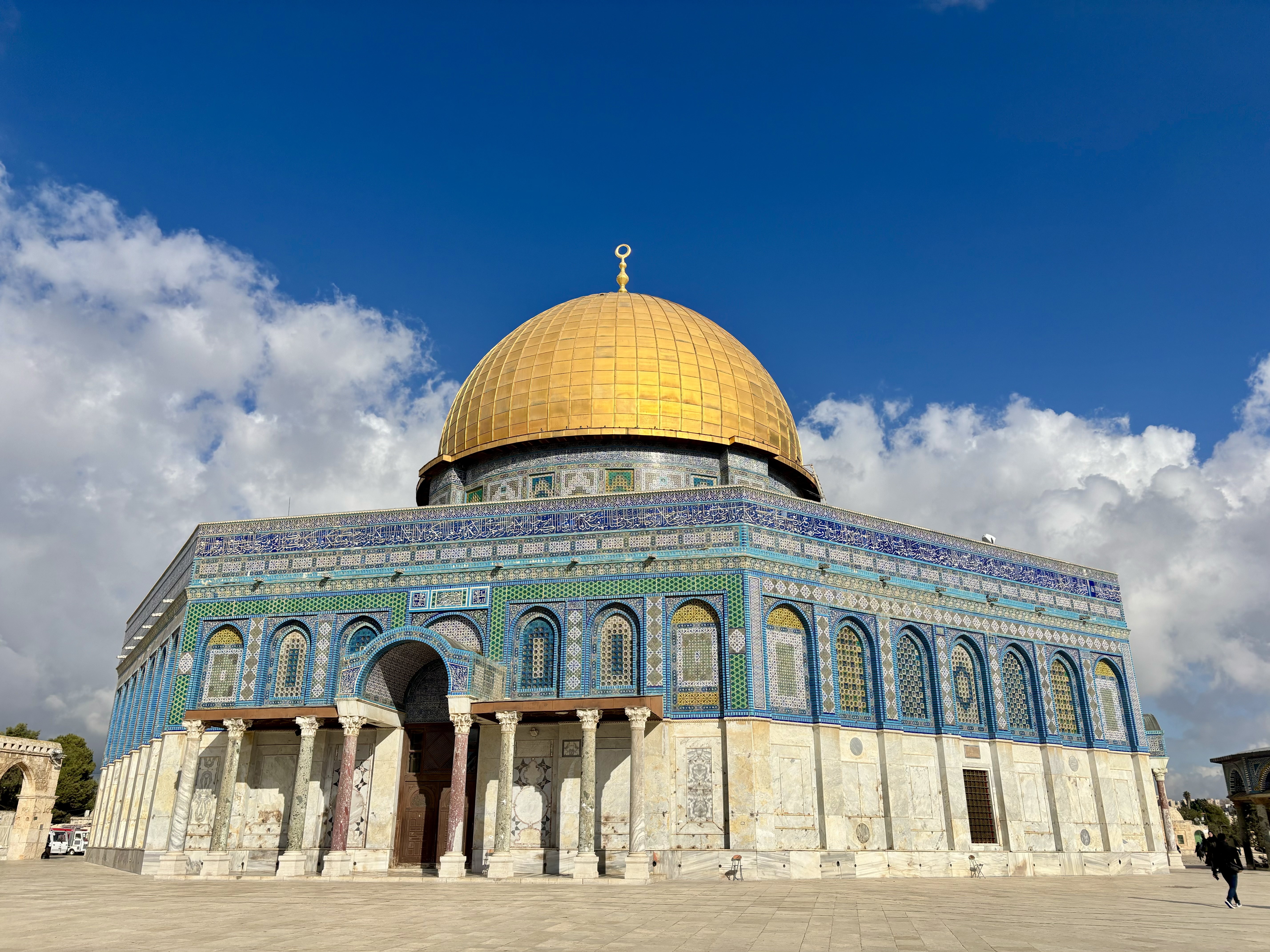
If so, The Temple Mount, with its Western Wall below—holiest shrine in Judaism—and Al Aqsa Mosque and Dome of the Rock above—holiest shrines in Israel for Muslims—is the “navel of Jerusalem.”
 
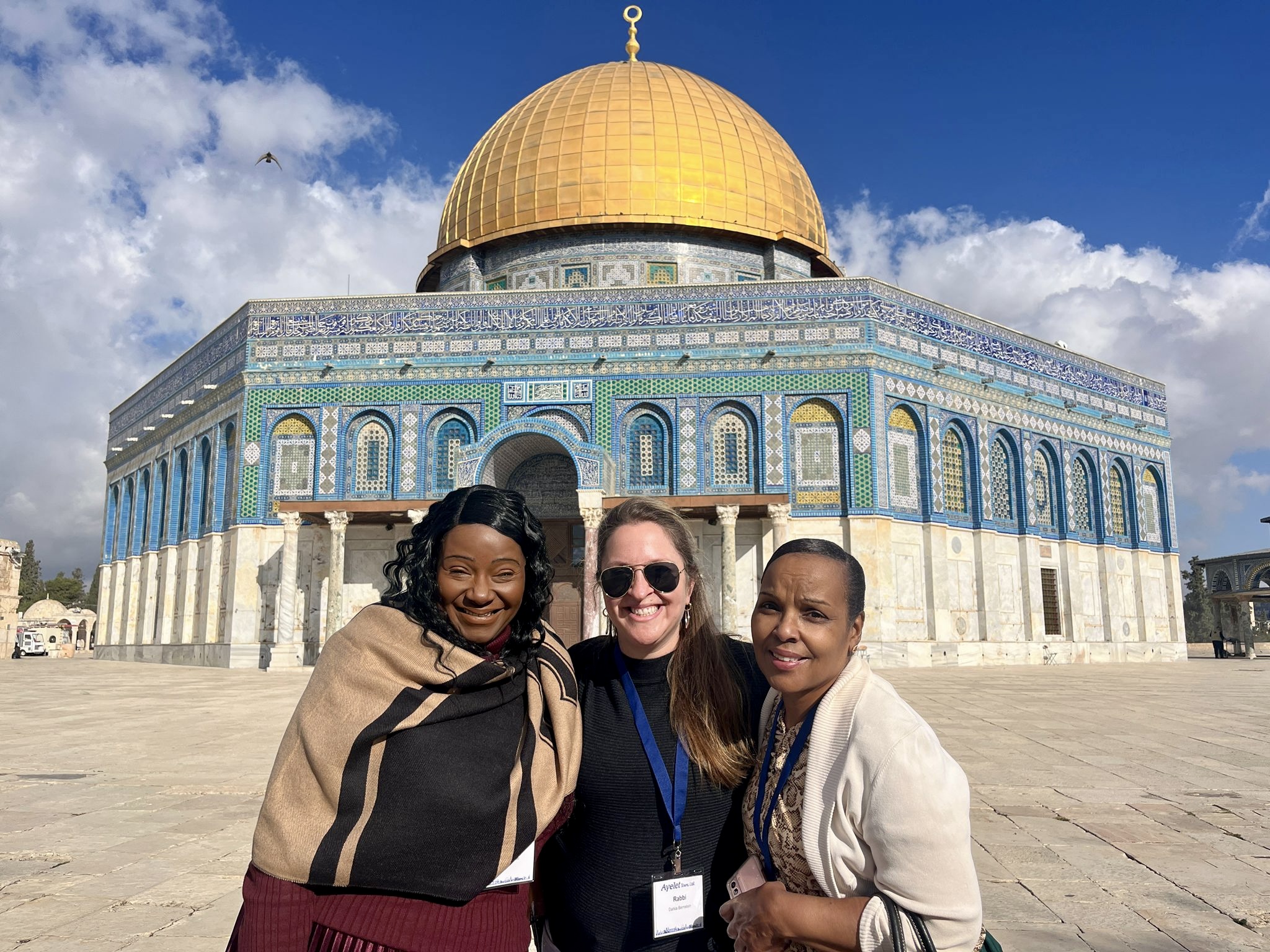
This morning our Westchester Jewish Council (WJC) Multi-Faith Clergy Delegation visited these holy sites—as tourists, but also as spiritual leaders who recognize that in today’s fractured world, there are still places that loom large and centrally in the imaginations of millions of people of faith, and which summon us to live for a noble purpose: to serve God and humankind. 

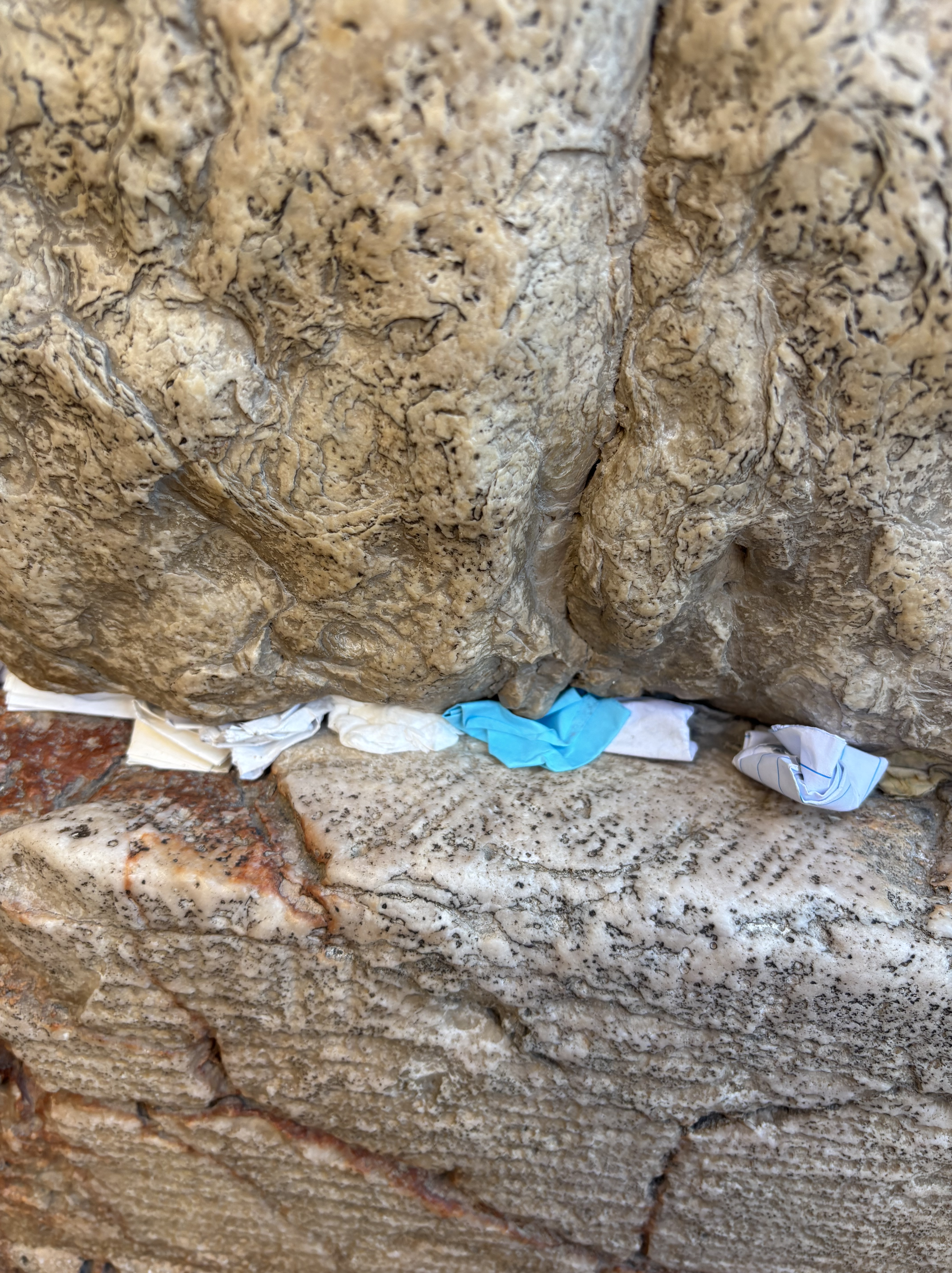
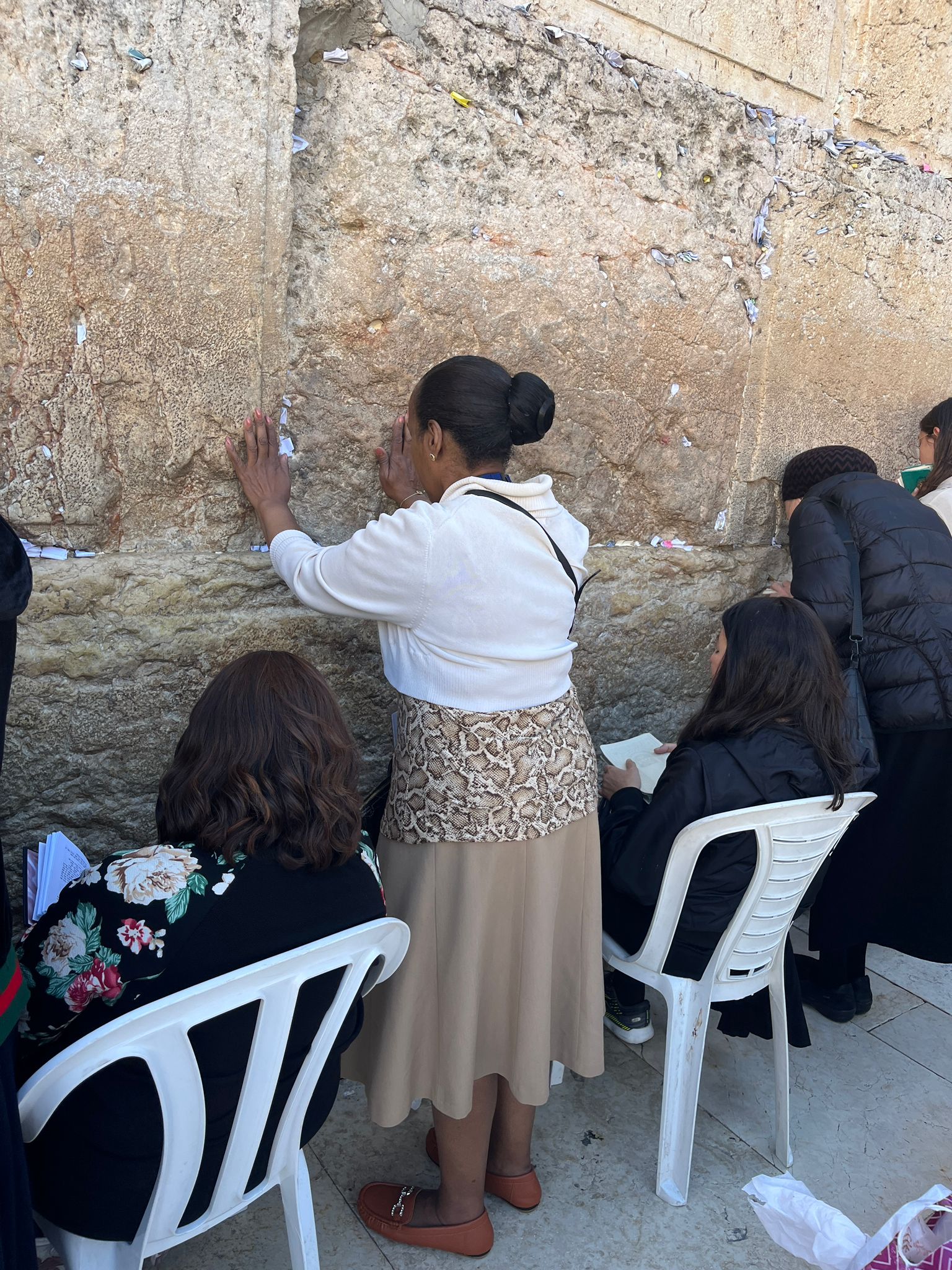
On this mount (Mount Moriah by name), Jewish tradition tells us Abraham bound his son Isaac. The passage can be found in this week’s Torah portion, Vayera (see Genesis Chapter 22). (Islamic tradition tells the same basic story but has Ibrahim (Abraham) nearly sacrificing Ismail (Ishmael).). I heard a Bar Mitzvah boy chanting this portion at the Kotel as I paused there to pray, followed by singing and dancing with his family on the nearby plaza. 

The same mythical location that inspires us to nobility, sacrificial service, and joyful observance of our traditions is also associated with acts of religious extremism and even violence. The holy site is often a flashpoint for religious tensions and provocations.
 
But this morning, Jerusalem is at peace, and we give thanks. May God continue to spread a shelter of peace over us, over Jerusalem, and over the hurting human family.

 
Tuesday, November 12th, 2024
11 Heshvan 5785

Dear WRT Family, 

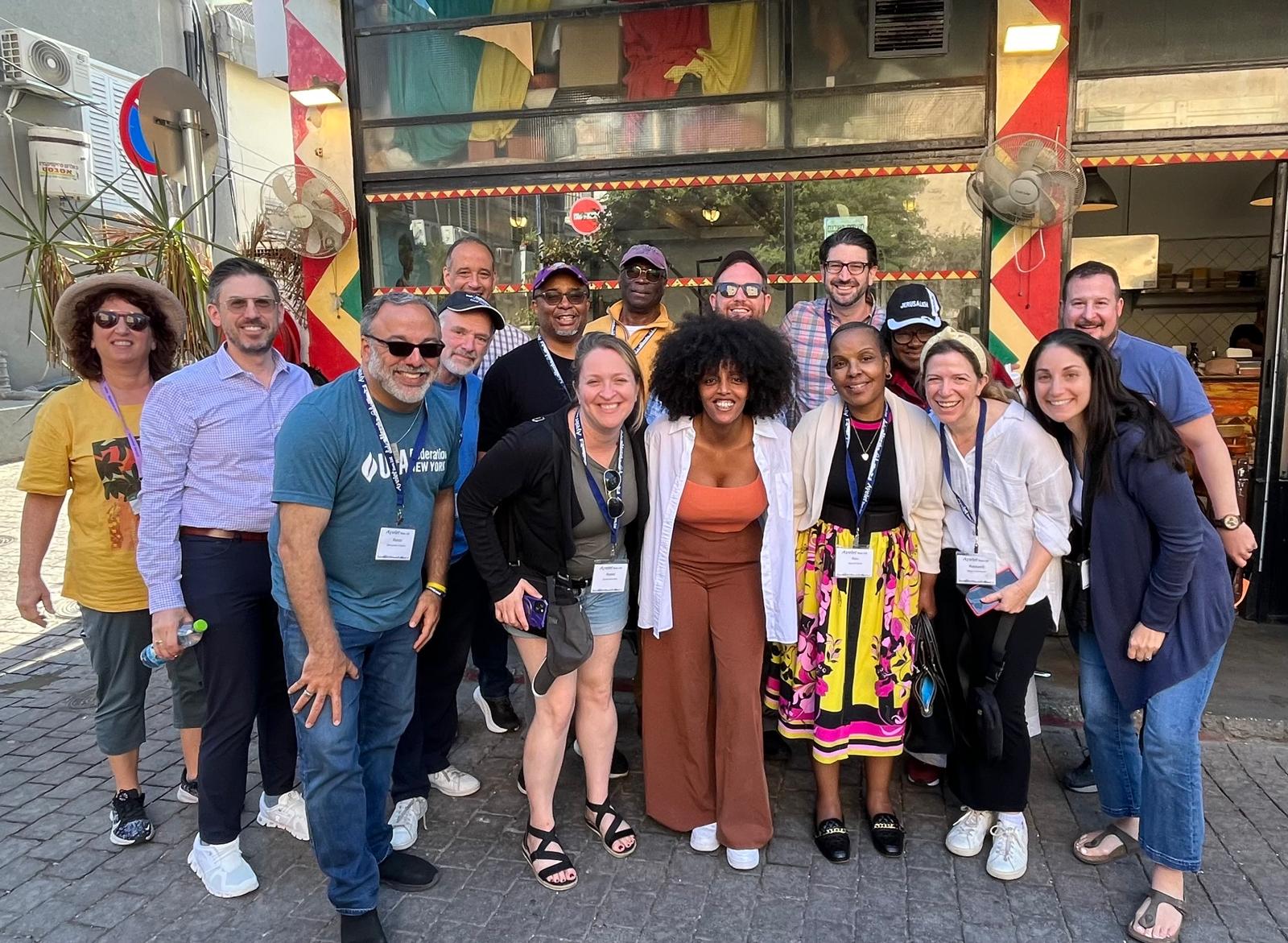
Today our Westchester Jewish Council (WJC) multi-faith delegation spent part of the morning at the Max Rayne Yad b’Yad (Hand in Hand) Jerusalem School, one of six bilingual, bi-cultural schools (elementary through high school) in Israel where Jewish and Palestinian-Arab Israelis learn together in Hebrew-Arabic classes with paired Arab and Jewish teachers, dual holiday observances, and a unique curriculum designed to foster dialogue and listening between disparate cultures and lived realities. 
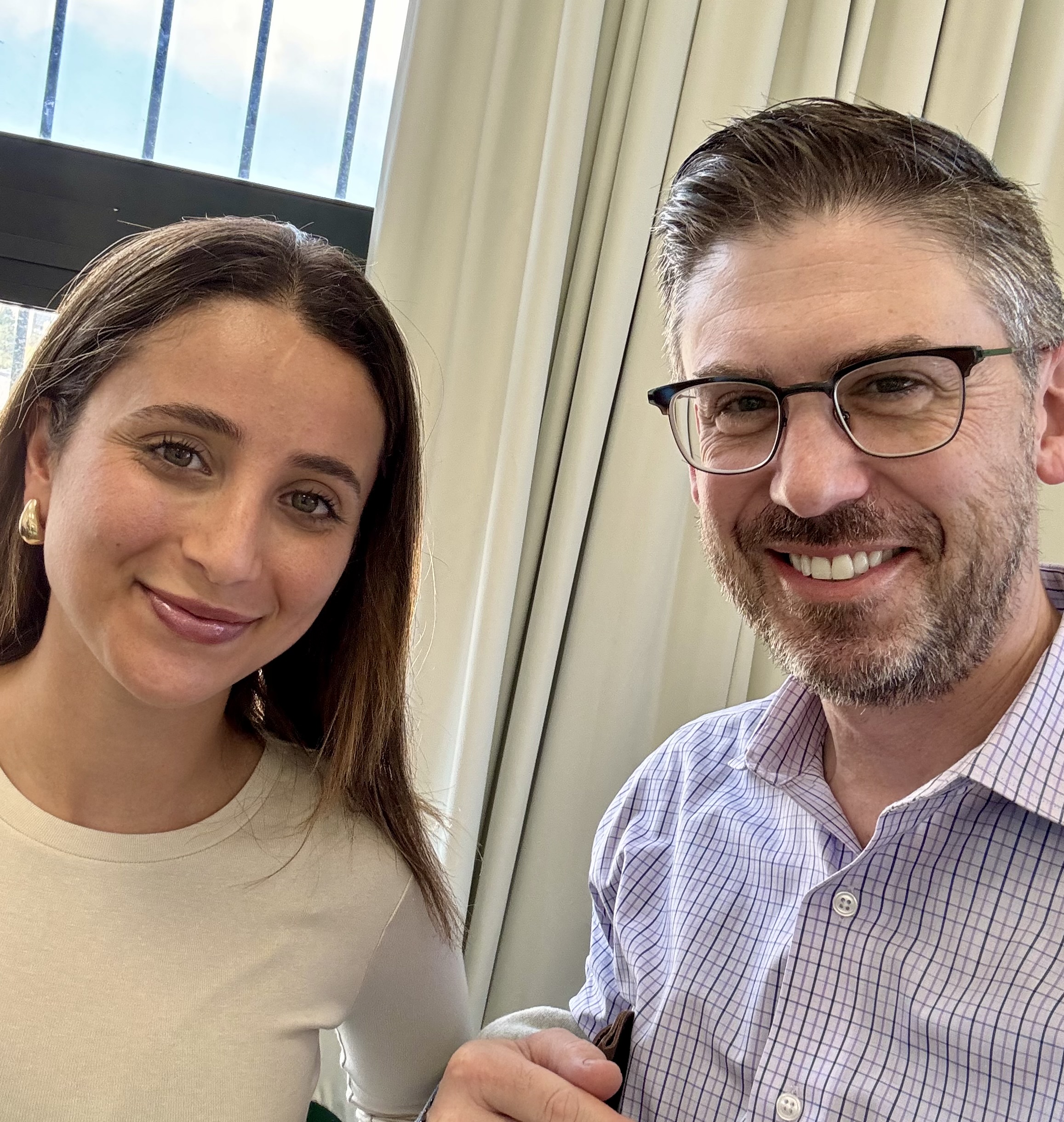
We met with Noor, who is a spokesperson for Yad b’Yad (pictured with our group, and with me), an Arab woman who grew up in Israel and who interacted with her first Jewish person at age 19. Asked about how the school, and especially the students, have responded to the horror of October 7th and the ensuing brutal war, Noor shared that the philosophy of Yad b’Yad is that through sustained, painful dialogue, what seems impossible can become possible. The hard work of building commonality across a chasm of difference begins with sharing personal and family stories and listening intentionally to another person’s pain.
 
Unfortunately, very few Israelis — Jewish or Arab — are exposed to this mixed-learning environment. The vast majority of Israelis attend separate schools for Jewish kids and Arab kids. And by high school, most of the Jewish kids transfer out, while Arab students remain at Yad b’Yad (largely because the quality of the academic program exceeds what is available to most Arab youth in Israel). 
Nevertheless, the families who began this bold project 26 years ago led from a vision of a different future for their children. As is written in this week’s Torah portion, “On the mountain of the Eternal, there is vision” (Genesis 22:14). They remind us that with vision, we can move from the way things are to the way they ought to be. Yad b’Yad offers a small glimmer of hope in the darkness. 

Wednesday, November 13th, 2024
12 Heshvan 5785

Dear WRT Family, 

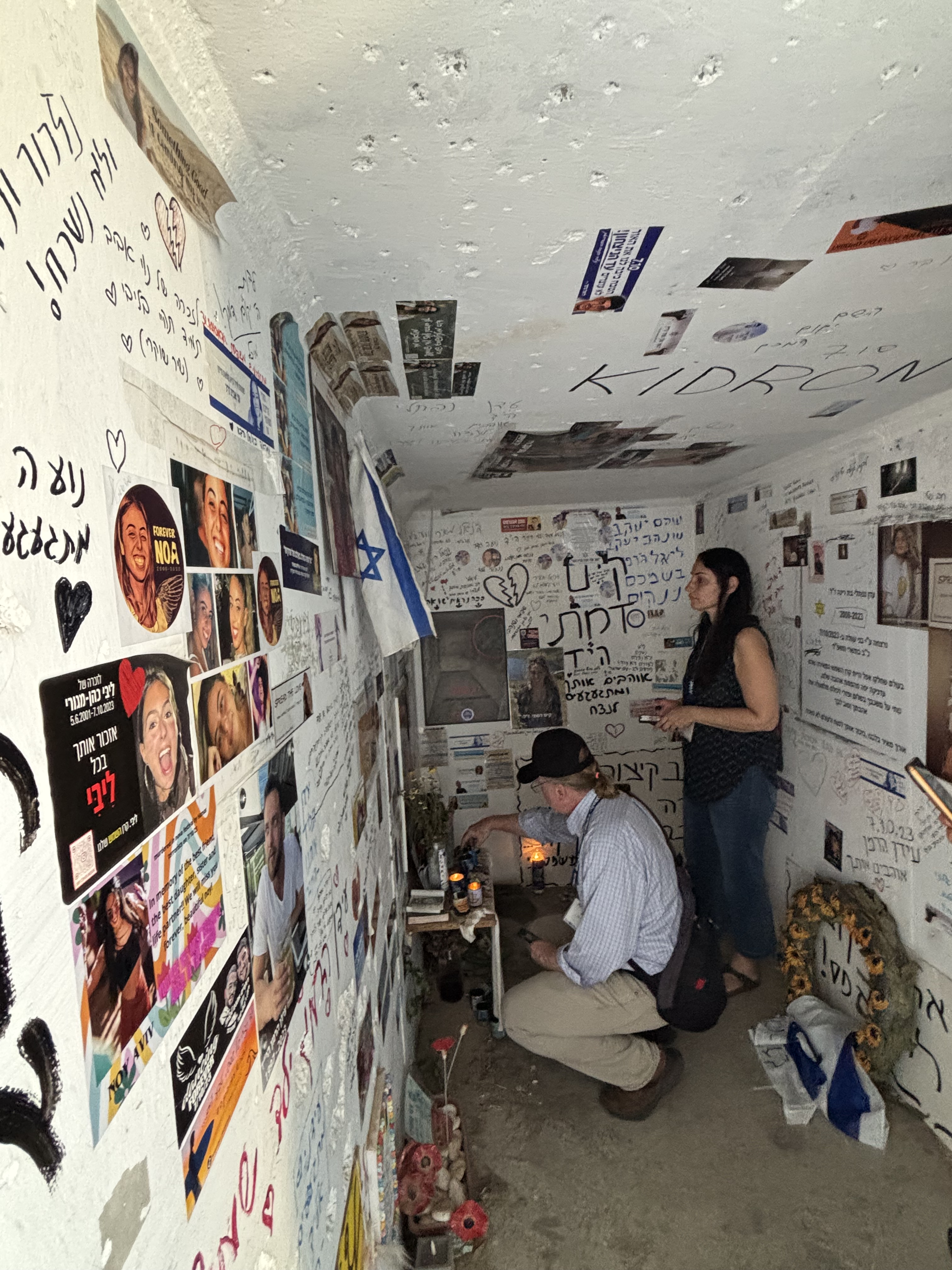
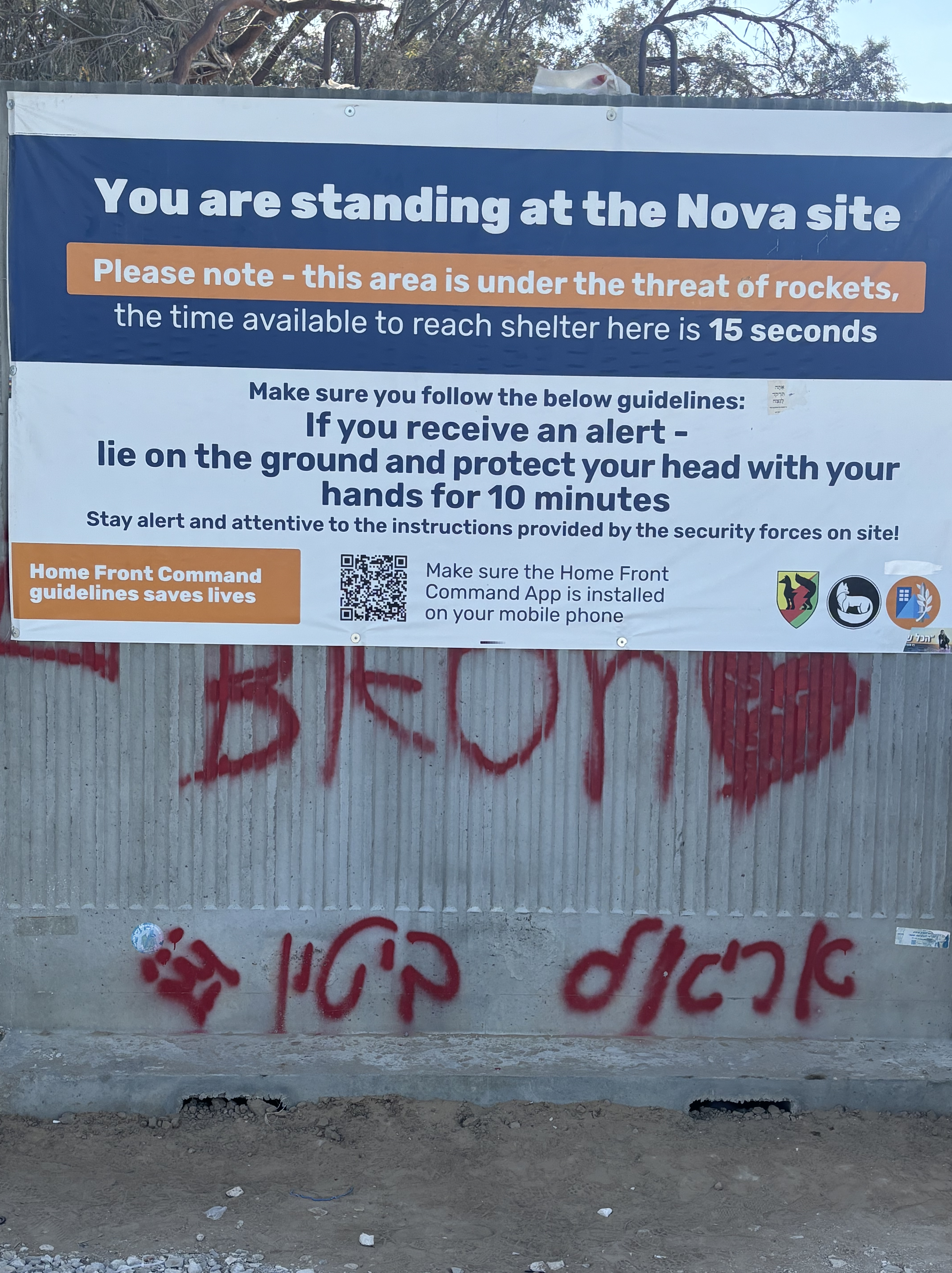
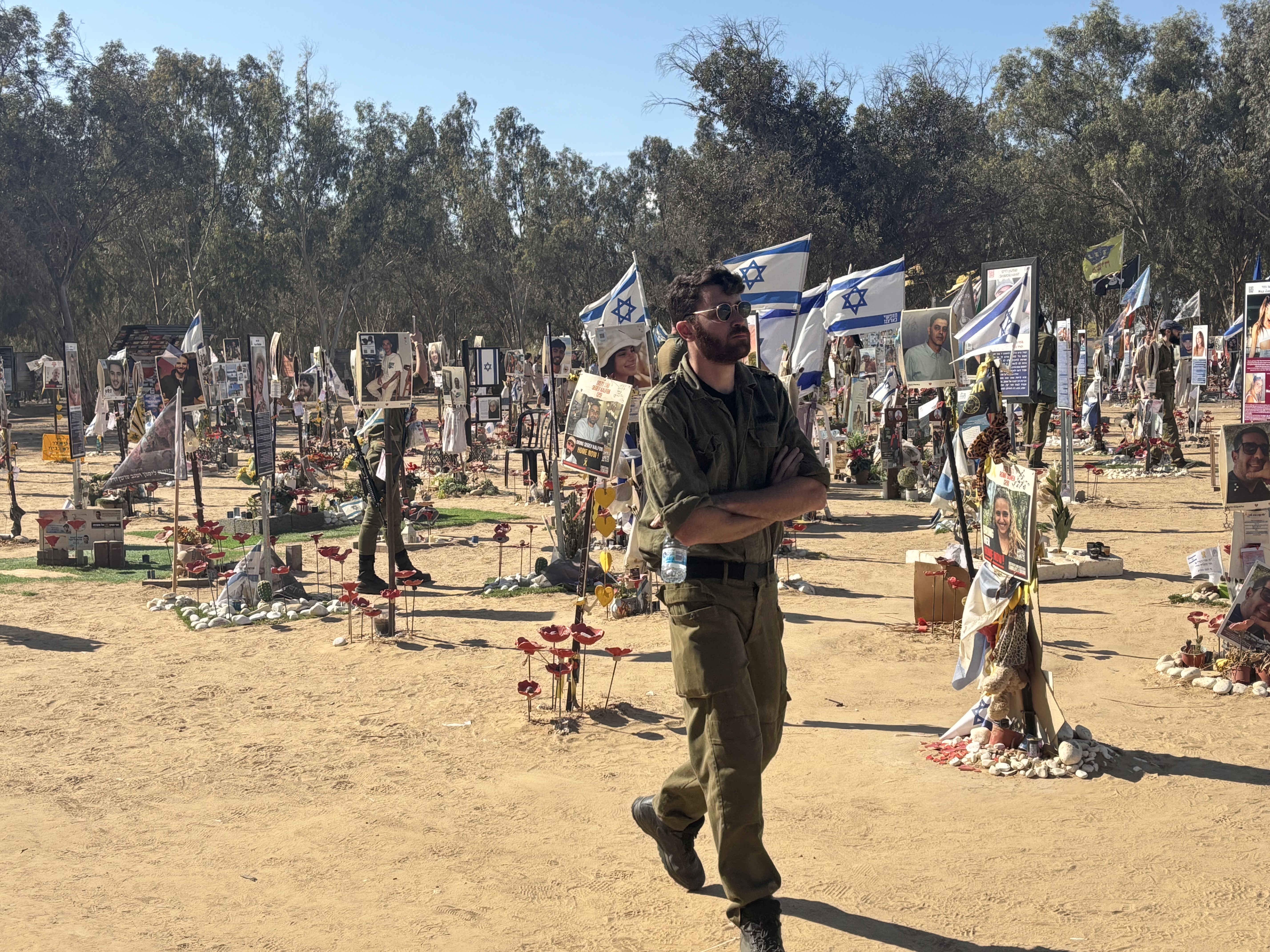
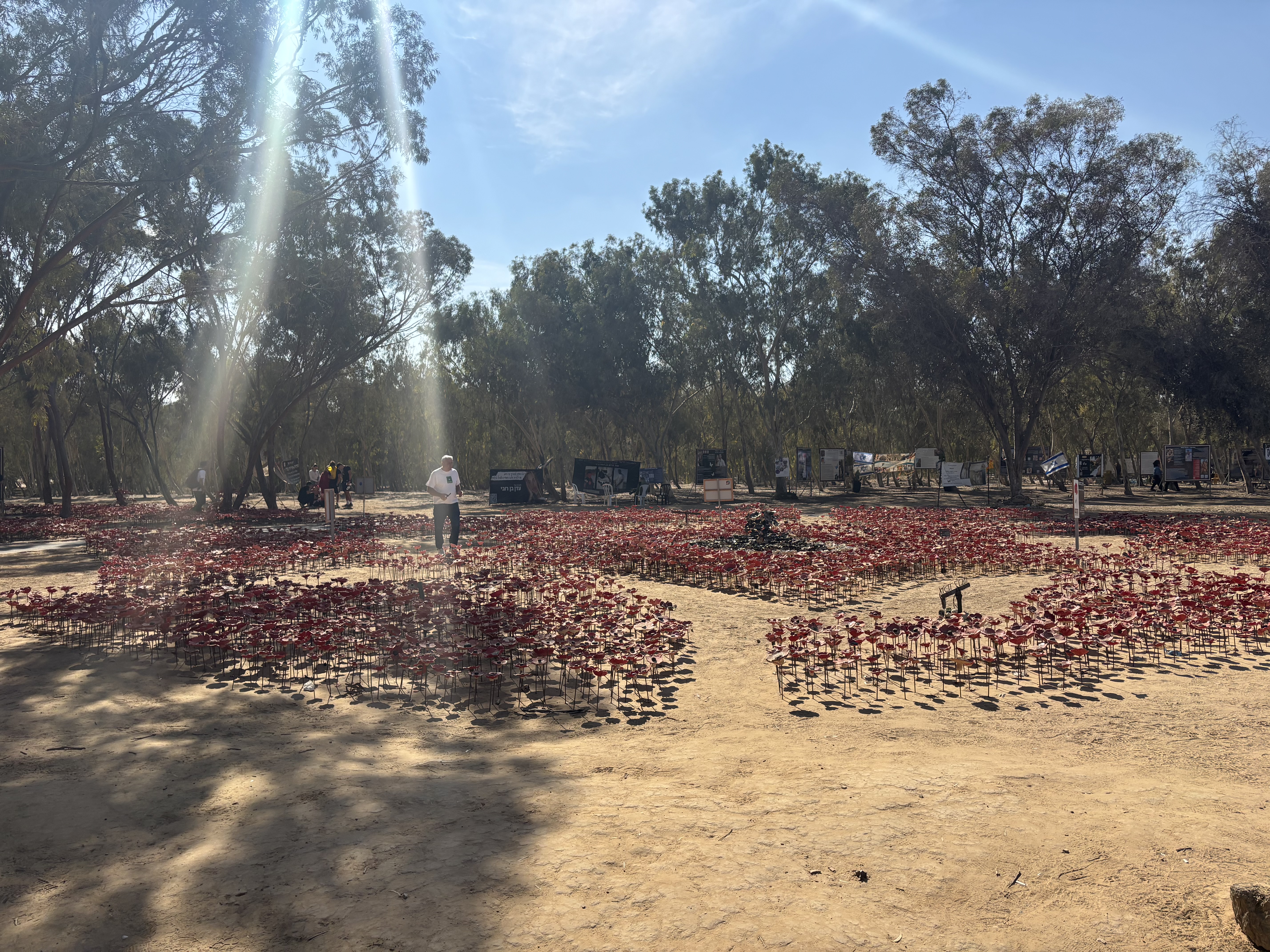
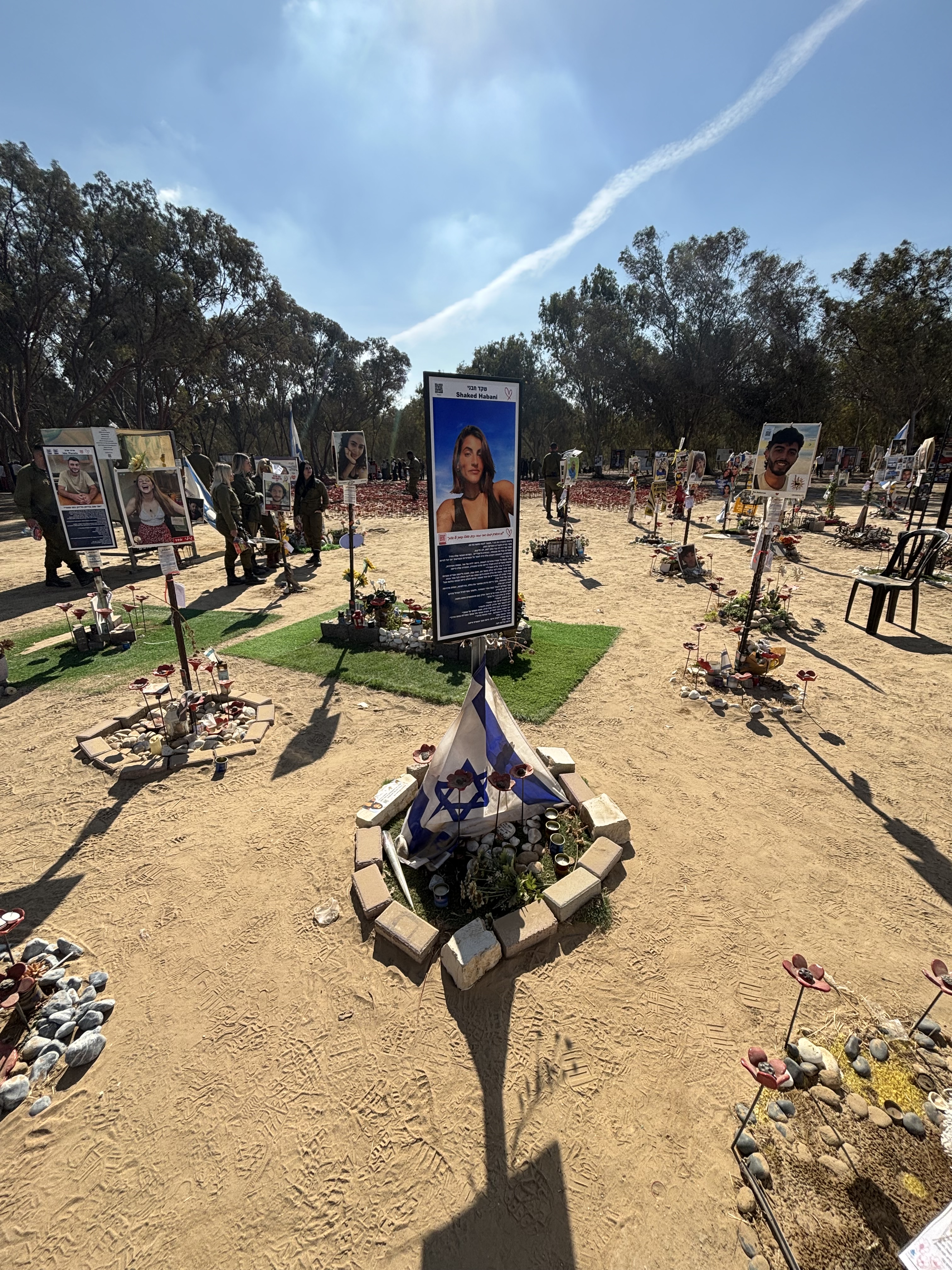
The Torah portion we are studying this week—Parashat Vayera (Genesis 18:1-22:24)—begins with Divine messengers visiting Abraham’s tent days after the covenantal circumcision of the males of his household. The Rabbis read into this passage the mitzvah of bikkur cholim, visiting the sick. It is a Jewish imperative to give comfort to the ailing, the wounded, and the bereaved. The Babylonian Talmud (Sotah 14) understands all of these compassionate behaviors as ways of emulating the Divine. That’s the best way I can make sense of our visit, this morning, to Ofakim and the Nova Festival site, two of the many targets of the Hamas massacre of October 7th. 

Ofakim, a sleepy city about 35 km from the Gaza border, lost more than 50 of its residents, and 364 individuals were murdered in cold blood at the Nova festival. Taken together, the victims of these two sites represent about 1/3 of the people slaughtered by Hamas on October 7th. It is hard to describe the feelings of numb rage and mute sorrow that accompanied our visit this morning. From what I could tell, we were the only American visitors to the site, a small cluster of pastors and rabbis who nodded silently to the many IDF soldiers there to pay their respects to their murdered friends, family, and fellow citizens.
 
What little comfort I found in making pilgrimage to what has become Israel’s “Ground Zero” of sacred remembrance came from the same Talmudic passage referenced above, which also observes that a person who visits someone who is ailing “takes away 1/60 of that person’s suffering.” “One sixtieth” is an idiomatic way of describing “the smallest measurable portion.”

It’s a passage I take seriously, if not literally. I have seen time and again how simply showing up for people in pain—whether through a hospital visit, or a shiva call, or, indeed, this trip to Israel—can alleviate a tiny bit of suffering. 

Just a little. 

The smallest measurable portion. 

May God comfort those who mourn and bring consolation to the broken-hearted. 


Thursday, November 14th, 2024
13 Heshvan 5785

Dear WRT Family, 

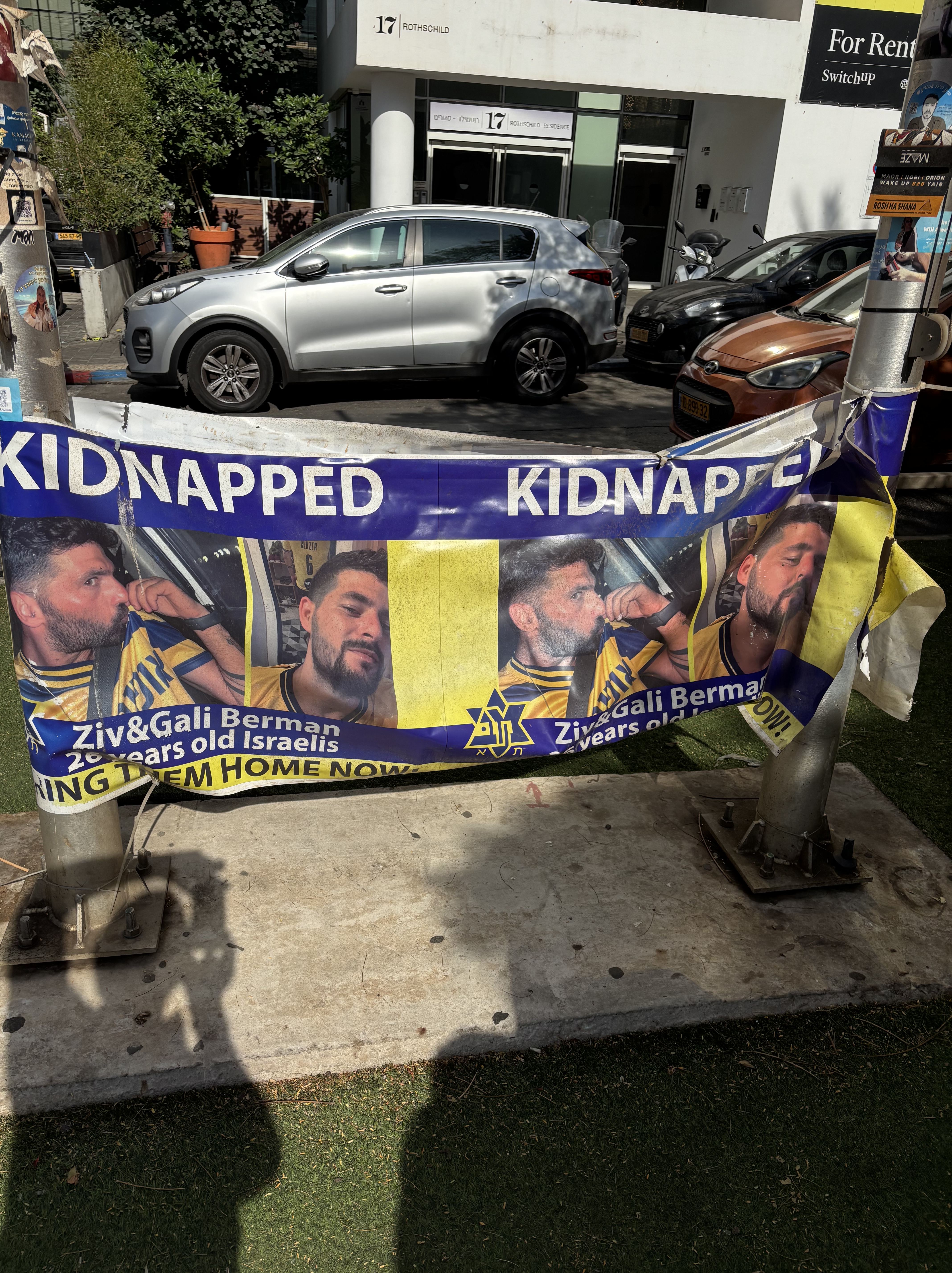
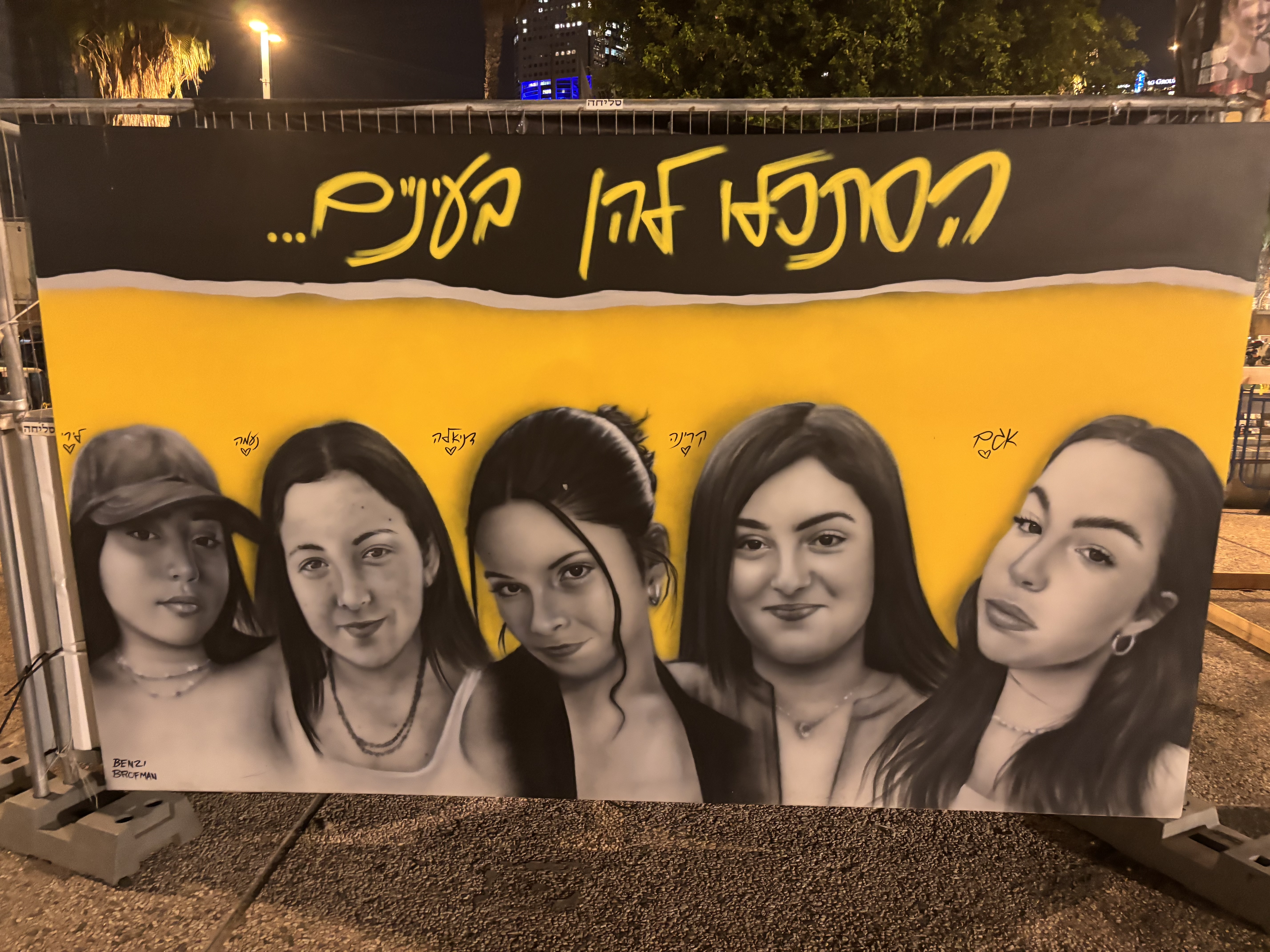
The faces of the hostages and the murdered stare back at you from every street corner and park bench in Tel Aviv. 

We’re here, in the cosmopolitan heart of Israel, for the last day of our mission, and the pictures I’ve included below were all taken within a 5-foot radius from Rothschild Boulevard, one of Tel Aviv’s main arteries and the home of Beit HaAtzma’ut, Independence Hall, where David Ben Gurion declared Israel’s independence in May 1948. That’s the squat building with the torn-up façade behind a spiderweb of scaffolding. It’s been “under construction” for several years now, but the sad truth is that the project has been mismanaged, has run out of money, and remains in limbo. Directly across the street from this monumentally significant building (in such a monumental state of disarray), the face of 25-year old Eden Yerushalmi (z”l) murdered in a tunnel beneath Gaza in August—whose body was recovered in the arms of fellow captive Hersh Polin (z”l)—implores the reader, Remember me, ok? 


I imagine the two are in dialogue with each other: the symbol of Israeli independence—battered and gutted but still standing—and the face of a murdered hostage, each imploring the other: Remember me, ok?

At the end of this week’s Torah portion, Vayera, God promises Abraham:

“I will bless you, making your descendants as numerous as the stars of the heavens and the sand upon the shore of the sea, and your descendants shall seize the gates of their foes” (Genesis 22:17). 
That promise—like our unfinished Beit HaAtzma’ut, House of Independence—is still a work in progress, still being built (and rebuilt), with great struggle and sacrifice.
 
But here, even now, Am Yisrael Chai: the people of Israel lives. 
Rabbi Jonathan E. Blake 

Abraham’s Journey, and Yours: A Letter to My Nephew

Shabbat Lech-Lecha 5785

Sermon delivered at Westchester Reform Temple, Friday, November 8th, 2024

Dear Samson,

I wouldn’t blame you if you’d rather think about sports or music or video games or even school, anything but the Election of 2024.  

Still, I hope you’ll indulge these few words.  2024 is the last time you will be a bystander to a Presidential Election.  Today you are a sophomore at Mamaroneck High School.  In November 2028, you will (presumably) be a sophomore in college.  I also voted in my first Presidential election my sophomore year, in 1992, and I remember how thrilling it felt to participate directly in the project of American democracy.  It still thrills, whatever the outcome.  I’m excited for you to experience this in just a few years.  

Between now and then, I hope you’ll give serious thought to what it means to be an American Jew, and how you will grow into this identity, because that’s who will cast his vote in 2028. An American Jew.  

I believe it is an extraordinary privilege to be an American Jew.  It is a heritage that came to you not by choice, but which you must now affirm for yourself.  This is the essential promise you made a little over two years ago when you spoke about Jewish adulthood, maturity, responsibility, blah blah blah—all the stuff every Bar or Bat Mitzvah says, but which remains a promise only partially fulfilled until later in life, if ever.  In any case, if the history of human adolescent development is any indication, I feel confident that the next four years will prove formative for how you will choose to show up as a grownup in a reeling world.

I’m writing this letter the week of Parashat Lech-Lecha, so, naturally, I seek guidance in these words of Torah.  Our portion revolves around the figure of Abraham: his journeys, his family, his adventures and trials.  Mostly, though, this is a parasha about self-discovery, character formation, and moral courage.  

God’s first words to Abraham are Lech-Lecha which give the portion its titleIdiomatically we translate Lech-Lecha “go forth” but the Rabbis read the words literally:  Lech, “Go,” L’cha, “unto yourself.”1  God sent Abraham off to discover a new land, a new religion, a new people, yes, but also to discover Abraham.  After self-discovery, everything else would follow. 

You too are entering an age of self-discovery.  With adolescence comes the realization that not every adult can be trusted or believed; not every authority should be followed; politicians, professors, parents, and even well-meaning uncles who happen to be rabbis may have their own interests and agendas that are not in line with your emerging moral sensibilities, values, and priorities.  I am not recommending dismissing these voices out-of-hand because, in the main, I like to think that the grownups in your life have your best interests at heart.  But, increasingly, you’ll have to decide for yourself what is best. 

And as you do, as you make your own introspective Lech-Lecha journey, I hope you will center your heritage as an American Jew in your emerging character and as a source of moral courage.  I hope you will invest time and thought and effort to study our history, tradition, and moral priorities, which anchor our experience as American Jews.  I hope you will internalize that your Jewish heritage is not an old scroll to be dusted off and paraded around for ceremonial purposes but rather an Etz Chayim, a living tree of immense beauty, wisdom, and spiritual nourishment.  

I hope you will remember that you are part of a people whose story runs 3,000 years deep, as wide as the globe, and whose roots are planted in the soil of Eretz Yisrael, our Biblical homeland, which, for all its difficulties and dilemmas, is still home to half of your global Jewish family, whose destiny is inextricably bound up with your own, and whose thriving as a vital, secure, and democratic Jewish state—essential to the Jewish future—is up to us. 

And I hope you will remember that your American heritage has allowed your Judaism to thrive in a country founded on the precept of religious freedom for all.

Your American Jewish heritage confirms that immigration is a source of national strength and pride.  Your ancestors, all of my great-grandparents, came here because to be a Jew in Russia at the turn of the 20th century was either a dead end or a death sentence.  They came here to escape antisemitic mistreatment and violence.  Your great-grandfather, my Pop-Pop Acky (he was Grammy’s father) fought as a combat medic with the First Marines in Iwo Jima and Okinawa, believing, rightly, that there was no dissonance between being a devoted Jew and a patriotic American, no matter one’s political party. 

Your family continues to demonstrate that civic engagement is a Jewish value. Aunt Kelly spent Election Day as a poll-worker, her small contribution toward ensuring the free and fair elections that stand as the cornerstone of American Democracy.  She told me how moving it was to see parents taking their kids to vote, how a number of first-time voters, some of them advanced in age, proudly cast their ballots.  She heard tons of different languages, saw people of every skin color and cultural background, each bringing their own distinctive voices and values to their votes.  

You are an American Jew, with values rooted in these symbiotic identities.  I hope you remember that when we talk about our “values,” especially as proud American Reform Jews, we mean all of the following, in no particular order:  

  • Honoring the dignity of every human being; 
  • Protecting the rights of the disenfranchised:  whether of women to bodily and reproductive autonomy, or of refugees to safety and opportunity, or of the poor to health care, or of minorities to equal treatment under the law;
  • Recognizing the centrality of Israel to Jews and Judaism; 
  • Combating the ever-metastasizing evil of antisemitism, whether here or abroad, whether it comes from anti-Israel activists on the left, or White Nationalists on the right;
  • Protecting our precious environment and natural resources; 
  • Providing tzedakah for the needy;
  • Curbing gun violence and saving lives; 
  • Cultivating our education and critical reasoning;
  • Laboring for the greater good;
  • Living and loving beyond ourselves and our narrow self-interest.

If I had to boil my list down to one line, I’d choose a precept from Pirkei Avot, an almost-2,000-year-old collection of Jewish wisdom:  Ba-makom she-ein anashim, hishtadel lihiyot ish.  “In a place where no one is a mensch, be a mensch.”2  

Still, the way I see it, we Jews ought not be “one-issue” voters because Judaism is not a one-issue way of life.  Of course what we may choose to emphasize from a long list of authentic Jewish values remains a personal choice, but there is no single “best” or overriding Jewish value or priority.  We should never be demeaned for how we vote or which political party we favor, so long as we act with Jewish thoughtfulness and integrity. 

I know that to you, four years must seem, like, really, really far away.  There are a thousand math lessons and English essays and standardized tests to get through, a permit and a license, college visits and applications, prom and graduation, shows to perform, baseball stadiums to visit, and destinations far and wide to explore.  I learned this week that taking out the trash has been added to your roster of household responsibilities, so I would not wish to overwhelm you with too many other grown-up headaches.  Unfortunately for you, and for all of us, the world is an overwhelming place and often the only grown-up choice is to keep striding into the maelstrom, or, at least, down to the curb.

Abraham’s first journey, the journey of introspection, leads to his next journey—the journey of the rest of his life—a journey of moral courage.  

The ancient Rabbis explained this by way of a parable.  An ordinary person, they said, was going about his business, traveling from one place to another, when he noticed a castle in flames, and exclaimed, “Why is no one doing anything?  How can it be that there is no one to look after this palace?”  Just then, a voice called out from the highest balcony—already engulfed in the inferno—crying out, “I am the owner of the palace.”  At that moment, the midrash goes, God selected this ordinary person—Abraham by name—to begin the story of the Jewish people.3  

The Rabbis found that Abraham merited leadership because he saw the fire.  “Why is this happening?” he asked. “Why is no one doing anything?”  

What makes Abraham special is that he could see things not only for what they are, but for the way they could be.  

Sir Jonathan Sacks of blessed memory, who was the Chief Rabbi of Great Britain, explains:  “Judaism begins not in wonder that the world is, but in protest that the world is not as it ought to be.  It is in that sacred discontent that Abraham’s journey begins.”4  

Sacred discontent is what I wish for you, dear nephew.  In the coming days and months and years you will have to wade through endless streams of comments by and about our President-Elect.  What he said, what he did, what he posted online.  I often think you are the smartest member of our family for your comprehensive disengagement with social media.  With that said, this torrent of rhetoric will be unavoidable and you will have to figure out what it all means to you.  You will have to learn how to tune out much of it without excusing the worst of it, particularly the coarse and demeaning language reserved for women, minorities, immigrants, foreigners, people with disabilities like your siblings, Jakey and Shirah, people who identify as LGBTQIA+, political opponents, and the most vulnerable in our society.    

You will have to remember that in those places where hateful speech is permitted to flourish while truth-telling books are banned, where irrational conspiracy theories are amplified while science is shunned, where policies that promote liberty are suppressed while autocratic impulses are indulged, Jews have never fared well.

There will be times when you feel powerless to make a difference.  I know I often do.  These are turbulent and precarious times and I do not know any better than anyone what will happen with Israel, Ukraine, Russia, Gaza, Lebanon, Iran, China, Saudi Arabia, NATO or North Korea over these next four years; or what our poor, fractured country will do with all its festering bile and clattering discord.  Personally, I wish each of our political parties and their leaders would take a big, long Lech-Lecha journey of introspection, character re-formation, and moral courage. 

But as for our journeys:  Abraham inspires us not only to hope and pray for a better tomorrow but also to work for it, which is simply another way of saying that we should plan to show up as Jews in the world at a time when the world needs us. You, and me, and all of us. 

Most of all, Samson, you will have to remember that to be an American Jew is not only an extraordinary responsibility but also an extraordinary opportunity, to journey deep within and emerge with Abrahamic character:  morally courageous, and never too content.

May God bless you, and all of us, too.   

Uncle Jon

  1. See Genesis 12:1 and Rashi, ad loc. ↩︎
  2. Pirkei Avot, 2:5. ↩︎
  3. Based on Bereshit Rabbah, 39:1. ↩︎
  4. Sacks, “A Palace in Flames: Family Edition.” ↩︎