
Sermon Delivered at Westchester Reform Temple, Scarsdale, New York, October 2, 2025
This Yom Kippur message began on July 31st, when Yeonsoo Go, a 20-year-old Purdue sophomore and 2024 Scarsdale High School graduate, was detained by Immigration and Customs Enforcement after a routine visa hearing in Manhattan. Handcuffed and sent to Louisiana’s Richwood Correctional Center, Soo, as she’s known, was labeled an “illegal alien” for allegedly overstaying a visa — a claim her family disputes.
Soo arrived four years ago on a religious dependent visa, accompanying her mother, Reverend Kyrie Kim, the first woman ordained in the Seoul Diocese of the Anglican Church of Korea. Rev. Kim was expressly invited to New York to strengthen the Episcopal Church’s ties with Asian communities. Our local interfaith clergy association, of which I’m a past president, proudly embraces Rev. Kim as one of our own.
If you want to know the definition of “upstanding,” look up this family: Kind, generous, invested in the community’s welfare. They are not anti-Israel protesters or political activists. They are not criminals, gang members, scofflaws or reprobates. They are likely to be found helping out in a homeless shelter when not in church, school, or the neighborhood. Our neighborhood.
So when Soo disappeared into ICE custody, our local churches and synagogues sprang into action. Within hours, priests and pastors, rabbis and cantors, exchanged urgent messages and calls. Soon, our local elected officials, including WRT congregant, New York Assemblywoman Amy Paulin, were on the case. Days passed with little word from Soo, later revealed to be held in squalid conditions. By Sunday, with the support of our Scarsdale Village leadership including WRT congregant, Mayor Justin Arest, we had organized a community-wide vigil to take place in Chase Park on Thursday, one week after her apprehension. By this point, we had it on good authority that members of the US Congress of both political parties were working on her release.
It finally came on Monday, five days after her detention, with a tearful family embrace upon her return to New York.
A happy ending? Not quite. Soo’s case remains unresolved, with no acknowledgment of error from authorities. The trauma Soo and her family endured lingers, as does the fear this incident (and countless like it) sows among immigrants and guests to our country, regardless of their legal status. Intentional or not, the message that comes across to millions of law-abiding people is: You are not like us. You are Other. You do not belong here.
The biggest question — Why? — looms large, suggesting that maybe, just maybe, “the cruelty is the point.”1
We Jews know from cruelty. In Torah, it first appears in Exodus, Chapter 1: “The Egyptians worked the Israelites with cruelty.”2 The Hebrew word פרך, meaning ruthlessness, brutality, cruelty, defines our slave labor in mortar, brick, and field, and is repeated in the next verse for emphasis.3
Cruelty is Pharaoh’s calling card. By chapter’s end, even forced labor proves insufficient to satisfy his malice, as he escalates to infanticide: “Every boy born you shall throw into the Nile.”4
The cruelty is the point.
Ten years ago, I traveled to Israel with a group of rabbis — Reform, Conservative, and Orthodox. We arrived at the height of the Syrian Civil War and refugee crisis, with 1.3 million Syrians seeking asylum from the brutality of the Assad regime (which would collapse this past December) and a simultaneous resurgence of ISIS, the terrorist Islamofascist entity whose ideology mirrors that of Hamas.
One encounter, seared in my memory: a critically injured Syrian rebel fighter, recovering from his wounds in a hospital bed in a makeshift underground ward of Israel’s acclaimed Galilee Medical Center.
The CEO of the hospital, Dr. Masad Barhoum, a Palestinian Arab and Israeli citizen, explained the hospital’s mission to treat all, a commitment born of Israel’s humanitarian spirit and in fulfilment of the medical profession’s Hippocratic Oath, which does not discriminate when it comes to human life and health.
So why the basement? Why the secrecy?
Because if his comrades-in-arms were to learn that a devout Muslim combatant had obtained medical treatment in the Jewish State, he’d have yet another target on his back.
When confronted with the world’s worst cruelties, the Israel I know and love has time and again rushed in to help and heal, with compassion blind to the patient’s color, country, or creed.
That is why I appreciated hearing this summer from Dr. Dan Turner, a pediatric gastroenterologist and deputy Dean of the School of Medicine at the Hebrew University in Jerusalem. Through the Israel chapter of Physicians for Human Rights, Turner provides medical care to Palestinians, documents abuses, and advocates for policy changes, like ending the practice of handcuffing prisoners during medical treatment, which Turner describes as both unnecessary and cruel.
Turner’s willingness to treat an enemy injured in war, or suffering from malnutrition and disease, has earned him more than a few enemies of his own. He has been called a traitor, a self-hating Jew, a terrorist sympathizer. He has received death threats.
He remains steadfast. Listen to his own words. For Turner, treating a patient, even an enemy, is “not about excusing their actions; it’s about maintaining our own humanity. …Treating [our enemies] humanely doesn’t weaken us — it strengthens our moral core.”5
Referencing the same Biblical Hebrew word for the cruelty of Pharaoh, Turner says: “We can’t let fear justify פרך.” Torah isn’t abstract; it demands action. Every time I advocate,” he adds, “I’m reminded… : ‘Love your neighbor as yourself.’6 That includes the neighbor across the border.”7
So when we see cruelty enacted as policy, cruelty for its own sake, we recoil — not in the name of a political party, not because we call ourselves Reform, Conservative, Orthodox, or any other modifier, but in the name of Judaism itself.
When cuts to USAID are already implicated in the deaths of hundreds of thousands from complications related to treatable conditions like HIV/AIDS, malaria, tuberculosis, and pneumonia, with the potential for millions more to die in the next five years8; when pictures of crying migrants are posted on social media for laughs, and refugees are barred (unless they happen to be White South Africans); when religious zealots burn down mosques or villages or olive groves in the West Bank; when the State Department denies visas for Gazan children to receive medical treatment; when hate-filled extremists on both left and right decide to air their grievances with guns and explosives; when it becomes clear that the cruelty is the point, Judaism itself is violated, and Jews, affronted.
Judaism loathes a Pharaoh: anyone who punishes the weak, the lonely, and those brave enough to stand up and speak out. Whether the King of Babylon or the Emperor of Rome, the Pope in the Crusades or the King and Queen of Spain in the Inquisition, the Cossack warlords or the Führer of the Reich, the Soviet despots or the Mullahs of Iran, we know all too well the danger of cruelty wedded to power.
So what lesson ought we learn from our experience with the Pharaohs of Jewish history? To watch our backs? To secure our borders? To wage war against our enemies, when life and home, sovereignty and self-determination are under siege? All of these, of course: complicity with terror goes against Jewish survival and Jewish morality. Our refusal to be history’s victims comprises the essence of “Never Again.” We must keep guard against the Pharaohs of the world.
Yet we must also keep guard at all times against the Pharaoh within.
The word פרך — cruelty — the defining feature of the Pharaoh — comes up a second time in the Torah, in the Book of Leviticus. Only this time, the tables are turned. This time, the Torah warns us not about the danger of Pharaoh’s cruelty against us, but rather about the danger of the cruelty we might inflict upon others, especially when we have the power to do so.
Three times in the space of ten verses9 the Torah warns about treating a hired laborer with פרך, cruelty. Three times it warns us not to subject a worker to the conditions of Egyptian slavery. Any one of us, the Torah is saying, has the potential to become a Pharaoh in miniature.
Time and again research into human psychology has borne out the same conclusion. In the early 1960s, Dr. Stanley Milgram conducted a groundbreaking psychological experiment at Yale University to explore obedience to authority, inspired by the atrocities of the Holocaust and the question of how ordinary people could commit horrific acts under orders. Participants were instructed to administer what they believed were increasingly severe electric shocks to a “learner” (played by an actor) for giving incorrect answers, with an authority figure urging them to continue despite the “learner’s” apparent distress.
Shockingly, 65% of participants complied fully, delivering what they thought were lethal shocks, revealing the power of authority to override personal morality. Left to our own devices, if we have power, we tend to exercise it, not restrain it. What Milgram proved was how easily the Pharaoh within can emerge from the shadows of the human subconscious.
As Professor Turner, the Israeli physician, puts it: “[C]ruelty dehumanizes everyone — victim and perpetrator. To fight [it], we must choose humanity, even when it’s hard. The Torah teaches us we were slaves in Egypt [in order] to learn compassion, not to repeat oppression.”10
The Torah teaches us this, again and again and again, in a thousand different ways, because it must be said, again and again and again, in a thousand different ways. Not just the general principle, “Love your neighbor as yourself,” but the detailed, practical applications, the innumerable variations on a theme:
- When you see your enemy’s ox wandering astray, return it to him.11
- When you see your enemy’s donkey lying helpless under its burden, raise it with him.12
- When a poor person resides among you, do not harden your heart; do not close your hand, but give generously.13
- When you lend money to the poor, exact no interest.14
- When you reap the harvest of your land, leave the corners of your field unpicked and do not gather the fallen sheaves; leave these for the poor, the needy, the stranger.15
- When foreigners reside among you, do them no wrong; treat them as natives born among you.16
- Do not afflict a widow or an orphan.17
- Do not detest an Egyptian, for you were an alien in his land.18
- You must not remain indifferent.19
Beware the Pharaoh within. For cruelty can seize hold of any human being, even the best of us.
Yom Kippur calls us to this awareness: that any one of us has the power to cause hurt and harm, to be cruel. We all do it, all the time — and worse, we do it to the people we love the most, over whom we have the power to inflict pain, because we know all their vulnerabilities.
The Pharaoh within speaks not in ancient Egyptian but in a universal language that each of us knows all too well. The Pharaoh within is quick with a snarky putdown, laughs at another’s weakness, withholds forgiveness, bears grudges. The Pharaoh within mocks others on social media, abuses other drivers with unwarranted road rage, refuses to give the benefit of the doubt. The Pharaoh within turns an indifferent eye to the plea of the needy, dismisses a coworker’s ideas, leaves messes for others to clean up. The Pharaoh within doesn’t think twice before humiliating another person. The Pharaoh within spreads gossip, rolls eyes at others’ earnestness, berates and belittles.
The Pharaoh within is a real jerk!
The Rabbis had a name for this Pharaoh within. They called it yetzer ha-ra, the “Bad Inclination” — meaning an inborn attribute, part of our human nature. The Rabbis associated the yetzer ha-ra with appetite, ambition, desire — natural human impulses that can be destructive even as they also lead us to build and create and even procreate.
But the dark side of the yetzer ha-ra concerned the Sages, and Rabbi Simcha Zissel Ziv, a leading figure of the 19th century Jewish Mussar movement which focused on character development, explained why:
“The human soul is a battlefield where the yetzer ha-ra wages war through arrogance and indifference to others’ pain. Just as one must wage war against external enemies to protect the nation, so must one uproot these traits from the heart through constant vigilance and Torah study. Cruelty toward the weak is the yetzer ha-ra‘s greatest weapon, for it severs the soul from God’s compassion.”20
We’ve come here on this Yom Kippur, this day of ultimate reckoning, feeling smaller and more helpless than ever. Our powerlessness in the face of tyranny, our impotence in the face of large-scale cruelty, mocks us.
But we might, in this new year, yet summon the moral steel to get back to keeping the Pharaohs — within and without — from getting the best of us.
Because if there’s anything we know from the Torah’s great story of our people, it’s that even a Pharaoh is no match for the power of our God, and that as surely as a Pharaoh dwells in every human heart, so too God, the One whom our tradition names Ha-Rachaman, the Compassionate One; Yetzer Tov, the Good Inclination; and, this, the most beautiful of Divine names:
:הָרֹפֵא לִשְׁבוּרֵי לֵב וּמְחַבֵּשׁ לְעַצְּבוֹתָם
The Healer of the Broken-Hearted, Who binds their wounds.21
Dear God, enter our broken hearts.
Bind our wounds, our sources of sorrow and pain.
Let our compassion curb our capacity for cruelty.
Remind us that whenever and wherever vulnerable people are suffering, that is our business.
Open our hearts to a Torah that teaches: You cannot remain indifferent.
We have to be the answer to the deficit of love in our shabby and hurting world.
It all starts here.
There’s no time to lose.
- G’mar Chatimah Tovah
- Phrase attributed to author Adam Serwer. ↩︎
- Exodus 1:13. ↩︎
- Exodus 1:14. ↩︎
- Exodus 1:22a. ↩︎
- Comments by Professor Turner taken from “What Matters Now to Prof. Dan Turner: Treating our enemies humanely makes us human,” What Matters Now (podcast), August 13, 2025. ↩︎
- Leviticus 19:18. ↩︎
- Turner, Ibid. ↩︎
- Angela Matthew, “USAID cuts have caused more than 330,000 deaths worldwide, BU professor estimates,” published in The Washington Post, July 1, 2025, reposted online at https://www.medschool.umaryland.edu/media/som/news/news-logos/BU-researcher-warns-of-367,000-deaths-from-halted-USAID-programs_.pdf. ↩︎
- Leviticus 25:43, 25:46, and 25:53. ↩︎
- Turner, Ibid. ↩︎
- Exodus 23:4. ↩︎
- Exodus 23:5. ↩︎
- Deuteronomy 15:7. ↩︎
- Exodus 22:25. ↩︎
- Leviticus 23:22. ↩︎
- Leviticus 19:33-34. ↩︎
- Exodus 22:22. ↩︎
- Deuteronomy 23:7. ↩︎
- Deuteronomy 22:3. Passages cited here encompass direct and partial citations as well as paraphrases. ↩︎
- R. Simcha Zissel Ziv, Hokhmah u-Musar, Vol. 2. ↩︎
- Psalms 147:3. ↩︎
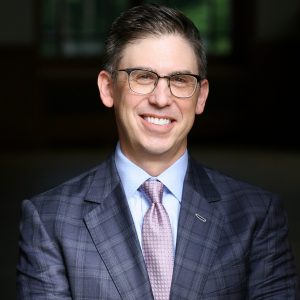
 Rabbi Jonathan E. Blake
One thought on “The Pharaoh Within: Yom Kippur, 5786”