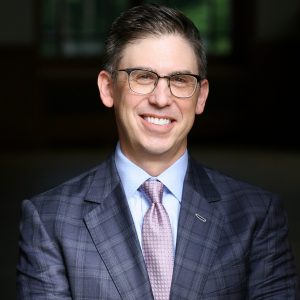

Sermon Delivered at Westchester Reform Temple, Scarsdale, New York, October 1, 2025
My senior year at Amherst College, I studied the Civil War with Professor David W. Blight, now a Yale historian whose biography Frederick Douglass: Prophet of Freedom won the 2019 Pulitzer Prize. This summer, I found his Civil War class online as a free podcast — a reminder that we live in an age in which the boundless annals of human knowledge are only a click away.
At the same time, objective truth is under siege. Feelings posture as facts. Armchair experts peddle opinions as axioms, amplified by our echo chambers. AI, capable of crunching vast arrays of data, can “hallucinate” plausible falsehoods and convincingly pose as a person posting inflammatory garbage online. Social media has produced a condition that philosopher Sam Harris likens to “mass psychosis.” On Instagram and TikTok, Hamas propaganda competes for eyeballs with makeup tutorials. It’s… a lot.
So I appreciated that Blight published a timely op-ed this spring, taking to task a recent executive order called “Restoring Truth and Sanity to American History,” in which he asserts:
“The order is nothing less than a declaration of political war on the historians’ profession, our training and integrity, as well as on the freedom — in the form of curious minds — of anyone who seeks to understand our country by visiting museums or historic sites.”
“Even if you agree with some of the executive order’s positions,” he adds, “do we want our cultural centers and repositories of America’s history to be subjected to a litmus test that requires history to be presented in the most positive terms?”
“Many Americans do care about the country’s past,” he notes; “they can handle the truth: conflicts, tragedies, redemptions and all. They actually prefer complexity to patriotic straitjackets.”1
I read this, and thought, “Well, can we? Do we?” And I recalled A Few Good Men (1992), in which Jack Nicholson’s Col. Jessep roars at Tom Cruise’s Lt. Kaffee one of the iconic lines in cinematic history: “You can’t handle the truth!”
So the title of my sermon this evening is: You Can’t Handle the Truth! (Or Can You?)
Now of course no political party has a monopoly on truth — or lies. Both sides have asked us to ignore our eyes and ears and brains, whether about our elected officials’ fitness for office, the origins of Covid, or our nation’s fraught history with indigenous peoples, slavery, civil rights, women’s rights, antisemitism, the LGBTQ community, immigrants… you know; it’s a long list. Truth should not be beholden to political agendas. Yet the assault on objective reality at this moment feels particularly fierce and consequential.
This, in and of itself, is nothing new — surely we are not the first generation to have reason not to believe everything the government tells us. Consider the German-Jewish scholar Hannah Arendt, one of the most influential political theorists of the twentieth century. Imprisoned by the Gestapo in 1933 for researching antisemitism, it is she who observed that “The chances of factual truth surviving the onslaught of power are very slim indeed.” In her landmark opus The Origins of Totalitarianism from 1951, Arendt asserted that authoritarian regimes thrive when “the distinction between fact and fiction, true and false, no longer exists.” She warned not only about a regime’s assault on truth, but also about the public unwittingly going along, gradually becoming unable to tell truth from lies. Sound familiar?
I believe civilization’s future hinges on whether we pursue truth with rigor. So tonight, I ask not how politicians should act, but how we should respond — as Jews.
Maimonides said: ושמע האמת ממי שאמרה, “Accept Truth from whatever source it comes,” a remark made in order to substantiate his appeal not only to traditional Jewish wisdom but also to philosophy and science.2 (Recall that Maimonides, who lived more than 800 years ago, was not only a rabbi but also a doctor, a fact that must have made his mother kvell.)
When religion and science clash, he taught, it’s our understanding of religion that needs updating — not empirical truth. For him, pursuing truth was the ultimate religious act, glimpsing God’s “Active Intellect,” the animating force of the Universe.
This echoes U’netaneh Tokef, the signature prayer of the High Holy Days, which twice invokes emet, truth, in its opening verse: “Your throne is established in truth. In truth, You are judge and plaintiff, counselor and witness.” Many musical settings play up the word emet, truth, to underscore its centrality to the text and to Jewish theology. (Fun fact: a few years back, a child born in our WRT family was given the name Emmet to honor the commanding way in which Cantor Stephen Merkel of blessed memory used to sing Emet in the U’netaneh Tokef.)
Emet affirms order and meaning even amidst life’s chaos. When a loved one dies, we say, בָּרוּךְ דַּיַּן הָאֱמֶת, “Blessed are You, Judge of Truth,” acknowledging death as part of God’s eternal plan. Death may just be the one true thing we know in this life.
The Talmud puts it this way: חוֹתָמוֹ שֶׁל הַקָּדוֹשׁ בָּרוּךְ הוּא אֱמֶת, “The seal of the Holy One is Emet – Truth.”3 Seeking truth is a way to draw nearer to God. It illuminates the Divine presence in the everyday workings of the world. God and Truth, Ultimate Reality, are indistinguishable from each other.
At the same time, the truth hurts, doesn’t it? A world in which everyone spoke the truth, the whole truth, and nothing but the truth, all the time, would be annoying at best, and — to tell the truth — unlivable. Judaism gets this. Sometimes, other values, good Jewish values, must take precedence. Lying to save a life (pikuach nefesh) is not only permitted but mandated. Tact — which is really just socially enforced lying — is almost always a good idea, especially when it will spare another person from embarrassment. Judaism considers humiliating another person tantamount to shedding blood.4 It’s traumatic, so liberties should be taken with the truth in order to avoid it.
Judaism even encourages a so-called “white lie” for the sake of marital and household harmony, what we call shalom bayit or “shalom in the home.”5 The social order depends to some degree on kicking truth out of the room, to make some room for compassion.
A midrash imagines the angels debating God’s decision to create humankind. They broke into factions, some saying: “Don’t do it!” and others saying, “Go for it!”
“You should totally create human beings for the sake of kindness and righteousness,” went one argument, “because they will be capable of such incredible compassion and nobility.” The other group countered, “For the sake of peace, and especially, if You care at all about truth, please, God, whatever you do, do not create people. They will mess everything up with their fighting and lies.”
So what did the Holy One do? God took truth and cast it to the ground, even over the objections of the angels who pointed out that “God’s very seal is truth.”6 (The angels were great at quoting Talmud.) Ever since, human beings have been amazing at a lot of things, but telling the truth, or hearing the truth, have not been foremost among them.
As for why God chose to exile truth, the Talmud never says.
Maybe because truth is our greatest struggle.
Can we handle the truth? Not so much.
Illusions about ourselves or our beliefs are comforting, difficult to give up. When confronted with hard truths, we cling to our security blankets, avoid the cold, hard facts, blame others. Combine this with the forces presently arrayed against truth — pervasive propaganda, algorithms curating everything we see and hear and read — and we risk a world in which any podcaster with a mic can sway millions with emotionally charged falsehoods.
The problem isn’t just the powerful; it’s us, if we don’t question everything we’re fed.
This isn’t abstract. Lives and livelihoods are at stake. As the planet heats up, there are lots of ways to formulate thoughtful policies that acknowledge the delicate balance among industry, environment, and economy. But denying the science will lead only to ignorant decisions. When conspiracy theorists with no medical training dismiss accepted science, the best of our intellectual capital will be alienated and bring their skills elsewhere. Even more, when scientific truth is denied or ignored, diseases will spread, and the vulnerable — children, the elderly, the poor — will suffer and die. My mom’s life was saved in 1955 by the polio vaccine, available just weeks before her diagnosis. For me — indeed, for all of us — this is personal, not political.
Judaism’s embrace of science and reason, unusual if not unique among the world’s faith traditions, further amplified by Reform Judaism’s founders, like Rabbi Abraham Geiger, is one of its greatest strengths. In 1836, Geiger criticized teaching biblical stories as fact, advocating for a “scientific” study of texts and critical reasoning over blind dogma.7 It is with Geiger as my inspiration that I have, throughout my rabbinate, tried to hold fast to this maxim: “Never teach children anything they will later have to unlearn.”
This relentless pursuit of truth must be restored, especially in academia, where truth — and Jews — sometimes feel exiled.
Many of you share a feeling that along with truth, we Jews have been, in a sense, cast out from the same venerated institutions that generations of American Jews held up as the pinnacle of merit and achievement.
Over the last year, as a proud alum, I’ve joined the recently formed Amherst Alumni Alliance Against Antisemitism (that’s five A’s if you’re counting). In what is either a bizarre coincidence or proof of God having a sense of humor, I am one of at least thirteen (!) practicing rabbis to have graduated from Amherst College, a fact that defies statistical probability. (I guess something must be in the water up there because Rabbi Platcow attended UMass just down the street and look what happened to her.)
Over the past year, I’ve enjoyed regular dialogue with the College President, the Alliance, my fellow alumni rabbis, and, best of all, a wonderful group of Jewish students making their way through the complicated post-October-7th landscape on campus, with whom I got to share a memorable Shabbat in March as the invited guest of Amherst Hillel.
That visit bolstered my hope in the next generation of Jewish learners and leaders. These students inspired me with their open-mindedness, their sense of belonging among the Jewish People, their love of Jewish tradition, their willingness to be “out and proud” as Zionists, and their probing thoughtfulness in negotiating the complexities of their Zionism while a brutal war in Gaza rages. If these students represent our future, even in part, we ought to devote our energies to strengthening their resolve and their opportunities to thrive on campus as Jews and Zionists, and not fall into panic or despair.
Thanks to the concerted efforts of concerned alumni, positive steps taken at Amherst include the Board rejecting divestment from Israel, adopting clearer protest policies, holding mandatory trainings and faculty workshops on antisemitism.
But challenges remain. Amherst has a small Jewish student body, few Jewish Studies faculty, and no Jewish Studies major. A course on the History of Israel has not been offered since 2016. Moreover, a narrative that pervasively frames Israel as a “settler-colonial state” can be found across curricula, including in my beloved English department. Truth emerges through repeated testing, skepticism, and refining ideas based on evidence. Without a robust exposure to viewpoint diversity, how can students test ideas to find truth?
Reviving “Truth, Justice, and the American Way” on our campuses shouldn’t involve government overreach or financial penalties that harm research and exploit antisemitism for partisan ends. Instead, alumni like us can hold our institutions accountable. We can interrogate curricula, support Jewish students, and demand rigorous debate. What I have learned from my experience over the last year is that any one of us who cares about what’s happening on the campuses where we once studied, or where our children and grandchildren presently attend, has the ability to get involved and insist that our academic institutions focus their mission on the pursuit of truth.
Can we handle the truth? Out there, truth is under relentless assault — in the halls of academia, where facts are twisted to fit the ideological agendas of the left; in the public square, where they are subjugated to the ideological agendas of the right; and, of course, online, where they are just twisted.
But the battle for truth begins not out there, but in here. On Yom Kippur, as we turn inward in teshuvah, we confront hard truths about ourselves — the flaws we’d rather not bring to light, the unspoken regrets, all the ways we’ve just missed the mark. No hiding. No excuses. Just the truth.
So many of life and literature’s great heroic figures pursued and learned the truth, even at great personal peril: Socrates, Galileo, Malala Yousafsai, Hester Prynne, Luke Skywalker, Elphaba.
So many tragic figures just couldn’t handle the truth, to their ultimate ruin: King Saul, King David, King Lear (it’s a lot of kings come to think of it); Javert, Madame Bovary, Michael Corleone.
And now it’s Yom Kippur. The day to face the truth. It’s in the unfiltered, unflinching, inward gaze that true growth begins, paving the way for repentance, renewal, and a heart made whole.
Then we can emerge with integrity made stronger, our deeds more aligned with our values, ready to carry the light of our truest selves into a new year and a world starving for honesty.
After all, we can’t really expect truth out there if we won’t face the truth in here.
When the angels saw that God, putting together all the pieces that would build a human being, had cast truth out, they protested. “You would undermine Your byword, Your very seal?!”
They begged God to take Truth back. They screamed into the cosmic void:
!תַּעֲלֶה אֱמֶת מִן הָאָרֶץ
Let truth rise up from the ground!
This year, let’s help our better angels make this prayer come true.
Let’s recommit to help truth rise up from the ground.
Let’s get off of social media and spend more time reading books.
Let’s have some good conversations with real people where we can respectfully debate well-considered ideas and maybe even concede that none of us has all the answers.
Let’s be more willing to hear the truth even when we don’t like the source.
Let’s look in the mirror and face what we see.
Let me leave you one of the truest things I know.
It comes from my considerable experience driving to Jewish cemeteries across the tri-state area:
When you get lost, there’s no shame in asking for directions.
O God of Truth, whose seal is truth, guide us in truth.
We have lost our way.
Help us find our way back home.
G’mar Chatimah Tovah
- “Trump Cannot Win His War on History,” New York Times, March 31, 2025. https://www.nytimes.com/2025/03/31/opinion/trump-war-history.html ↩︎
- Maimonides, Introduction to Shemonah Perakim (Eight Chapters).
↩︎ - Babylonian Talmud, Shabbat 55a. ↩︎
- “כׇּל הַמַּלְבִּין פְּנֵי חֲבֵירוֹ בָּרַבִּים, כְּאִילּוּ שׁוֹפֵךְ דָּמִים” – Babylonian Talmud, Bava Metzia 58b. ↩︎
- See Midrash Vayikra Rabbah 9:9 on Genesis 18:13. ↩︎
- Midrash Bereshit Rabbah 8:5, translated & adapted by J. Blake. ↩︎
- Abraham Geiger, “The Youthful Rebel,” published in Michael A. Meyer and W. Gunther Plaut, editors, The Reform Judaism Reader: North American Documents. New York: URJ Press, 2000, p. 7. ↩︎
 Rabbi Jonathan E. Blake