God’s in Charge: Parashat Chayei Sarah, 5786

Sermon Delivered at Greater Centennial A.M.E. Zion Church, Mount Vernon, New York

Sunday November 9th, 2025

The following joke was funny between 1976 and 1996 and only for a select audience, so you could say that this is very “inside baseball” but here goes.  

A man goes to his rabbi and says, “Rabbi, I don’t know what to do.  The first game of the World Series is next Tuesday and it’s the same night as Yom Kippur (the Jewish Day of Atonement).” 

The rabbi says, “Well, isn’t that why they invented the VCR?”

And the man says, “You can tape Yom Kippur??!”

Like I said – very inside baseball.  But, naturally, since the Dodgers’ big win last Sunday, baseball has been on my mind. Throughout the season and postseason, and even after the Series, I’ve heard a lot of talk about the so-called “inevitability” of the Dodgers winning.  Sportscasters and fans united around this theme of inevitability, which stems from the club’s star power (including Shohei Ohtani, Yoshinobu Yamamoto, Mookie Betts, and Freddie Freeman), its unmatched payroll (over $300 million!), and its back-to-back dominance after their 2024 title.  Despite a grueling back-and-forth seven-game tug of war, and a nailbiter finish, immediately the “i” word started coming up again.  A New York Post column by Joel Sherman cemented their status, opening with: “They were inevitable. Indomitable. And now indisputably historic” (November 2, 2025).

Inevitable comes from the Latin, meaning “unavoidable.”  Something is fated, predestined, meant to be.  In Yiddish we have a similar word, bashert — when an outcome is more than random chance but rather, inevitable.  Bashert is typically used to describe a person’s soulmate, life partner, the perfect match, the right one. You can refer to that special person as your bashert, your meant-to-be.  And the classic Bible story illustrating bashert is found in the reading from Genesis that Jewish communities all over the world are studying this week.  

In Genesis Chapter 24, Abraham sends his trusted household servant, Eliezer, in search of a wife for his son Isaac, who apparently cannot be trusted to find a wife on his own.  Abraham, like many an anxious Jewish parent, can’t stand thinking about his beloved son spending his poor life alone, so he needs to get him “all boo’d up” and commissions Eliezer to find Isaac’s bashert.  

But how to find just the right one?  The servant travels off to Abraham’s native land and pleads for God to get involved:  “O Lord,” he prays, “God of my master Abraham, grant me good fortune this day, and deal graciously with my master Abraham.  Here I stand by the well, as the daughters of the townspeople come out to draw water.  Let the maiden to whom I say, ‘Please, lower your jar that I may drink,’ and who replies, ‘Drink, and I will also water your camels’—let her be the one whom You have decreed for Your servant Isaac. Thereby shall I know that You have dealt graciously with my master” (Gen. 24:12-14).

Eliezer knows he has spotted the right one NOT when he meets the hottest girl in all the land, or the richest, but rather when Rebekah emerges at the well and sees a tired stranger and his thirsty flock, and stops to give them drink, camels and all.  Do you know how long it takes to water an entire flock of camels?  Did you know that a single camel can store enough water to survive for six or seven months in the Sahara desert without drinking?  But I digress.  

What identifies Rebekah as the right one for Isaac is her kindness, her generosity, her inner beauty: her compassion, patience, and strength of character.  Eliezer takes her back to Canaan to meet her groom.  When Isaac sees her, he is floored, because she is also hot.  But honestly, Rebekah’s qualities, inner and outer, matter less than the fact that God has preordained her to be Isaac’s bashert.  Even her father, Laban, sees it plain as day:  “The matter has been decreed by the Lord,” he admits; “we have nothing good or bad to say about it” (Gen. 24:50).  

When I studied this passage in seminary, our professor of classical Bible commentary, Rabbi Dr. Ed Goldman, would ask us rabbis-in-training:  “And what does this story show us?”  Like generations of rabbinical students before us, we had heard his answer so many times that we could respond in unison:  “The inevitable, inexorable, unfolding of the Divine Will.”  

Put another way:  we human beings like to think we’re in charge, but make no mistake: God’s in charge.  “The inevitable, inexorable unfolding of the Divine Will.”  Inevitable — it’s unavoidable.  And “inexorable” — also from the Latin, meaning, “it can’t be prayed or swayed away.”  “Thy will be done.”  If God wants something done, it’s gonna get done.  God’s in charge.

Dr. Goldman saw this theme all over the Book of Genesis and in fact called it the theme of the Bible itself.  The creation of the world?  The inevitable, inexorable unfolding of the Divine Will.  Adam and Eve eating the fruit, getting kicked out of the Garden, and starting the journey of humanity on the wrong side of Eden?  The inevitable, inexorable unfolding of the Divine Will.  Jacob dreaming a ladder connecting Earth and Heaven?  The inevitable, inexorable unfolding of the Divine Will.  Joseph interpreting Pharaoh’s dreams and freeing himself from the prison-house?  The inevitable, inexorable unfolding of the Divine Will.  A band of Israelite slaves escaping Pharaoh’s tyranny?  Not prayer, not good planning, not even Moses’s clarion leadership but–say it with me–The inevitable, inexorable unfolding of the Divine Will.  

I have to admit that the older I get, the more I find affirming that, despite all our human toil and travail, at the end of the day, God’s in charge, and what God has in store for us, no human being can hinder.  The great masters all arrived at this same conclusion:

  • Isaiah 14:27: “For the LORD Almighty has purposed, and who can thwart God? God’s hand is stretched out, and who can turn it back?”
  • Proverbs 19:21: “Many are the plans in a person’s heart, but it is the Lord’s purpose that prevails.”
  • Job 42:2: “I know that You can do all things; no purpose of Yours can be thwarted.”

God’s in charge! 

Many years ago I was summoned to the hospital bed of a beloved member of my congregation for the recitation of Vidui, the traditional deathbed confessional, the Jewish version of “last rites.”  I took Don’s hand and we prayed:

“I acknowledge before You, Lord my God and God of my ancestors, that my recovery and my death are in Your hands. May it be Your will that You heal me with total recovery, but, if I die, may my death be an atonement for all the errors, iniquities, and willful sins that I have committed…”

And so on like that, until Don shut his eyes and his breathing became very slow.  I embraced his grieving family and said, “I’m going to part company now, but you can call me when he passes and we’ll prepare for what comes next.”  

The next morning the phone rang.  It was Don.  “Still here, Rabbi,” he said.  He would go on to enjoy another five good years.  The inevitable, inexorable, unfolding of the Divine Will.  God’s in charge.  

It’s useful wisdom to keep handy these days after Election Day, through all the storm and stress we have made of our current political situation, and the seemingly endless array of flawed leaders we have entrusted with tremendous authority.  It’s useful, when voters elect the person we fear or detest, to remind ourselves: Elected officials come and go; even kings and queens are made of flesh and blood; but God’s in charge.

It’s especially useful wisdom to keep handy when things don’t go our way.  Rabbi Jonathan Slater, a great teacher of Jewish wisdom and spirituality who lives here in Westchester, taught me that when things don’t go our way, the best we can do is say: “That was unexpected! I wonder what will happen next?”  And get ready to move forward on whatever path God has set for us.

Now I could end here and you would say:  “That was unexpected!  I wonder what will happen next?”  But bear with me.  There’s one more thought coming.  Because even in a world where God’s in charge, we human beings still have a lot of work to do, and our actions really do matter.  

Almost two thousand years ago, the earliest Rabbis recognized this paradox of our existence.  They put it this way:   

Everything is foreseen, yet freedom of choice is granted.  

And they added:  The world is judged with goodness.  And everything is in accordance with the bulk of [one’s] deeds (Pirkei Avot, 3:15).

In other words, God’s in charge… but God needs us to take charge, too.  Human beings were brought into this world not randomly, not to suffer the “slings and arrows of outrageous fortune,” as Shakespeare’s Hamlet put it (Hamlet, III:1), but rather, to make a difference.  

Given that so much of life attests to the “inevitable, inexorable unfolding of the Divine Will,” we still have choices about how to respond, and our choices matter.  

When bad things happen in our lives, we often ask, “Why?” “Why is this happening to me?” when instead we could ask, “Now what?  Now what must I do?  Who  must I become?” “How would God wish for me to show up, given what has happened?” 

It is true: much of life is inevitable–unavoidable; inexorable–cannot be prayed away.  But life is about more than just what happens to us; it is also about what we choose to make happen in our lives and in a world that desperately needs more good deeds, more love, more compassion and more justice.

So back to the Dodgers.  Was their big win inevitable?  Listen to what sports writer Hannah Keyser had to say:

“Ultimately, the series crowned a credible champ not just because the Dodgers were favored for months, but because, in the end, they had to scratch and claw their way to the top. Just because their victory was projected doesn’t mean it was easy or predictable (The Guardian, November 2nd, 2025, emphasis added).”

The last word goes to an old saying.  No one knows who first said it; it may have been a Catholic Saint because it ended up in the Catechism; but you can also find it in the Reform Jewish prayer book. 

Remember these words well, and may God bless us as we strive to join righteously and joyfully in the inevitable, inexorable unfolding the Divine Will:

Pray as though everything depended on God.

Act as though everything depended on you.

Amen.

To Sign or Not to Sign? That is NOT the question

Reflections on Parashat Lech-Lecha

Shared with the Board of Trustees of Westchester Reform Temple, October 28, 2025 | 7 Cheshvan 5786

The signature text about B’rit or Covenant in the Jewish tradition is found in Genesis 17, from this week’s parasha, Lech-Lecha. The verses I’ve extracted make clear the bilateral nature of covenant: God promises Abraham and Sarah that they will give rise to a great nation, in the land promised to them and their descendants. As partners in the covenant, Abraham and his household are made to swear loyalty and to mark a sign of the covenant in their flesh — the “Covenant of Circumcision” or B’rit Milah, as we call it (“B’ris” in Ashkenazi common parlance). In order to be effective, a covenant must be mutual, bilateral: I do for you; you do for me. 

I wanted to spend a few minutes tonight speaking about the B’rit, the Covenant, that Rabbis and Cantors make with the Jewish community and vice-versa.  We see ourselves, and we hope you see us, as more than just employees.  We are bound by covenant with our congregations, a covenant that goes beyond the terms written in a contract.  Indeed, our sense of covenant, as Jewish clergy, extends even beyond the individual organizations that we may serve, binding us in service to the entire Jewish People and to humanity — to serve as teachers, guides, and ambassadors of Jewish teachings and Jewish values.  

That is our covenantal obligation to you, as Jewish clergy.  And you have covenantal obligations too, which include to join one another and to be present in community, to live out the fullest and most dimensional meaning of a Jewish life — in keeping with the mission of our synagogue and the values of our sacred Jewish tradition. 

When we conceive of our roles as a covenantal mutuality, it can truly be a beautiful thing.  Clergy will feel bonded to their communities in ways that far transcend the terms of a contract.  And communities will, God willing, come to know and cherish their clergy as more than transactional functionaries of Jewish life.  

All of us clergy feel so blessed to experience our service to the congregation of WRT as a covenant.  

Which is why all of us are so concerned about what we’re seeing happening right now in the wider Jewish community.  Please know: this Board has been exemplary in managing this moment; but others in our community are in need of a “covenantal course-correction.”

To wit: a lot of chat, some of it polite, much of it rude and hysterical, is being devoted (chiefly online, but also in person), to the subject of a certain letter signed by over 1,000 Jewish clergy, calling attention to concerns over political anti-Zionism and naming politicians such as Zohran Mamdani for consistently trafficking in anti-Zionist rhetoric in ways that make many Jews, in New York and beyond, feel concerned, and yes, unsafe.  

These concerns are shared by all the clergy of this congregation.  But let me be clear:  Rabbis and Cantors had plenty of compelling reasons to sign that public letter, and rabbis and cantors had plenty of compelling reasons not to sign that letter.  

Reasons for signing emerge from an intention to alert the Jewish community and the wider world to the danger of normalizing anti-Zionism in American political life.  Reasons for not signing may include: restrictions imposed on the Rabbi or Cantor by a synagogue Board, or longstanding community norms that discourage clergy from endorsing or disqualifying political candidates.  Notice that it is entirely possible not to support Zohran Mamdani and his execrable rhetoric, and still conclude that it’d be best not to sign a public letter.  Clergy are painfully aware that, in 2025, a signature on a public letter may follow a rabbi or cantor around for the rest of one’s career.  Other clergy may vehemently disagree with Mamdani but, especially if living and working in New York City, may want or need to engage with him and his administration if he wins the election, and would prefer to enter such dialogue with as clean a slate as possible.  Demonizing those who chose not to sign is both unwise and unhelpful.  And frankly, it’s un-Jewish.  We can’t cancel each other.  We need to work together. And we need to remind ourselves, as was memorably said to me recently, that “gossip is not activism.” 

Most of all, the energy presently being devoted to canceling Jewish leaders who thoughtfully elected not to sign a letter saddens me, because it suggests that the clergy-community relationship is built on a shaky foundation, one not rooted in a sturdy covenantal understanding.

I implore us as leaders of this Jewish community to stand up for our sacred Clergy-Congregation Covenant, and to push back on those who wish to define one’s rabbi or one’s cantor entirely by this one issue. Please consider the full breadth and depth of discourse and viewpoints shared in public by your clergy before judging us with absolutes like “strong” or “weak,” “morally courageous” or “morally bankrupt.”   We need each other — rabbis, cantors, and communities — in order to live this covenantal tradition together with shalom, with mutually beneficial collaboration, and, above all, with joy.

Thank you

How We Get Across: Pesach 5785

Sermon for Shabbat / Chag Pesach (Day 7), 5785, Friday April 18, 2025

Delivered at Westchester Reform Temple, Scarsdale, New York

In life as in literature, crossing a body of water often heralds a moment of transformation.  

The Greeks whispered of the River Styx that formed the boundary between Earth and the Underworld, where the ghostly ferryman Charon would transport the souls of the dead on their voyage to the hereafter.  

In 49 BCE, Julius Caesar and his army crossed the Rubicon, a shallow river in Northeastern Italy that protected Rome from Civil War.  His crossing was considered an act of insurrection.  There he declared, alea iacta est:  “The die is cast.”

We remember George Washington crossing the frozen Delaware the night after Christmas, 1776, in his surprise attack on Hessian forces in Trenton, New Jersey.

The runaway slave Eliza crosses the frozen Ohio River at the heart of Uncle Tom’s Cabin.  In Harriet Beecher Stowe’s own verse:

So over the roaring rushing flood,

From block to block she sprang,

And ever her cry for God’s good help

Above the waters rang.

And God did hear that mother’s cry,

For never an ice-block sank;

While the cruel trader and his men

Stood wondering on the bank.

A good man saw on the further side,

And gave her his helping hand;

So poor Eliza, with her boy,

Stood safe upon the land.

All of us Jewish Americans find a water crossing at the heart of our family’s story, whether in persecuted flight across the Atlantic or as pioneers or entrepreneurs; the huddled and the hopeful.

And of course water crossings figure prominently in the Hebrew Bible:  Noah’s ark-bound journey from a world doomed to a world reborn; Jonah’s aborted flight across the Mediterranean to escape the prophet’s call; Joshua’s triumphal march across the Jordan River, carrying the Ark of the Covenant.  The Bible even tells us that before he started making house calls at Passover, Elijah’s final earthly act was to roll up his cloak and touch the waters of the Jordan River with it; the waters divide to the right and the left and Elijah crosses over on dry ground, together with his apprentice Elisha (cf. II Kings 2:11-15).

This last scene, of course, echoes the greatest water crossing of them all, in the Bible and indeed in all of literature: the Torah reading for this seventh day of Pesach, the crossing of the Red Sea.  A moment of transformation: entering the water as slaves, the people emerge free men and women on the other shore.  

Of course, they had no choice, no way to retreat.  With the Egyptian army in hot pursuit, the Israelites arrive at the water’s edge.  Then, the Torah tells us, the Divine pillar of cloud and fire positioned itself behind the Israelites, in front of the Egyptians, forming a barrier that prevented the Egyptians from moving forward.  But it also presumably prevented the Israelites from moving backward (Cf. Ex. 14:19-20).

Here, the famous midrash inserts brave Nachshon ben Amminadav, who entered the Sea unbidden (Mechilta d’Rabbi Yishmael, 14:22).  The waters reach his ankles; the Sea continues to rage.  He goes in up to his knees, his waist, his chest… the Sea closing in over him.  Only when the water reaches his nostrils does the Red Sea part and our people enter on dry land.  Presumably the Rabbis who wrote this legend wanted to instill a lesson of faith, faith in the face of an insuperable obstacle, but I say Nachshon had no choice:  with fire and cloud and an army behind him and nothing but open Sea ahead of him, where could he turn?  I am reminded in an uncomfortable way of those terrible images of the World Trade Center jumpers on 9/11, those helpless victims, with cloud and fire billowing behind them and nothing but the open blue of sky in front of them.

Life hands us experiences over which we have no choice.  Time moves in only one direction and we must walk forward, sometimes into a Sea of grief and sadness.  And I do not know why it is so, but there are years in our life that take more than they give, so that over time each of us becomes threaded into a common web of human experience, the kinship of bereavement, the universal society of every generation that must lay to rest the people we love.

I have walked alongside many—maybe even you and your family—in that Sea of grief and I always emerge with cause to marvel at the faith to keep moving forward, whether by choice or consequence.  And I do not know why it is so, but instead of drowning in tears I have always found that just the courage to enter the Sea causes the waters to part a little bit, that by going through the process of bereavement, an encounter with death becomes a little bit easier to bear.  

Jewish tradition recognizes that human grieving passes through stages and therefore our reckoning with it must also take the form of a journey of stages.  Even before a person enters shiva, one is called Onen, a state in which one remains from the time of death until the time of burial when shiva properly begins.  

Rabbi Maurice Lamm whose book The Jewish Way in Death and Mourning provides the definitive writing on the subject, observes: 

The onen is a person in deep distress, a person yanked out of normal life and abruptly catapulted into the midst of inexpressible grief. He is disoriented, his attitudes are disarranged, his emotions out of gear. The shock of death paralyzes his consciousness and blocks out all regular patterns of orderly thinking. ‘The deceased lies before him,’ as the sages said and, psychologically, he is reliving the moment of death every instant during this period.”

The Onen is like Nachshon before entering the Sea, trembling on the water’s edge.  

But then the ritual begins:  the family is gathered; a rabbi or cantor or caring officiant summoned; the funeral arranged, the loved one’s story told, the act of k’riah performed, tearing a black ribbon or piece of clothing so that grief finds its way from inside the heart to outside the breast, a badge of love and loss, of honor and hope.  

Sometimes when I walk with a bereaved family down the long aisle of our sanctuary, a sea of mourners and friends on either side, I think of the Israelites marching through the Red Sea and I feel comforted.  It happens again, when leaving the grave, custom invites those gathered there to form two rows in order to allow the mourning family to pass between them and feel their shelter and support.  How like the Israelites passing through the Sea, I sometimes think, and what a necessary miracle of faith to place one foot in front of the other, in that awful moment of leaving a loved one to rest.  

Oftentimes in the rituals of bereavement I share words of the 23rd Psalm, as we will in tomorrow morning’s Yizkor service.  Even before the famous line, “The Lord is my Shepherd,” we read a little epigram:  “Mizmor L’David:  A Psalm of David.”  According to Jewish tradition, the Psalm was written by King David.

My friend Rabbi Les Gutterman has observed that “kings, now as then, have many privileges and prerogatives.  One they have never enjoyed is exemption from sorrow.  Death has a passkey into every home in the community including the royal palace.”  King David buried his son Absalom.  “Thus he says, ‘Yea, though I walk through the valley of the shadow of death.’  One must walk through that valley.  We cannot run.  Bereavement sometimes comes quickly.  Healing is always a slow process.”  Shakespeare said it well:  “What wound did ever did heal but by degrees?” (Othello, II:iii).

Like the Nachshon and the Sea, the Psalmist cannot escape the Valley of the Shadow. It has an entrance no one can avoid.  The only way across the Valley, the only way across the Sea, is through.  And on the other side, we emerge transformed.  We discover that love does not die; people do; and that our loved ones may leave our world but in so many ways they never leave us, for we have been changed by them; and who we are—the way we think, the way we talk, the way we act, the way we move through the world—integrates the memories, the gifts, the holiness and the love that our dear ones gave to us.  And that is why we have Yizkor, not only to remind ourselves not only of how our loved ones lived, but also to acknowledge and even celebrate how we have been transformed by their lives.

When the Israelites came to the Sea, the guiding presence of God’s pillar of cloud and fire retreated from in front of them, to behind them, leaving nothing but the Sea before them.  

Rather than as an abandonment from on high, it is possible to understand this maneuver as a tender demonstration of God’s love.  I think the Torah wants us to know that God had their backs, as it were.  The only way across was through.  They walked into the Sea—a Promised Land before them, God’s gentle presence behind them.  

So May our Shepherd in dark valleys transform our cherished memories into sources of healing and lasting blessing.   Amen.

CALVES TO THE LEFT OF ME, HEIFERS TO THE RIGHT

Sermon for SHABBAT KI TISA / SHUSHAN PURIM 5785 – Friday, March 14, 2025

Westchester Reform Temple, Scarsdale, New York

The old Purim custom of drowning out the name of Haman comes to mind as I speak to you this evening about Mahmoud Khalil, the recent Columbia University graduate and protest-movement leader whose name has dominated the press, especially the Jewish press, over the last week.  

As with Haman, I wish I could have stamped out the name Mahmoud Khalil, denied him media attention, prevented him from becoming a cause celebre, deprived his admirers a martyr to lionize, but rabbis do not get to choose the headlines any more than we get to choose parashat ha-shavua, the Torah portion of the week, so let’s consider ours for a moment and then return to the curious case of Mr. Khallil.

The portion Ki Tisa frames the most ignominious episode in the story of the Israelite people:  their dalliance with idolatry in the form of a golden calf.  Moses has disappeared up Mount Sinai while God inscribes for him the Law on two tablets of stone.  As days wear on into weeks, the people at the foot of the mountain grow anxious and restless and press Moses’s surrogate, his brother Aaron, saying:

ק֣וּם ׀ עֲשֵׂה־לָ֣נוּ אֱלֹהִ֗ים אֲשֶׁ֤ר יֵֽלְכוּ֙ לְפָנֵ֔ינוּ כִּי־זֶ֣ה ׀ מֹשֶׁ֣ה הָאִ֗ישׁ אֲשֶׁ֤ר הֶֽעֱלָ֙נוּ֙ מֵאֶ֣רֶץ מִצְרַ֔יִם לֹ֥א יָדַ֖עְנוּ מֶה־הָ֥יָה לֽוֹ׃

“Get up and make us a god who will go before us, for this man, Moses, who brought us out of Egypt—we do not know what has happened to him” (Ex. 32:1).

Aaron—disturbingly, without hesitation—complies.  The men cast off their gold and Aaron casts it into an icon well known in both Egyptian and Canaanite society—the bull or calf associated with power and fertility.  The people cavort around their sacred cow, offering sacrifices, feasting and dancing, and even exclaiming, 

… אֵ֤לֶּה אֱלֹהֶ֙יךָ֙ יִשְׂרָאֵ֔ל אֲשֶׁ֥ר הֶעֱל֖וּךָ מֵאֶ֥רֶץ מִצְרָֽיִם׃

“This is your god, O Israel, who brought you out of the land of Egypt!” (Ex. 32:4, cf. also 32:8).

Needless to say, things do not go well for these Israelites, and to this day the phrase “golden calf” can refer to any form of idolatry, overt or covert.  On this matter, I found the Encyclopedia Britannica’s entry on idolatry illuminating: “Gross, or overt, idolatry consists of explicit acts of reverence addressed to a person or an object—the sun, the king, an animal, a statue…. A person becomes guilty of a more subtle idolatry, however, when, although overt acts of adoration are avoided, he attaches to a creature [or any thing, or even an idea] the confidence, loyalty, and devotion that properly belong only to the Creator.”

Because we are human, we are all susceptible to these “more subtle” idolatries.  And in this era of bitter partisanship, I worry that we are especially susceptible to the fetishes of our respective political camps.  

On the left we have an idolatry that worships powerlessness and victimhood as virtues, that, in its most extreme expressions, justifies and even glorifies any act of terror, any rhetoric of violence, no matter how depraved, making the condemnable commendable—so long as it is espoused or perpetrated in the name of a group perceived to be “oppressed.”  

In this form of idolatry, recent headliners like Luigi Mangione, who stands accused of murdering a healthcare executive in cold blood, and Mahmoud Khalil, the protestor at the center of this week’s news, become golden calves—icons worshipped as gods, paragons of the right and the good.

Lest we pile on the left to the exclusion of other idolatries, let it be known that the right has its fair share of golden calves as well, including the fetishization of order and authority, of traditional notions of masculinity and strength, of so-called “traditional family values,” of racial purity and historical narratives that play fast and loose with the truth.  Take, for instance, the myth of the “Southern Gentleman” as a model of chivalry which of course obfuscates the brutal truth of slavery and the aims of the Confederacy, for starters.

It seems to me that the idolatries of both the left and the right have collided in the curious case of Mahmoud Khalil, leading me to conclude that both are wrong.  I have found company in an article by Yale Law professor Jed Rubenfeld, published this Wednesday by The Free Press.  It is called “Both Right and Left Are Wrong About Mahmoud Khalil,” followed by the subtitle, “Anyone who says the law is obvious here is not telling the truth.”

To recap the facts of the case as we know them:  Khalil, having recently graduated from Columbia University, played a leading role in the virulent anti-Israel protests there, acting as spokesperson and negotiator for a group called CUAD—Columbia University Apartheid Divest—which describes itself as “fighting for the total eradication of Western civilization,” and which, since October 7th, has mobilized the erection of the encampments and the takeover of several buildings on campus.  “Khalil was suspended from Columbia last April for his participation in the protests, but the school reversed his suspension the next day. Arrested on March 8, Khalil is currently being detained in Louisiana. On March 10, a federal judge in New York stayed his deportation pending a hearing.”

Rubenfeld continues:

The administration has not yet definitively stated its legal grounds for deporting Khalil, but a federal statute, the Immigration and Nationality Act, says that aliens—even those who, like Khalil, have green cards—can be deported if they “espouse or endorse terrorist activity.” It also permits deportation on the basis of an alien’s beliefs or statements if the Secretary of State determines that the alien’s continued presence here “would compromise a compelling United States foreign policy interest.”

The rest of the article is a difficult but rewarding read, and I commend it to you.  The thrust of the piece is that if Khalil were a US citizen, the matter would be more or less straightforward, as Rubenfeld makes clear:  “Political opinion, no matter how abhorrent, is protected speech in America.  Expressing support for even the sickest terrorist butchers, like Hamas, is protected speech.”  

“But,”—and this is critical—“he’s not a citizen. His green card makes him a lawful permanent resident, but he’s still an alien. Thus the real question is whether, or when, or to what extent aliens have the same constitutional rights as citizens. Unfortunately for both left and right,” Rubenfeld advises, “the answer is complicated.”

I’ve made the whole article available as a handout which you can take as you leave the sanctuary this evening.  The point I wish to emphasize is how our golden calves, our idolatries—our ideological sacred cows and shibboleths, amplified by the most extreme voices in our respective echo chambers—blind us from seeing “the truth, the whole truth, and nothing but the truth.”  

In the case of Khalil, loud voices on both the left and the right have adopted predictable positions in line with their ideological fixations.  The right, enamored with the perceived strength of the current administration in its standing up to antisemitic bullying, sees in Khalil a Jew-hating provocateur and terrorist sympathizer who is simply getting what he had coming to him.  

The left—not only reflexively sympathetic to the Palestinian cause, but also reflexively antagonistic to anything the current administration says or does—sees in Khalil an avatar of resistance to an administration that overreaches in silencing its opponents.  

Both camps are participating in the shared preoccupation du jour, what my friend Rabbi Jeff Salkin calls “aerobic offense” — working ourselves up into a frenzy over the latest outrage, day after day. Both have fallen into a seductive, whirling dance around their own camp’s ideological golden calf: the core beliefs that dominate each one’s echo chamber and which keep each camp from apprehending the whole truth.  

One of my favorite Jewish authors and public intellectuals, Jay Michaelson, responding to the fracas over Khalil, has this to add:

“On the Left, rushing to pull the fascist fire alarm every single time will lead to a boy-who-cried-wolf exhaustion on the one hand, and a flattening of anti-democratic offenses on the other.  On the Right, supporting the deportation of an unpopular (to the Right) individual is, to me self-evidently, extremely unwise and imprudent, not to mention anti-democratic and illiberal.”

Seeking truth, in all its messiness and complexity, is, I suppose, perennially unpopular, especially compared to the cheap satisfactions of “being right” or sticking it to one’s ideological opponents.  

Were either camp to distance themselves from the golden calves of their own dogmas, the left might take a moment to reflect that making a hero of a virulent antisemite who harassed and intimidated Jews on their own campus is bad, not just for the Jews but for all people; and the right would be wise to recognize that depriving anyone of due process—even a green-card holder—is bad news for every American, not only their ideological opponents.  Capital-T Truth encompasses both of these small-t truths.

And so, the Talmud affirms:  חוֹתָמוֹ שֶׁל הַקָּדוֹשׁ בָּרוּךְ הוּא ״אֱמֶת״ — “The seal of the Holy One is Truth” (Shabbat 55a). God’s essence, God’s name—so to speak—is Truth:  the ultimate and all-encompassing reality, which necessarily embraces ideological complexity and even contradiction.  

It may be easier to stay within our camps and dance around our golden calves.  We did it back then and do it today.  But the One whose seal is Truth summons us back to the mountain where true Torah is found.

Shabbat Shalom!

Israel Travelogue: Week of November 10-15, 2024

Monday, November 11th, 2024
10 Heshvan 5785
Veterans’ Day 

Dear WRT Family, 

On Kol Nidre I referred to Medieval Christian maps that would portray Jerusalem as Omphalos Mundi, “the navel of the world.” 

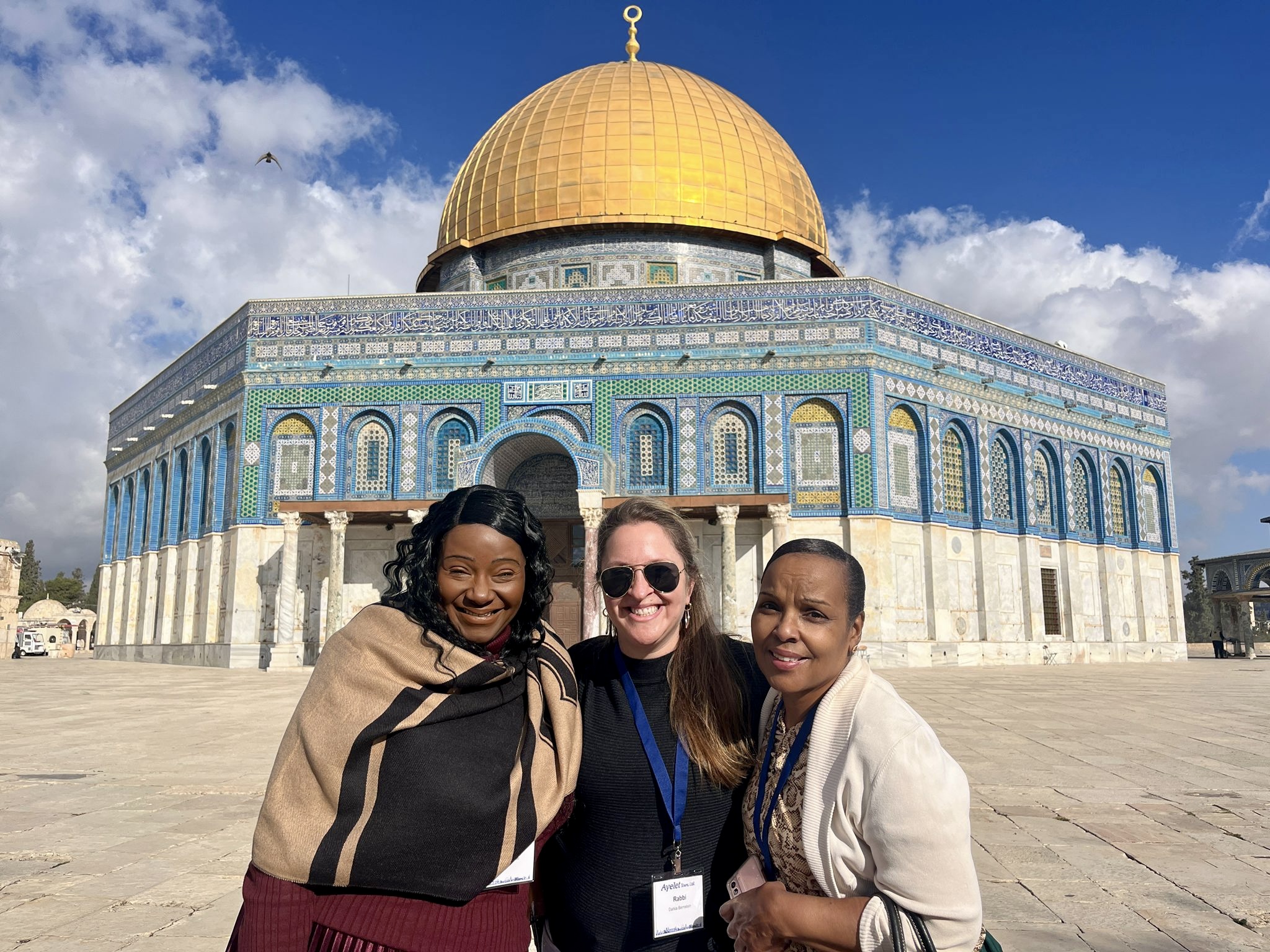
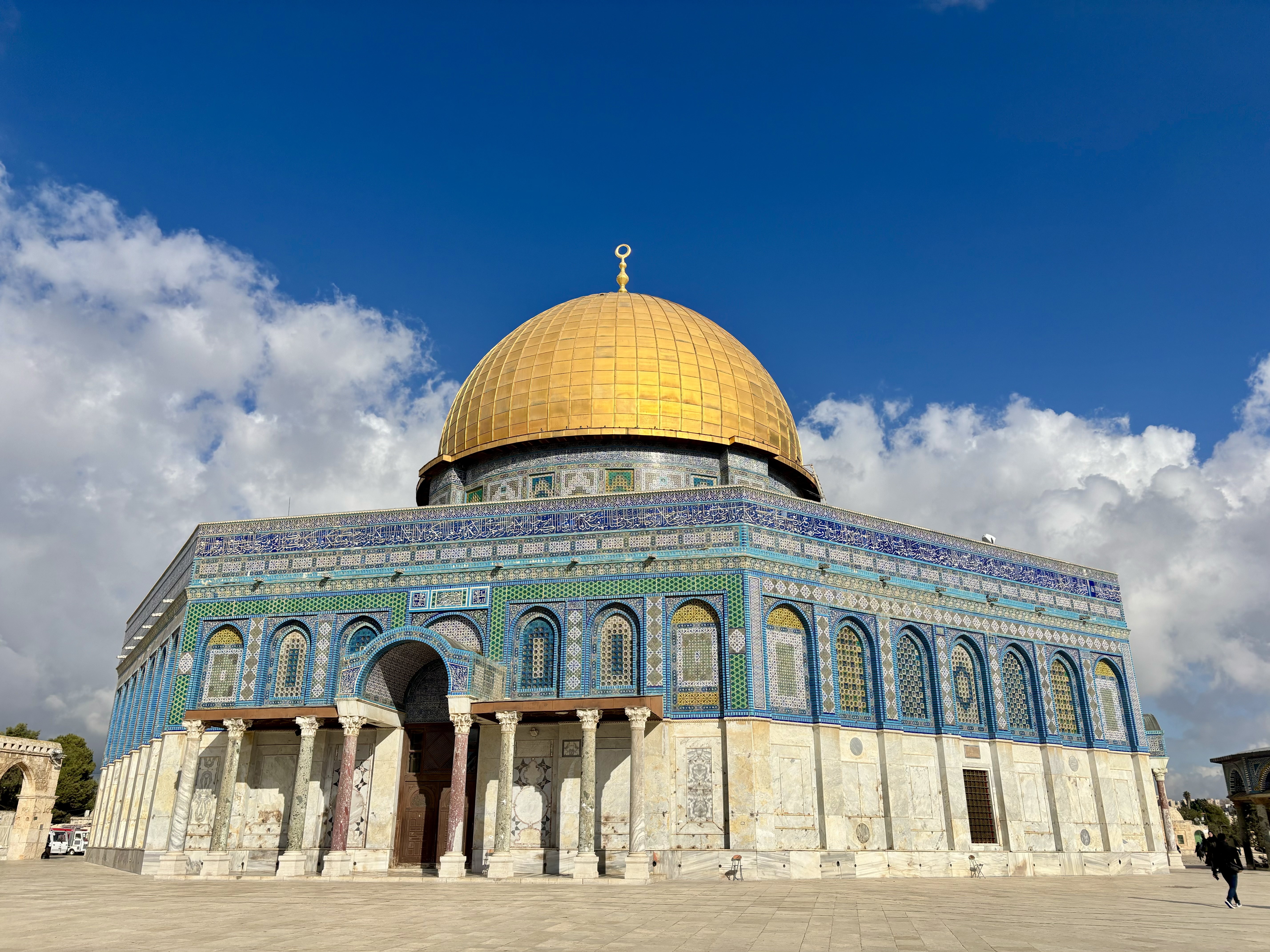
If so, The Temple Mount, with its Western Wall below—holiest shrine in Judaism—and Al Aqsa Mosque and Dome of the Rock above—holiest shrines in Israel for Muslims—is the “navel of Jerusalem.”
 
This morning our Westchester Jewish Council (WJC) Multi-Faith Clergy Delegation visited these holy sites—as tourists, but also as spiritual leaders who recognize that in today’s fractured world, there are still places that loom large and centrally in the imaginations of millions of people of faith, and which summon us to live for a noble purpose: to serve God and humankind. 

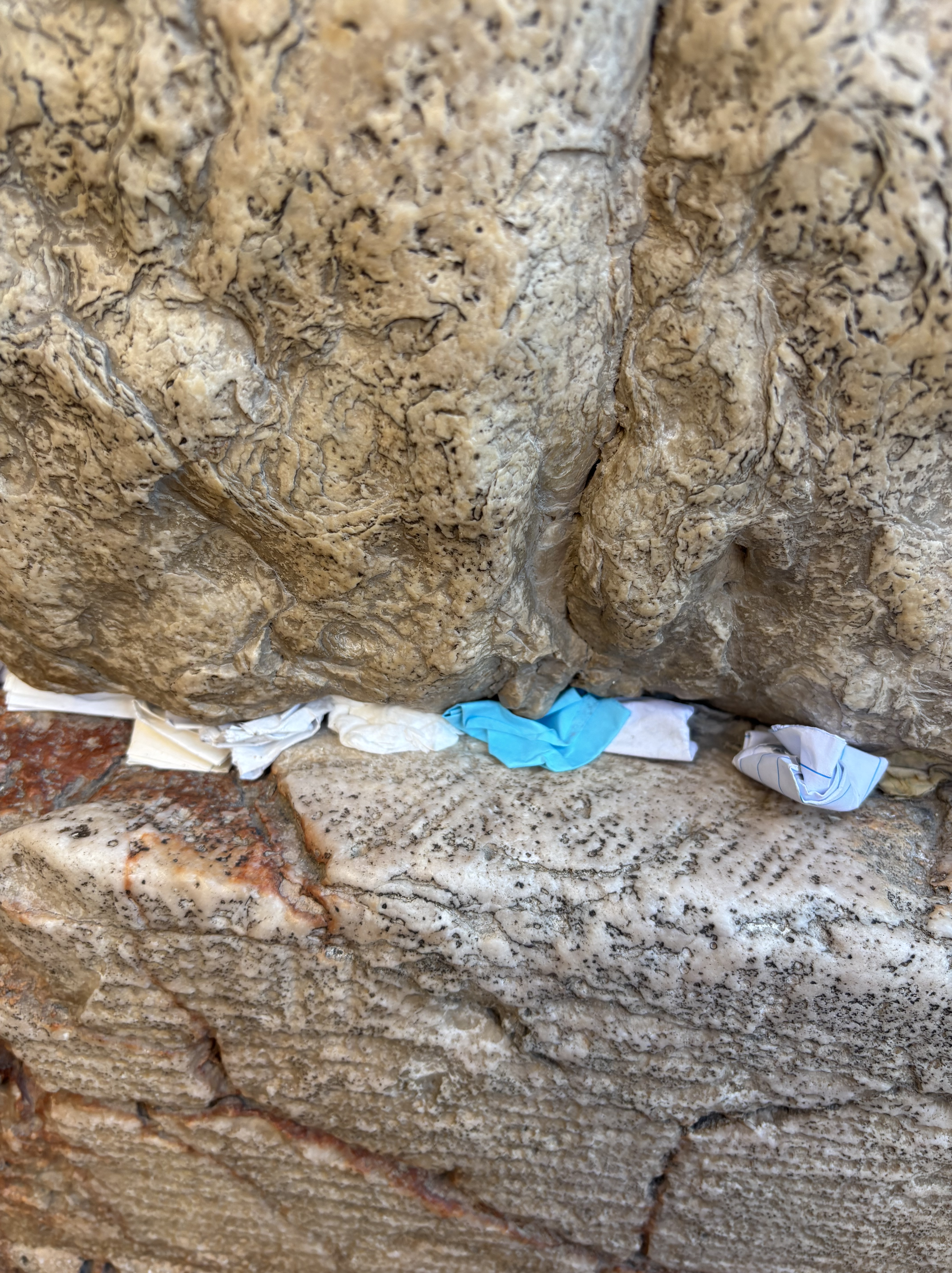
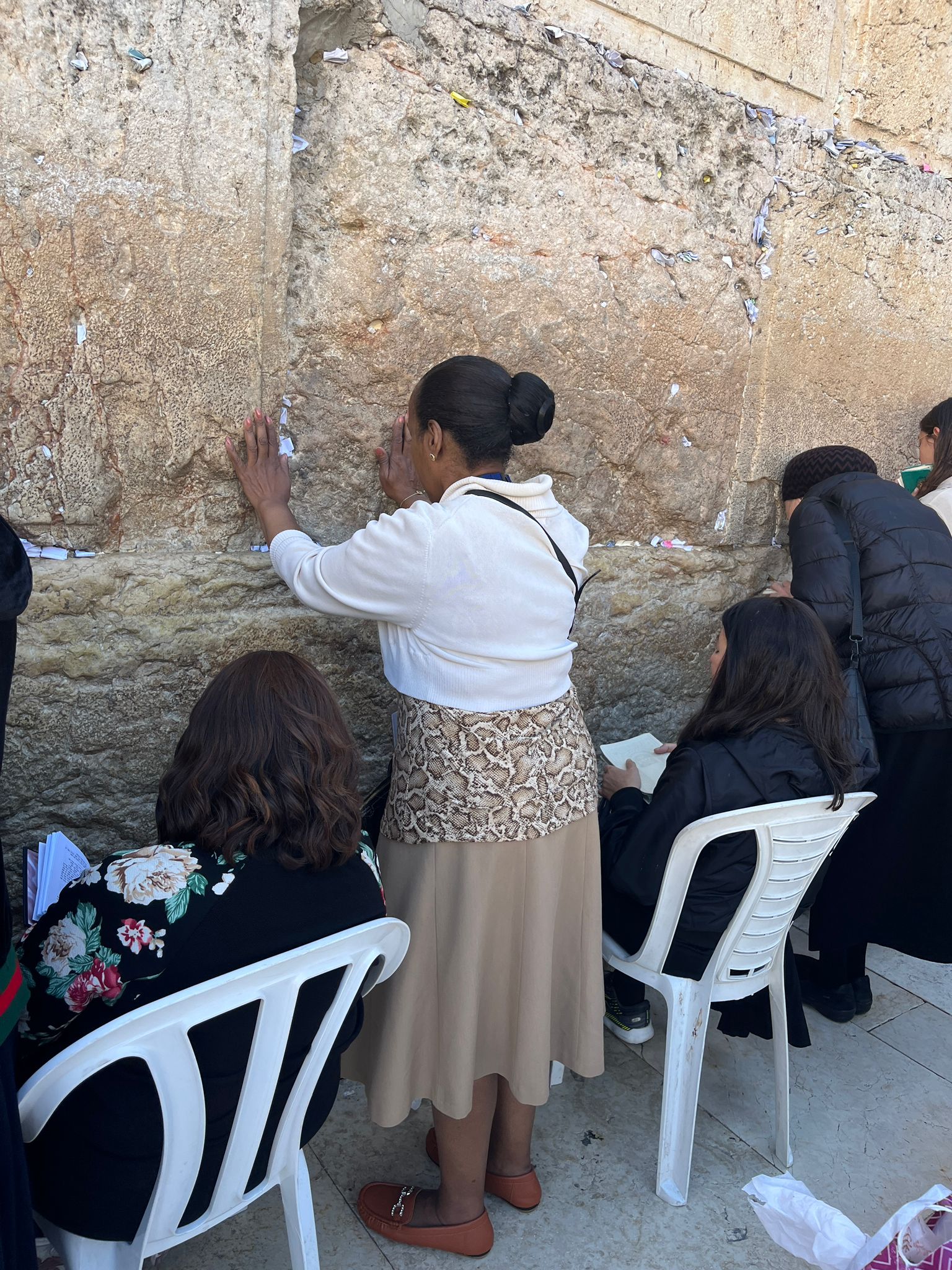
On this mount (Mount Moriah by name), Jewish tradition tells us Abraham bound his son Isaac. The passage can be found in this week’s Torah portion, Vayera (see Genesis Chapter 22). (Islamic tradition tells the same basic story but has Ibrahim (Abraham) nearly sacrificing Ismail (Ishmael).). I heard a Bar Mitzvah boy chanting this portion at the Kotel as I paused there to pray, followed by singing and dancing with his family on the nearby plaza. 

The same mythical location that inspires us to nobility, sacrificial service, and joyful observance of our traditions is also associated with acts of religious extremism and even violence. The holy site is often a flashpoint for religious tensions and provocations.
 
But this morning, Jerusalem is at peace, and we give thanks. May God continue to spread a shelter of peace over us, over Jerusalem, and over the hurting human family.

 
Tuesday, November 12th, 2024
11 Heshvan 5785

Dear WRT Family, 

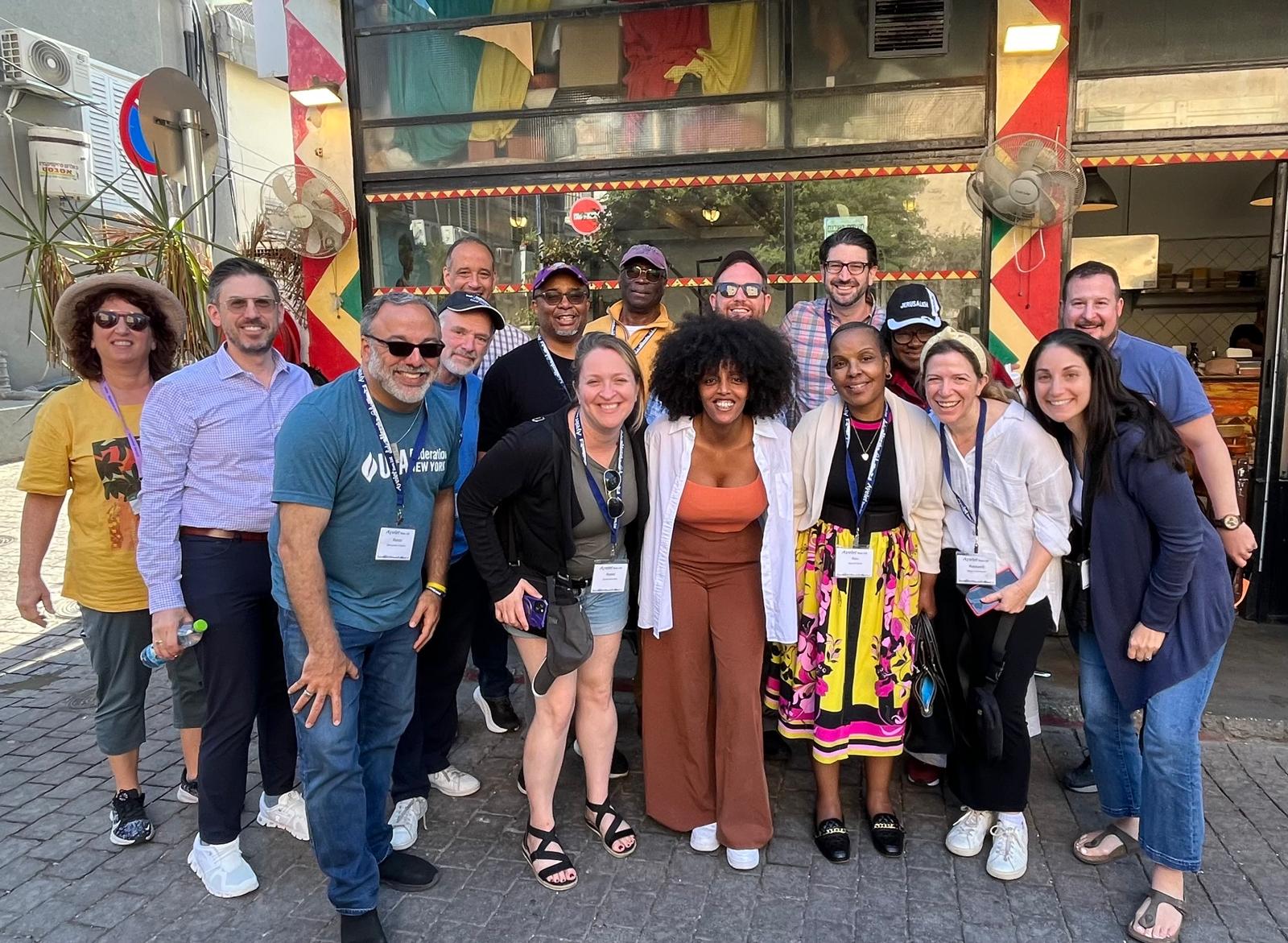
Today our Westchester Jewish Council (WJC) multi-faith delegation spent part of the morning at the Max Rayne Yad b’Yad (Hand in Hand) Jerusalem School, one of six bilingual, bi-cultural schools (elementary through high school) in Israel where Jewish and Palestinian-Arab Israelis learn together in Hebrew-Arabic classes with paired Arab and Jewish teachers, dual holiday observances, and a unique curriculum designed to foster dialogue and listening between disparate cultures and lived realities. 

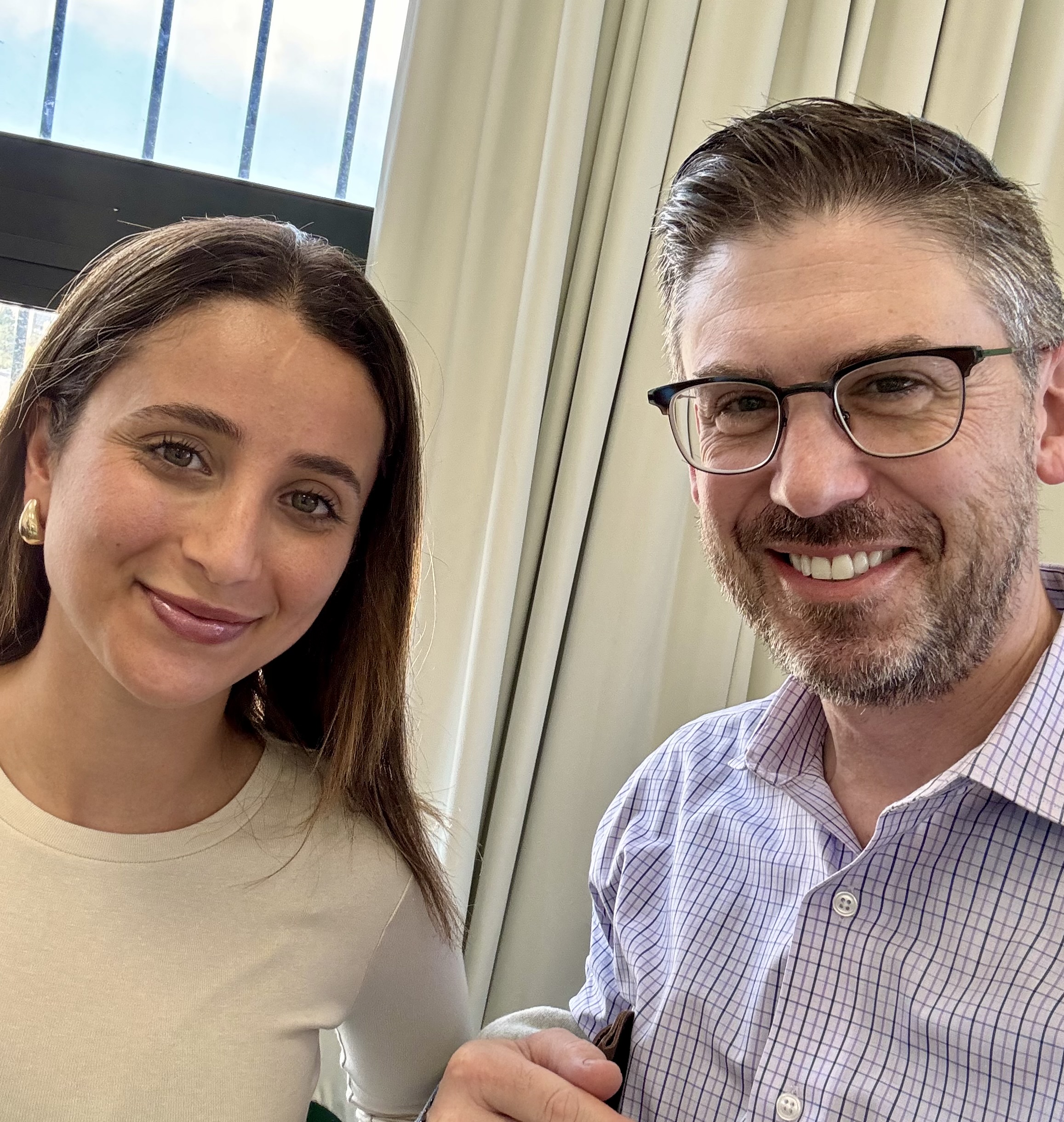
We met with Noor, who is a spokesperson for Yad b’Yad (pictured with our group, and with me), an Arab woman who grew up in Israel and who interacted with her first Jewish person at age 19. Asked about how the school, and especially the students, have responded to the horror of October 7th and the ensuing brutal war, Noor shared that the philosophy of Yad b’Yad is that through sustained, painful dialogue, what seems impossible can become possible. The hard work of building commonality across a chasm of difference begins with sharing personal and family stories and listening intentionally to another person’s pain.
 
Unfortunately, very few Israelis — Jewish or Arab — are exposed to this mixed-learning environment. The vast majority of Israelis attend separate schools for Jewish kids and Arab kids. And by high school, most of the Jewish kids transfer out, while Arab students remain at Yad b’Yad (largely because the quality of the academic program exceeds what is available to most Arab youth in Israel). 
Nevertheless, the families who began this bold project 26 years ago led from a vision of a different future for their children. As is written in this week’s Torah portion, “On the mountain of the Eternal, there is vision” (Genesis 22:14). They remind us that with vision, we can move from the way things are to the way they ought to be. Yad b’Yad offers a small glimmer of hope in the darkness. 

Wednesday, November 13th, 2024
12 Heshvan 5785

Dear WRT Family, 

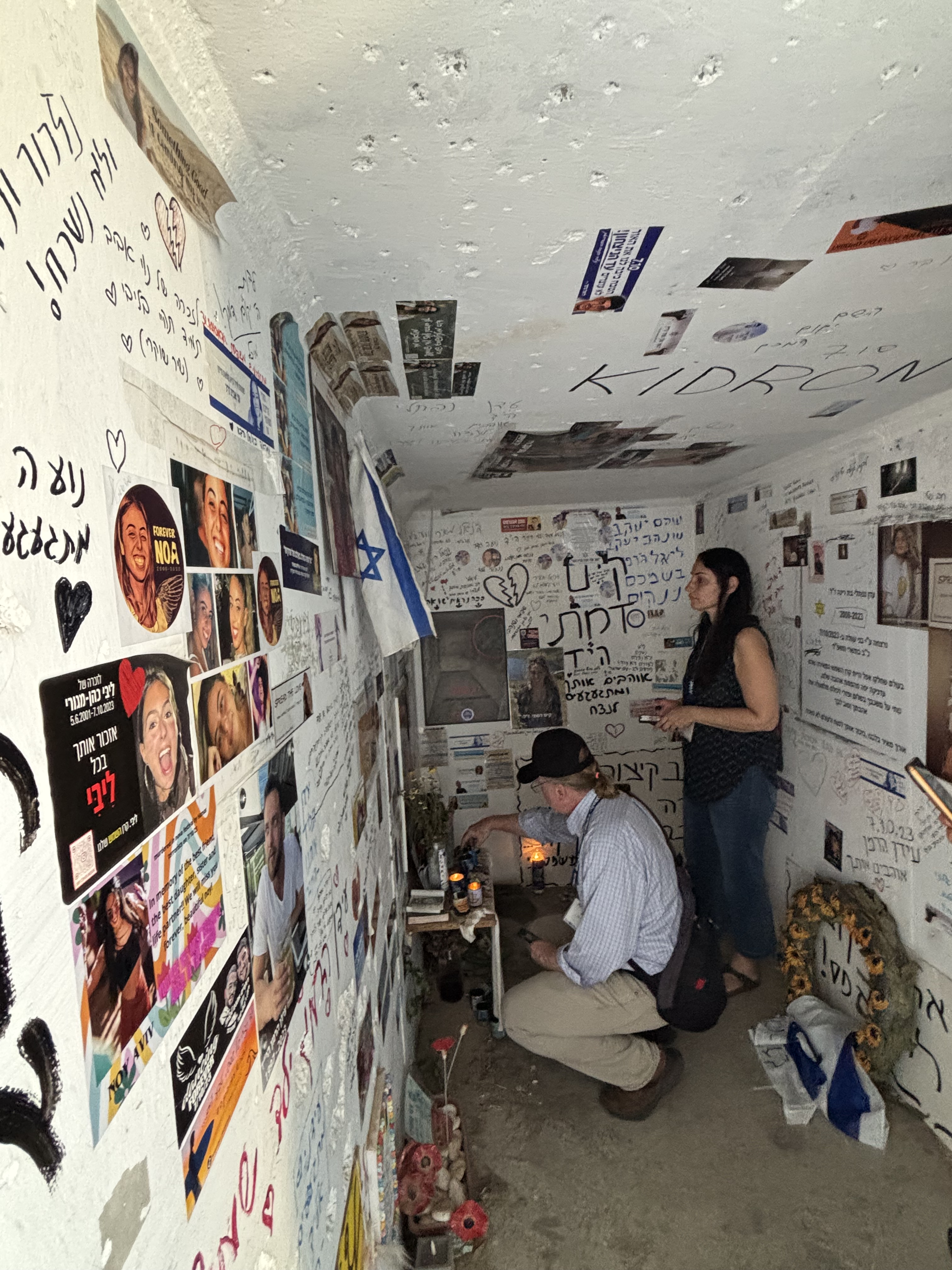
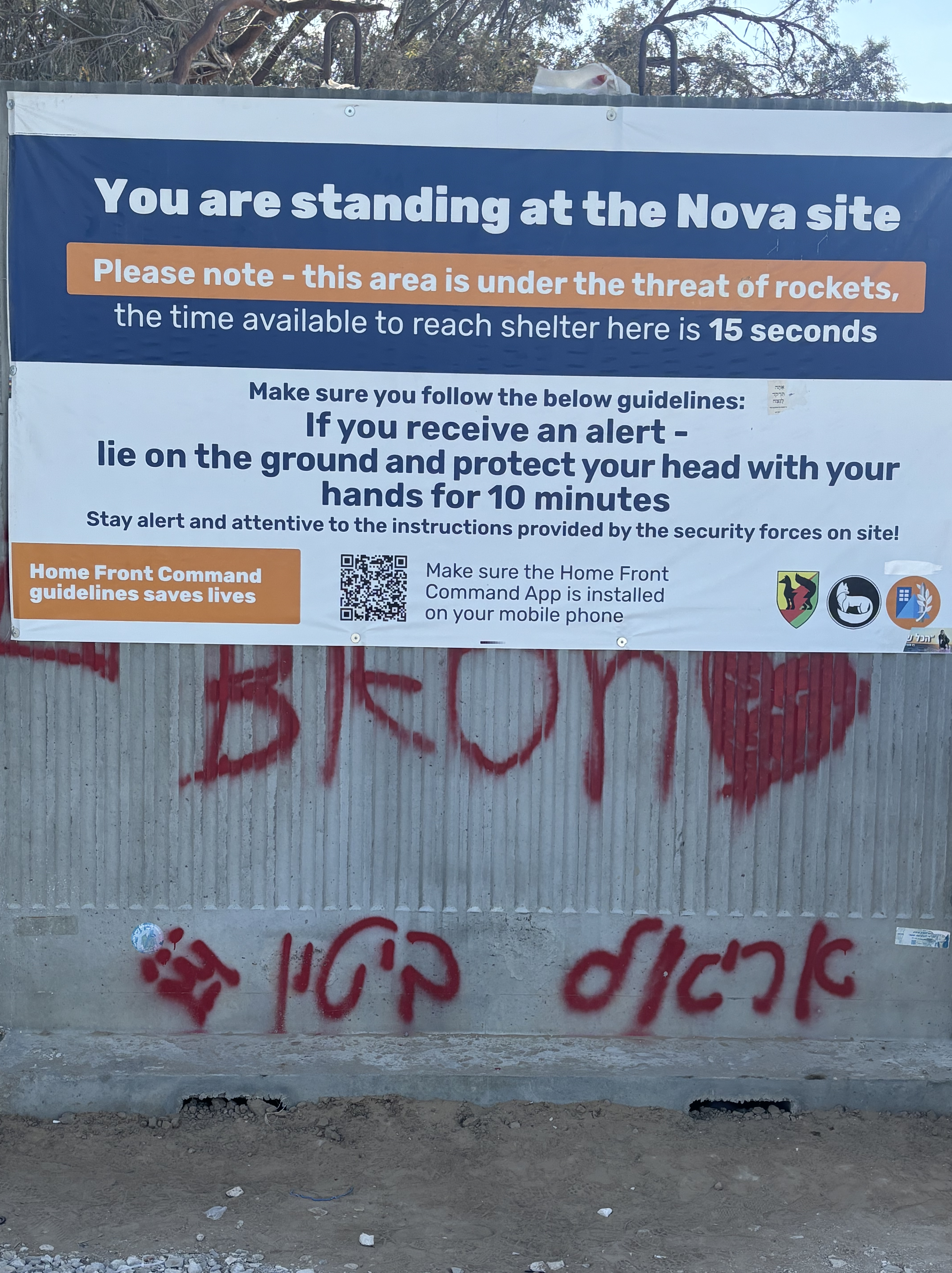
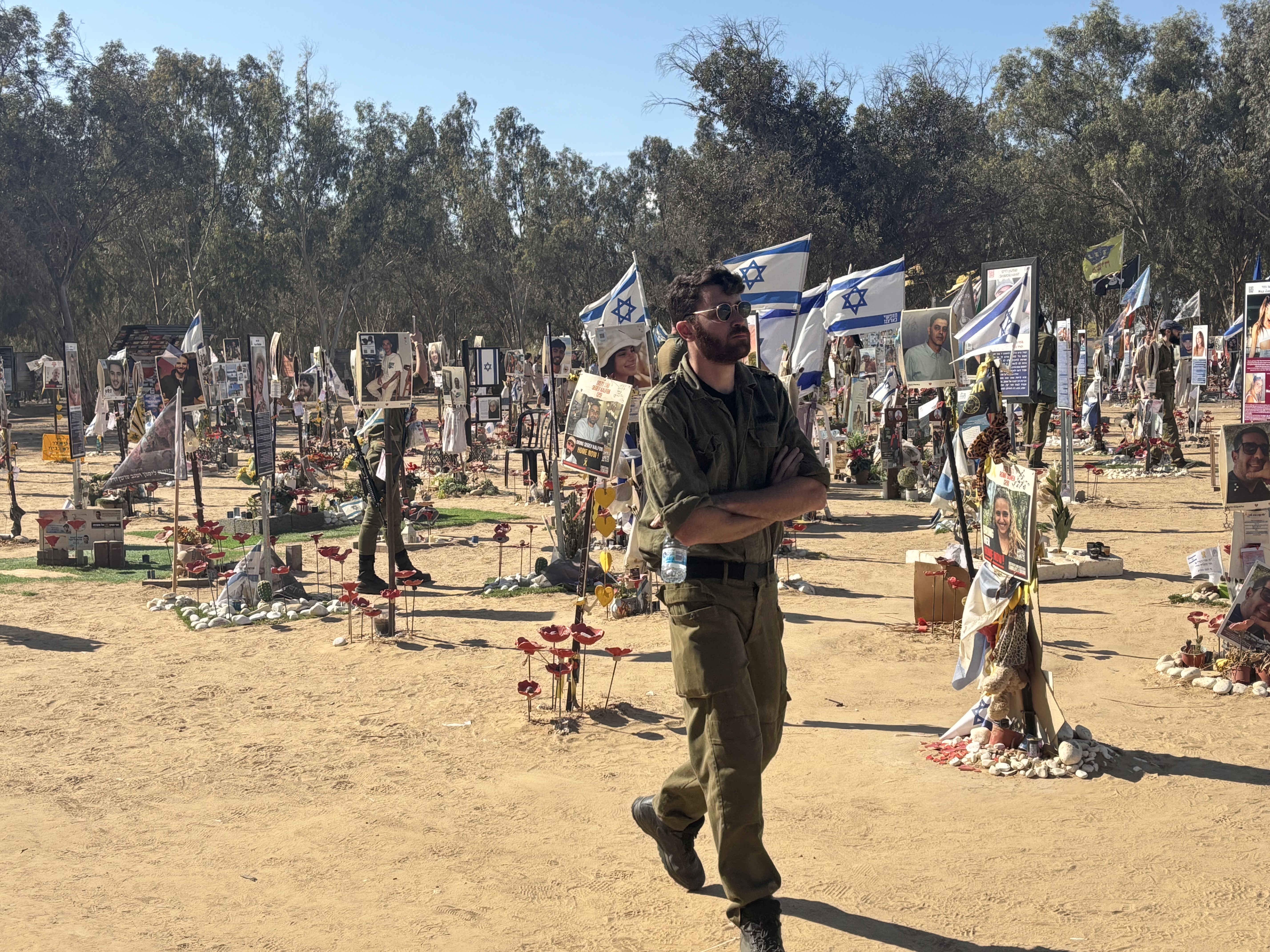
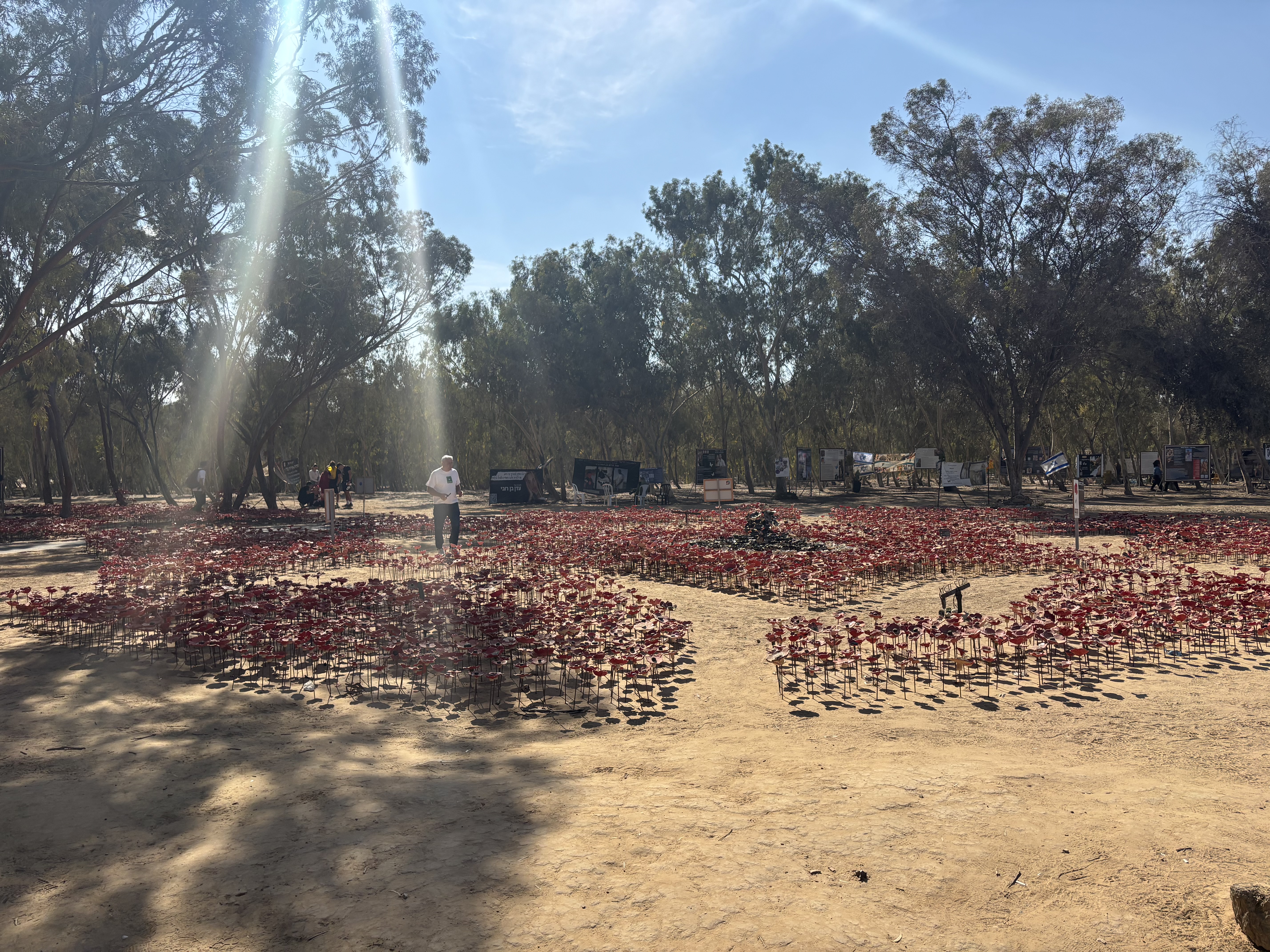
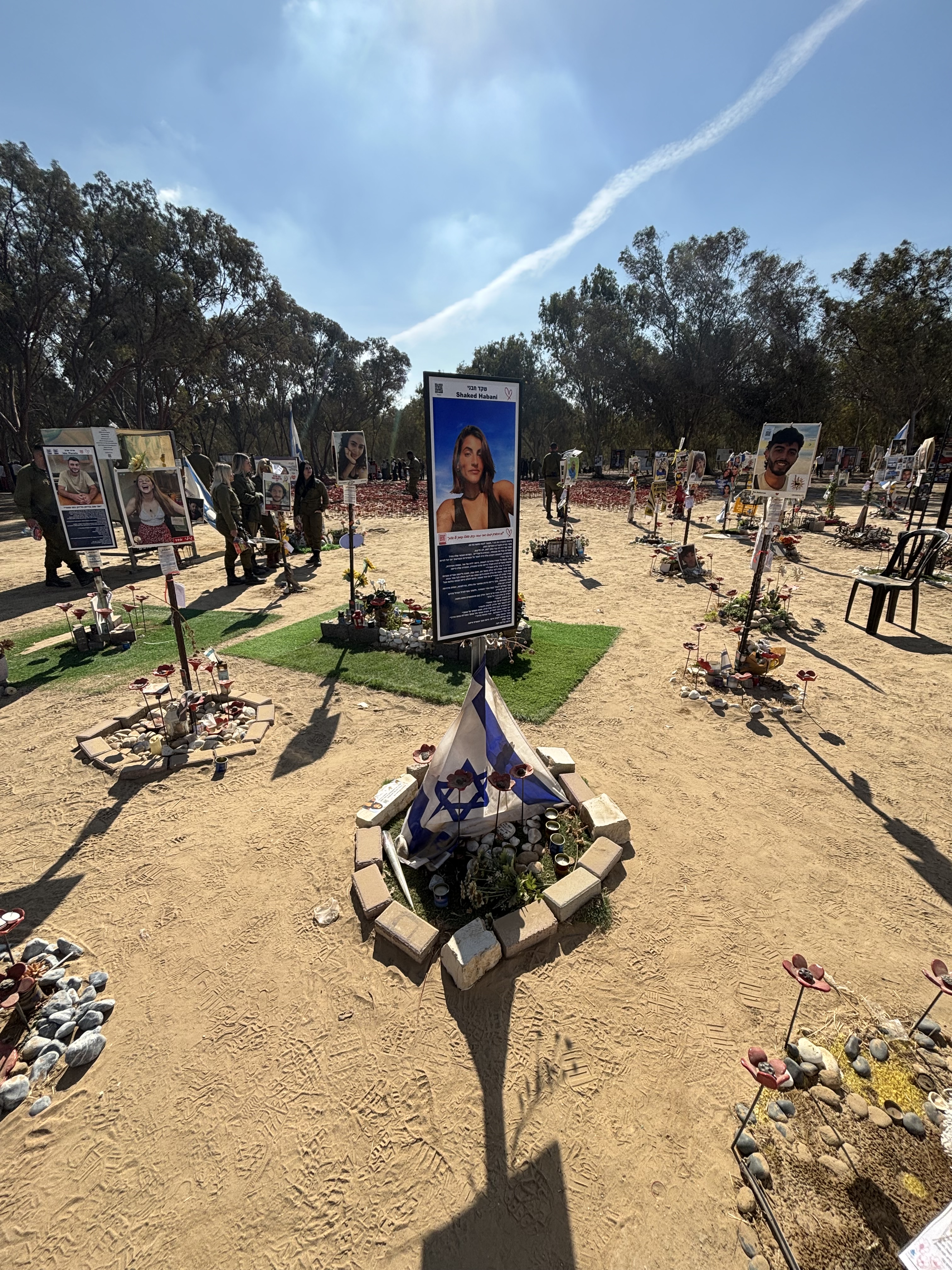
The Torah portion we are studying this week—Parashat Vayera (Genesis 18:1-22:24)—begins with Divine messengers visiting Abraham’s tent days after the covenantal circumcision of the males of his household. The Rabbis read into this passage the mitzvah of bikkur cholim, visiting the sick. It is a Jewish imperative to give comfort to the ailing, the wounded, and the bereaved. The Babylonian Talmud (Sotah 14) understands all of these compassionate behaviors as ways of emulating the Divine. That’s the best way I can make sense of our visit, this morning, to Ofakim and the Nova Festival site, two of the many targets of the Hamas massacre of October 7th. 

Ofakim, a sleepy city about 35 km from the Gaza border, lost more than 50 of its residents, and 364 individuals were murdered in cold blood at the Nova festival. Taken together, the victims of these two sites represent about 1/3 of the people slaughtered by Hamas on October 7th. It is hard to describe the feelings of numb rage and mute sorrow that accompanied our visit this morning. From what I could tell, we were the only American visitors to the site, a small cluster of pastors and rabbis who nodded silently to the many IDF soldiers there to pay their respects to their murdered friends, family, and fellow citizens.
 
What little comfort I found in making pilgrimage to what has become Israel’s “Ground Zero” of sacred remembrance came from the same Talmudic passage referenced above, which also observes that a person who visits someone who is ailing “takes away 1/60 of that person’s suffering.” “One sixtieth” is an idiomatic way of describing “the smallest measurable portion.”

It’s a passage I take seriously, if not literally. I have seen time and again how simply showing up for people in pain—whether through a hospital visit, or a shiva call, or, indeed, this trip to Israel—can alleviate a tiny bit of suffering. 

Just a little. 

The smallest measurable portion. 

May God comfort those who mourn and bring consolation to the broken-hearted. 


Thursday, November 14th, 2024
13 Heshvan 5785

Dear WRT Family, 

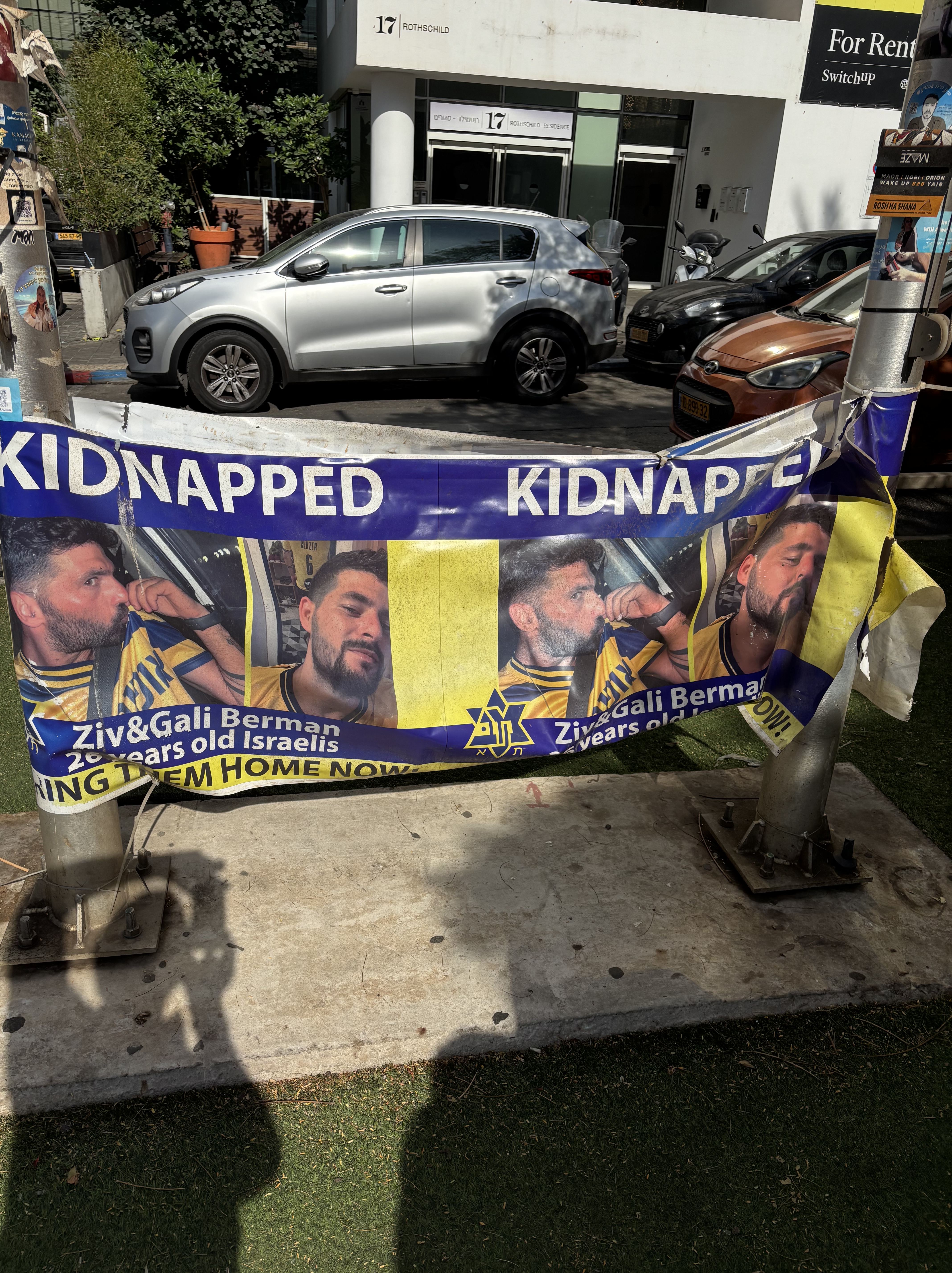
The faces of the hostages and the murdered stare back at you from every street corner and park bench in Tel Aviv. 

We’re here, in the cosmopolitan heart of Israel, for the last day of our mission, and the pictures I’ve included below were all taken within a 5-foot radius from Rothschild Boulevard, one of Tel Aviv’s main arteries and the home of Beit HaAtzma’ut, Independence Hall, where David Ben Gurion declared Israel’s independence in May 1948. That’s the squat building with the torn-up façade behind a spiderweb of scaffolding. It’s been “under construction” for several years now, but the sad truth is that the project has been mismanaged, has run out of money, and remains in limbo. Directly across the street from this monumentally significant building (in such a monumental state of disarray), the face of 25-year old Eden Yerushalmi (z”l) murdered in a tunnel beneath Gaza in August—whose body was recovered in the arms of fellow captive Hersh Polin (z”l)—implores the reader, Remember me, ok? 


I imagine the two are in dialogue with each other: the symbol of Israeli independence—battered and gutted but still standing—and the face of a murdered hostage, each imploring the other: Remember me, ok?

At the end of this week’s Torah portion, Vayera, God promises Abraham:

“I will bless you, making your descendants as numerous as the stars of the heavens and the sand upon the shore of the sea, and your descendants shall seize the gates of their foes” (Genesis 22:17). 
That promise—like our unfinished Beit HaAtzma’ut, House of Independence—is still a work in progress, still being built (and rebuilt), with great struggle and sacrifice.
 
But here, even now, Am Yisrael Chai: the people of Israel lives. 
Rabbi Jonathan E. Blake 

Shemini 5784: Reflections on 20+ Years at WRT

I’m speechless!

…Not literally, of course.  I have a speech….

(Never trust a rabbi who claims to be speechless.)

You have blessed me tonight so generously, so now it’s my turn to bless you.

The model for blessing the congregation appears in this week’s portion, Shemini:

“Aaron lifted his hands toward the people and blessed them.”  He offered the requisite sacrifices, “and then Moses and Aaron went inside the Tent of Meeting.  When they came out, they blessed the people; and the Divine Presence appeared to all the people” (Leviticus 9:22-23).

The Rabbis, always attuned to the nuances of the text, observed a few peculiarities in the space of these two verses:  the repetition of the blessing; the fact that Aaron blesses alone at the outset and then is joined by Moses; the brief and unexplained interlude when Moses and Aaron walk into the Tent; their immediate re-emergence to bless the people a second time.

I have thought a lot about this passage in the days and weeks leading up to this celebration.  

Specifically, three thoughts come to mind, each evident from this passage, and each increasingly evident over my years at WRT. 

  • First, that it is not good to go it alone.      
  • Second, that something important happens inside the Tent of Meeting.
  • Third, that we’re supposed to be doing here is taking the blessing out of the Tent and into the world.

People often ask me, “Do you ever get nervous up there on the bimah?”

And I say, “No, not really.” 

And that’s because I never have to do this alone.  

I get to do this with the best people in the world.  From the minute I arrived at WRT I have gotten to do this alongside the greatest cantors and rabbis, with world-class musicians and teachers of Torah, and each of us has each other’s back.  From the original “Dream Team” of Rick Jacobs, Angela Buchdahl, and Stephen Merkel of blessed memory, to the Dream Team of 2024, I have always felt so lucky to lead with a team.

The Torah comments twice on the subject of “going it alone,” and both times it uses the phrase “Lo Tov,” “not good.”  First, in the Garden of Eden, of the first human being, Adam, about whom it is written, Lo Tov heyot adam l’vado, “It is not good for a person to be alone” (Genesis 2:18).  And so the human is given a partner, an equal, a complement: Chava, meaning life.

Later the Torah presents us with a young Moses, a Moses still finding his way in the wilderness, leading a community out of bondage, when his father-in-law Jethro observes him managing all matters for the congregation, big and small, and warns that if he keeps it up, Moses is going to burn out fast.  Jethro says:  “Lo Tov ha-davar asher ata oseh, The thing you are doing is not good.  Get yourself some help” (Exodus 18:17-23). 

It is not good to go it alone.

Which makes me wonder about Aaron, at the top of the verse, standing up there in front of the people, all alone, administering the rituals—alone; blessing the people—alone; and I like to think that this lonely Aaron suddenly remembered that it is not good to go it alone, which explains what happens next:  he and Moses walk into the Tent of Meeting together, and then re-emerge together in front of the people.

I am blessed that I have never had to go it alone at WRT.  Clergy, professional, and lay partners have provided boundless support, insight, wisdom, leadership, caring: sometimes taking the melody line and sometimes the harmony, all contributing to the symphony of WRT.  

My heart swells with gratitude for all who have shared the mantle of leadership—and especially to my clergy partner, Amanda Kleinman, whose cantorate encompasses the totality of congregational service, from strategic planning to the cultivation of the next generation of leaders, from preaching and teaching to carrying our people in times of celebration and sorrow, and whose friendship, and patience (especially with me!) have sustained my spirit on hard days, and who exemplifies the perfect mix of taking the work seriously without taking ourselves too seriously.  

And who, by the way, planned this whole shebango—not single-handedly, of course, but whose vision, teamwork, and attention to detail are finely engraved in this beautiful Shabbat.  Amanda, it is a pleasure and an honor to lead with you, and to learn leadership with you and from you.

Amy Rossberg, who oversees congregant relations and pastoral care, holds our community with love and deep Jewish spirituality.  Hers is often the first voice offering mazal tov or sympathy.  I really don’t know where I’d be without her—probably lost on my way to a cemetery in Queens.  I am so grateful. 

Without Eli Kornreich at the helm of all of our operations—logistical, financial, and physical—the house of WRT could not stand.  And without our volunteer leaders, the house of WRT would be hollow.  Warren Haber, you exemplify dedication not only to WRT but to the Jewish people and the Jewish tradition, inspiring our entire community.  With you as Temple President, we should all feel blessed to know that we never have to go it alone.

I come from a family that centered joyful, Jewish living in our home and our hearts.  I have been blessed to be part of a family that includes my parents, my sister, and her family, including her husband Jonas and his family, my nephew Samson (who chanted Torah like a boss tonight!) and twin niece and nephew Shirah and Jakey, and their father Dean, and many others who are with me tonight, either in the sanctuary, or online, or in spirit, or in memory.   

Friends of the highest human caliber have given so much happiness and meaning to my life.  What a thrill to have some of my closest childhood friends here, and four of my five college roommates who have been making one another laugh until it hurts for almost 33 years, usually at James’s expense (he’s the roommate who correctly surmised that a ski trip would be better than a Shabbat service).  You all mean the world to me.  And I have been blessed by the immense caring and wisdom of my chavruta, my rabbinic study-partner, teacher, and friend Rabbi Jan Katzew.

At the heart of it all is Kelly, whose dedication to WRT deserves a celebration all her own.  Kelly has shared the leadership of this congregation in ways both overt—co-chairing WRT’s efforts to resettle refugees from Africa, preparing yontif meals for staff, lending her glorious voice to concerts and special services, co-leading congregational trips to Israel, basically, just being the “very model of the modern major rebbetzin”—and, covert: as teammate, truth-teller, logician, strategic adviser, sermon-editor, spiritual guide, cat mom, and above all, best friend.  You have sacrificed long days and sleepless nights for this congregation with the same integrity, love, and devotion that you give to the performing arts, including your present work in the national tour of Girl from the North Country, the extraordinary musical featuring the music of Bob Dylan that experienced a critically acclaimed Broadway run before it was cut short by Covid.  You can visit northcountrytour.com to follow her ongoing journey, resuming in Dallas next week.  

(And yes, the irony of Kelly singing 20 Dylan songs every day, eight shows a week, is not lost on us, given the fact that, of the handful of things about which we do not agree, the appeal of Bob Dylan’s voice is foremost among them.)

Kelly, thank you for being the first half of “Team McBlake”; thank you for all you give to this community; thank you for loving me, of all people; I love you.

So Aaron walks into the Tent of Meeting, not alone this time, but with his partner by his side, and then they re-emerge.  The text doesn’t tell us what happened inside that Tent but clearly, something has changed, because as soon as they step outside, they bless the community, and, for the first time in the Book of Leviticus, the Divine Presence makes itself known to all the people.

This, I think, is the magic of the synagogue.  You go in one way and you come out different.  Something transformative happens inside this Tent, something marvelous.  

You go in thinking, “my children will get a Jewish education,” or “my kids will get a Bar or Bat Mitzvah,” or, “I need someone to conduct my loved one’s funeral,” and what you discover is that inside the Tent, the world makes a little more sense.  The ancient Sages conveyed wisdom that still matters in our lives.  There is more to life than I realized.  There exists a place where I am less lonely.  My simchas and my sorrows have a place where I can hold them, honor them, and re-enter the community, transformed.  A place exists where—I can’t exactly put my finger on it, and I may not use this language for it, but for lack of a better way of putting it, inside the Tent, I felt as if I were in the presence of God.  Did my beliefs change?  Maybe; maybe not.  But I definitely changed.  My sense of priorities, my sense of purpose–they changed.  My life changed.

Besides. The point of Judaism never was to inculcate belief in God, anyway.  The point of Judaism is to make God’s presence known in the world, which is why Moses and Aaron have to come out of the Tent in order to bring the blessing and the Divine Presence to the world. 

The point of Judaism is to live in such a way that gives hope and testimony to the possibility that in a world of dross, beauty is possible. That in a world of hurt, love is possible. That in a world of randomness and disorder, reason and order are possible. 

So as I mark this milestone, I celebrate the way in which we, right here at WRT, have brought the blessing out from the Tent and into the world.  

I rejoice when I hear that other congregations are singing a melody that was first sung here.  

I rejoice when other congregations follow our lead and transform their environmental impact through the Zero Waste initiative that we developed, in this Tent.  

I rejoice when WRT’s engagement strategies, adult education initiatives, and creative holiday observances are emulated across the Reform Movement. 

I rejoice when we travel to Israel and are greeted not as tourists but as “B’nei Bayit” — members of one’s home and family.  

I rejoice when a guest at Shabbat or the Holidays comes up to the bimah afterwards and says, “I’ve never been to a prayer experience like this before.”

I rejoice when I see people walk out of the sanctuary and remember that the parking lot is holy ground, too, and remember that they learned derekh eretz, common courtesy, dignified decency, menschlichkeit, here in the Tent.

I rejoice when the Tikkun Olam values we teach in the Tent–the dignity of every human being, the need to cultivate multi-faith allies and friendships in a world that has no trouble generating enemies of the Jewish People, the centrality of Israel to us–are all made real in our work outside the Tent.

I rejoice when our congregants embrace, outside this Tent, the notion that standing up for Israel is not at odds with supporting the dignity of Palestinian people; that Jewish strength is not to be achieved through isolationism or extremism.

I rejoice when I learn, as I did just this week, that a young woman who grew up here at WRT was accepted to HUC and will be entering rabbinical school in Jerusalem this summer; that the leaders who began their journeys here at WRT are now serving as great leaders of Jewish people across the country and across the world.    

So this is my blessing to you, WRT:  

Please continue to bless one another as you have blessed me.  Please show one another the kindness, understanding, compassion and forgiveness that you have shown me.  And please be as good and generous to this synagogue as you have been to me.     

Please don’t leave the magic inside the Tent.  

The world needs you to bring the blessing out from here, to reveal the Divine Presence to all of God’s children.

Shabat Shalom 

Shabbat Va’era 5784: “Ordinary Egyptians”

Sermon delivered at Westchester Reform Temple, Friday, January 12, 2024

In late February 2020, Kelly and I joined ten other couples, all rabbis and their spouses or partners, on a nine-day trip to Egypt.  It seems hard to fathom even now.  We visited just days before pandemic lockdown, openly as a Jewish group, with an Israeli travel company, meeting with most of the remaining Jews left in Cairo and learning about Egypt’s efforts to cultivate Jewish and, specifically, Israeli tourism, by pouring millions of dollars into the restoration of historic synagogues. 

At the time of our visit, there were eight officially recorded Jewish residents of Cairo.  In 1948, upon the establishment of the State of Israel, Egypt had between 75,000 and 80,000 Jews, most of whom were expelled beginning in the 1950’s after the establishment of the State of Israel, a fate similar to that of most Jews from Arab lands.  

For these reasons—to say nothing of blood and frogs and lice, oh my!—I approached the trip with hesitation bordering on trepidation.  Little did we know we had more to fear from an invisible virus than from other threats either real or imagined, like terrorism, or mummies’ tombs.  Still, for this rabbi, the very mention of “Egypt” called up all sorts of associations, most of them bad.  Is any other place on earth called “the house of bondage?”  I recalled the Torah’s admonitions never to go back to Egypt (see, for instance, Deuteronomy 28:68), where our people were ruthlessly enslaved at mortar and brick.  But, I figured, a chance like this doesn’t come around every day, so Kelly and I boarded a plane and we were off.

What we discovered in Egypt dispelled my anxieties and opened my eyes.  We encountered a complex, vibrant, and wounded society, still reeling from the failed Arab Spring of a decade prior, which precipitated the overthrow of the despot Hosni Mubarak, and the subsequent coup d’etat that ousted his successor Mohammed Morsi, who had violently suppressed the protest movement, followed by the rise to power of his rival, Abdel Fattah el-Sisi.  

Even now, under el-Sisi, Egypt remains a repressive autocracy: a military dictatorship with a third of its people living in crushing poverty.  We also experienced a society of generous hospitality, kindness, an openness to tourists—yes, Jewish tourists—and, at least where it counts, between government officials, a longstanding partnership between Egyptians and Israelis, particularly where security matters are concerned.  Egypt has remained Israel’s most steadfast and important regional partner, with whom a stable peace has been preserved for forty-five years.

My time in Egypt certainly informed how I think about Egyptians, who feature at the center of this week’s Torah reading, Parashat Va’era (the second portion in the Book of Exodus), and who, at the same time, are de-centered from that narrative, in that the story is told from the Israelites’ perspective.  

This parasha depicts the first seven plagues against Egypt, a contest of escalating violence between the God of the Hebrews and the Pharaoh, his court, and all the gods of Egypt, with the objective of freeing the captive Israelites from Pharaoh’s ruthless terror regime.  Unmentioned but surely present were the countless Egyptians enduring a horrific bombardment which brings to their territory widespread destruction of property, the death of cattle and livestock, a shortage of food and potable water, outbreaks of vermin and disease; a terrifying rain of fiery hail; and that’s just this week’s parasha.  Next week will come the locusts and the darkness and the death of the firstborn.   

In any case, I have thought a lot, in recent days, about these ordinary Egyptians, and have taken a liberty Rabbis tend to take:  to read the Torah not only at the level of p’shat, the plain sense of the text, but also at the level of d’rash, or, midrash, imagining the story in between the lines of the text.  

I wondered what the Egyptian masses in between the lines of our story felt about the unrelenting assault on home and property and health and life.  Terror, certainly.  But what else?  Bewilderment?  Impotence?  Rage?  

And if rage, at whom?  Did they blame Pharaoh and his courtiers for getting them into this mess in the first place?  Did they blame Pharaoh for his stated aim to commit genocide against the Hebrews, issuing a policy of drowning their children in the Nile?  

Did they blame their own taskmasters for brutalizing the Hebrew slaves? Or did they believe they were just following orders?  I imagine that the vast majority of Egyptians lived far from Israelite settlements, and did not see themselves as complicit in any way with their suffering, any more than the average Israelite saw him or herself as complicit in the hell of plagues inflicted on their enemy.  And yet the average Egyptian surely suffered inordinately while Pharaoh and his company enjoyed the luxury of palace life.  

Did the Egyptians blame the Hebrews for settling in their land under Joseph, generations earlier?

When Moses demands, again and again, “Let my people go,” and Pharaoh refuses, again and again, his heart hardening to the plight of the captives, how did that play on the “Egyptian street?”  From what I saw of Egyptian archaeology in February of 2020 I can confidently say that ancient Egypt was not an open society; the Pharaoh ruled supreme as a living god among the people.  I’m sure public protest was not tolerated in Egypt, so it’s hard to know how ordinary Egyptians felt about Hebrew slavery at all, given that they were no less subjects to Pharaoh’s iron-fisted rule, whose lives mattered little to their autocratic tyrant.

I imagine that these ordinary Egyptians, embittered by life and indoctrinated by their state-sponsored belief system to worship death, probably carried a deep and pervasive sense of victimhood.  

I wonder all this about the Egyptians, and my questions continue to go unanswered.  The text gives us only what it gives: the words on the page, and the blank spaces in between to ask questions and imagine the untold stories.  We call this midrash.

But there are other Jewish texts—important texts—both within Torah and beyond it, that invite us to recognize that—despite the fact that the Egyptians were our enemies, and despite the fact that for us to demand freedom from captivity and terror was just both in cause and in means—even the use of force—the Egyptians, nevertheless, were human beings, and suffering human beings at that.  

Even in the hell of war, Judaism does not give us license to dehumanize the enemy.  Even one’s enemy is a human being made in the image of God.

When the Ten Plagues are recounted at the Pesach Seder, we spill a drop of wine in acknowledgment that the fruit of our joy, the cup of our liberation, is diminished by the suffering of the Egyptians.

The Talmud affirms that God does not rejoice in the defeat of the enemy and even portrays God as chastising the angels for wanting to sing while the Egyptians were drowning in the Sea (Talmud Bavli, Megillah 10b).

And the Torah’s own directive:  

לֹא־תְתַעֵ֣ב מִצְרִ֔י כִּי־גֵ֖ר הָיִ֥יתָ בְאַרְצֽוֹ׃…

…You shall not abhor an Egyptian, for you were a stranger in his land (Deut. 23:7b).

I would be remiss not to conclude, on this holiday weekend Shabbat, with words by Rev. Dr. Martin Luther King.  On the subject of loving our enemies, a notion deeply embedded in Christian thought but not emphasized in Judaism (and in some ways at odds with it), King delivered a sermon at the Dexter Avenue Baptist Church in Montgomery, Alabama on November 17th, 1957, that offers food for thought for this Jewish setting at this Jewish moment.  

“In the final analysis,” King said, “love is not this sentimental something that we talk about. It’s not merely an emotional something. Love is creative, understanding goodwill for all men. It is the refusal to defeat any individual. When you rise to the level of love, of its great beauty and power, you seek only to defeat evil systems.”

“Oh God,” he prayed, “help us in our lives and in all of our attitudes, to work out this controlling force of love, this controlling power that can solve every problem that we confront in all areas.”

Amen.