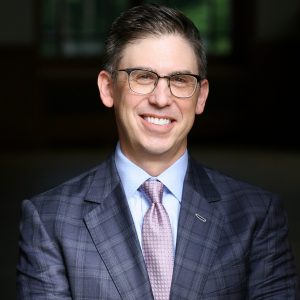

Sermon Delivered at Greater Centennial A.M.E. Zion Church, Mount Vernon, New York
Sunday November 9th, 2025
The following joke was funny between 1976 and 1996 and only for a select audience, so you could say that this is very “inside baseball” but here goes.
A man goes to his rabbi and says, “Rabbi, I don’t know what to do. The first game of the World Series is next Tuesday and it’s the same night as Yom Kippur (the Jewish Day of Atonement).”
The rabbi says, “Well, isn’t that why they invented the VCR?”
And the man says, “You can tape Yom Kippur??!”
Like I said – very inside baseball. But, naturally, since the Dodgers’ big win last Sunday, baseball has been on my mind. Throughout the season and postseason, and even after the Series, I’ve heard a lot of talk about the so-called “inevitability” of the Dodgers winning. Sportscasters and fans united around this theme of inevitability, which stems from the club’s star power (including Shohei Ohtani, Yoshinobu Yamamoto, Mookie Betts, and Freddie Freeman), its unmatched payroll (over $300 million!), and its back-to-back dominance after their 2024 title. Despite a grueling back-and-forth seven-game tug of war, and a nailbiter finish, immediately the “i” word started coming up again. A New York Post column by Joel Sherman cemented their status, opening with: “They were inevitable. Indomitable. And now indisputably historic” (November 2, 2025).
Inevitable comes from the Latin, meaning “unavoidable.” Something is fated, predestined, meant to be. In Yiddish we have a similar word, bashert — when an outcome is more than random chance but rather, inevitable. Bashert is typically used to describe a person’s soulmate, life partner, the perfect match, the right one. You can refer to that special person as your bashert, your meant-to-be. And the classic Bible story illustrating bashert is found in the reading from Genesis that Jewish communities all over the world are studying this week.
In Genesis Chapter 24, Abraham sends his trusted household servant, Eliezer, in search of a wife for his son Isaac, who apparently cannot be trusted to find a wife on his own. Abraham, like many an anxious Jewish parent, can’t stand thinking about his beloved son spending his poor life alone, so he needs to get him “all boo’d up” and commissions Eliezer to find Isaac’s bashert.
But how to find just the right one? The servant travels off to Abraham’s native land and pleads for God to get involved: “O Lord,” he prays, “God of my master Abraham, grant me good fortune this day, and deal graciously with my master Abraham. Here I stand by the well, as the daughters of the townspeople come out to draw water. Let the maiden to whom I say, ‘Please, lower your jar that I may drink,’ and who replies, ‘Drink, and I will also water your camels’—let her be the one whom You have decreed for Your servant Isaac. Thereby shall I know that You have dealt graciously with my master” (Gen. 24:12-14).
Eliezer knows he has spotted the right one NOT when he meets the hottest girl in all the land, or the richest, but rather when Rebekah emerges at the well and sees a tired stranger and his thirsty flock, and stops to give them drink, camels and all. Do you know how long it takes to water an entire flock of camels? Did you know that a single camel can store enough water to survive for six or seven months in the Sahara desert without drinking? But I digress.
What identifies Rebekah as the right one for Isaac is her kindness, her generosity, her inner beauty: her compassion, patience, and strength of character. Eliezer takes her back to Canaan to meet her groom. When Isaac sees her, he is floored, because she is also hot. But honestly, Rebekah’s qualities, inner and outer, matter less than the fact that God has preordained her to be Isaac’s bashert. Even her father, Laban, sees it plain as day: “The matter has been decreed by the Lord,” he admits; “we have nothing good or bad to say about it” (Gen. 24:50).
When I studied this passage in seminary, our professor of classical Bible commentary, Rabbi Dr. Ed Goldman, would ask us rabbis-in-training: “And what does this story show us?” Like generations of rabbinical students before us, we had heard his answer so many times that we could respond in unison: “The inevitable, inexorable, unfolding of the Divine Will.”
Put another way: we human beings like to think we’re in charge, but make no mistake: God’s in charge. “The inevitable, inexorable unfolding of the Divine Will.” Inevitable — it’s unavoidable. And “inexorable” — also from the Latin, meaning, “it can’t be prayed or swayed away.” “Thy will be done.” If God wants something done, it’s gonna get done. God’s in charge.
Dr. Goldman saw this theme all over the Book of Genesis and in fact called it the theme of the Bible itself. The creation of the world? The inevitable, inexorable unfolding of the Divine Will. Adam and Eve eating the fruit, getting kicked out of the Garden, and starting the journey of humanity on the wrong side of Eden? The inevitable, inexorable unfolding of the Divine Will. Jacob dreaming a ladder connecting Earth and Heaven? The inevitable, inexorable unfolding of the Divine Will. Joseph interpreting Pharaoh’s dreams and freeing himself from the prison-house? The inevitable, inexorable unfolding of the Divine Will. A band of Israelite slaves escaping Pharaoh’s tyranny? Not prayer, not good planning, not even Moses’s clarion leadership but–say it with me–The inevitable, inexorable unfolding of the Divine Will.
I have to admit that the older I get, the more I find affirming that, despite all our human toil and travail, at the end of the day, God’s in charge, and what God has in store for us, no human being can hinder. The great masters all arrived at this same conclusion:
- Isaiah 14:27: “For the LORD Almighty has purposed, and who can thwart God? God’s hand is stretched out, and who can turn it back?”
- Proverbs 19:21: “Many are the plans in a person’s heart, but it is the Lord’s purpose that prevails.”
- Job 42:2: “I know that You can do all things; no purpose of Yours can be thwarted.”
God’s in charge!
Many years ago I was summoned to the hospital bed of a beloved member of my congregation for the recitation of Vidui, the traditional deathbed confessional, the Jewish version of “last rites.” I took Don’s hand and we prayed:
“I acknowledge before You, Lord my God and God of my ancestors, that my recovery and my death are in Your hands. May it be Your will that You heal me with total recovery, but, if I die, may my death be an atonement for all the errors, iniquities, and willful sins that I have committed…”
And so on like that, until Don shut his eyes and his breathing became very slow. I embraced his grieving family and said, “I’m going to part company now, but you can call me when he passes and we’ll prepare for what comes next.”
The next morning the phone rang. It was Don. “Still here, Rabbi,” he said. He would go on to enjoy another five good years. The inevitable, inexorable, unfolding of the Divine Will. God’s in charge.
It’s useful wisdom to keep handy these days after Election Day, through all the storm and stress we have made of our current political situation, and the seemingly endless array of flawed leaders we have entrusted with tremendous authority. It’s useful, when voters elect the person we fear or detest, to remind ourselves: Elected officials come and go; even kings and queens are made of flesh and blood; but God’s in charge.
It’s especially useful wisdom to keep handy when things don’t go our way. Rabbi Jonathan Slater, a great teacher of Jewish wisdom and spirituality who lives here in Westchester, taught me that when things don’t go our way, the best we can do is say: “That was unexpected! I wonder what will happen next?” And get ready to move forward on whatever path God has set for us.
Now I could end here and you would say: “That was unexpected! I wonder what will happen next?” But bear with me. There’s one more thought coming. Because even in a world where God’s in charge, we human beings still have a lot of work to do, and our actions really do matter.
Almost two thousand years ago, the earliest Rabbis recognized this paradox of our existence. They put it this way:
Everything is foreseen, yet freedom of choice is granted.
And they added: The world is judged with goodness. And everything is in accordance with the bulk of [one’s] deeds (Pirkei Avot, 3:15).
In other words, God’s in charge… but God needs us to take charge, too. Human beings were brought into this world not randomly, not to suffer the “slings and arrows of outrageous fortune,” as Shakespeare’s Hamlet put it (Hamlet, III:1), but rather, to make a difference.
Given that so much of life attests to the “inevitable, inexorable unfolding of the Divine Will,” we still have choices about how to respond, and our choices matter.
When bad things happen in our lives, we often ask, “Why?” “Why is this happening to me?” when instead we could ask, “Now what? Now what must I do? Who must I become?” “How would God wish for me to show up, given what has happened?”
It is true: much of life is inevitable–unavoidable; inexorable–cannot be prayed away. But life is about more than just what happens to us; it is also about what we choose to make happen in our lives and in a world that desperately needs more good deeds, more love, more compassion and more justice.
So back to the Dodgers. Was their big win inevitable? Listen to what sports writer Hannah Keyser had to say:
“Ultimately, the series crowned a credible champ not just because the Dodgers were favored for months, but because, in the end, they had to scratch and claw their way to the top. Just because their victory was projected doesn’t mean it was easy or predictable (The Guardian, November 2nd, 2025, emphasis added).”
The last word goes to an old saying. No one knows who first said it; it may have been a Catholic Saint because it ended up in the Catechism; but you can also find it in the Reform Jewish prayer book.
Remember these words well, and may God bless us as we strive to join righteously and joyfully in the inevitable, inexorable unfolding the Divine Will:
Pray as though everything depended on God.
Act as though everything depended on you.
Amen.
 Rabbi Jonathan E. Blake