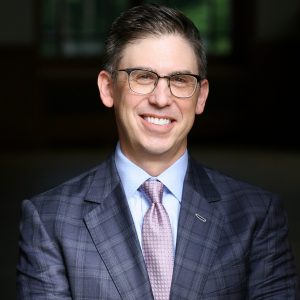

Delivered at Westchester Reform Temple, Scarsdale, New York
Friday, January 16, 2026
Shabbat Shalom!
My remarks tonight take up the theme of “persistence in resistance to tyranny” and are composed in line with what the 20th-century Christian theologian (and outspoken critic of the Nazis) Karl Barth once said: that “a sermon should have the Bible in one hand and a newspaper in the other.”
Wherever you get your news—and I hope you’re getting it from as many different and credible sources as you can—one could easily conclude that we live in unprecedented times, for the sheer volume and diversity of soul-wrenching issues before us. How, then, to choose among this week’s headlines alone, from Mississippi to Minnesota to Iran? I could take up any one in depth and keep you here until Tu Bishevat or, try something novel: take up all of them together and make my point in 10 minutes. You will be relieved to learn that I have endeavored in the direction of the latter.
I begin with a challenge to my own claim that we are living in unprecedented times, a statement which, given the nature of time and change, could be accurately claimed at any moment in human history. But I refute it in the spirit of Kohelet, whose opening chapter of the Book also known as Ecclesiastes, memorably records:
Only that shall happen
That has happened,
Only that occur
That has occurred;
There is nothing new
Beneath the sun!
(Eccl. 1:9)
“Nothing new beneath the sun,” indeed. For what we witness this week—from Mississippi to Minnesota to Iran—has been seen before, and that takes us to the verses we have heard from the Torah reading for this Shabbat, Parashat Va’era. To set the stage, Va’era marks the stunning turning point in the narrative of Israelite bondage, when God responds to the suffering of the slaves and, with Moses as messenger, begins their liberation.
To Moses God declares, “Say, therefore, to the Israelites: I am Adonai. I will deliver you from the hardship of the Egyptians and save you from their bondage. I will redeem you with an outstretched arm and through extraordinary judgments. I will take you to be My people, and I will be your God…. I will bring you to the land which I swore to give to Abraham, Isaac, and Jacob, and give it to you for an inheritance, I, Adonai” (Ex. 6:5-8).
It is what happens immediately after this inspirational charge that particularly interests us now:
וַיְדַבֵּ֥ר מֹשֶׁ֛ה כֵּ֖ן אֶל־בְּנֵ֣י יִשְׂרָאֵ֑ל וְלֹ֤א שָֽׁמְעוּ֙ אֶל־מֹשֶׁ֔ה מִקֹּ֣צֶר ר֔וּחַ וּמֵעֲבֹדָ֖ה קָשָֽׁה׃
“But when Moses told this to the Israelites, they would not listen to Moses, their spirits crushed by brutal slavery.” Or, literally, “they would not listen to Moses, out of shortness of breath and brutal slavery.” (Ex. 6:9). Tyranny takes your breath away. It suffocates the body and stifles the spirit.
Consider what this passage teaches us about the natural response of people to oppression and brutality; the effect on body and breath, flesh and spirit, of trauma and terror, whether brought upon human beings by literal tyrants, or lone wolf terrorists, or states acting with unrestricted power to menace the weak with not only the threat but also the use of violence against the defenseless.
In a sense, the arsonist who incinerated a Reform Temple with its Torah scrolls in Jackson, Mississippi, the arsonist who tried the same in this week in Germany, the armed ICE officers who have maimed and killed civilians, and the Islamic Revolutionary Guardsmen who mowed down protesters by the thousands on the other side of the world, may have acted from starkly different motivations in different settings and circumstances, but the intended effect on their victims, and on us who sympathize with their victims, is one and the same: to make it impossible to breathe. To crush not just body but spirit.
Moreover, we learn from Torah—in the very next verse—that the effect is often contagious, afflicting not just the masses but also their Moses. “The Israelites would not listen to me,” he says to God in panic; “how then should Pharaoh heed me, me—who gets tongue-tied!” (Ibid, v. 10)
This, too, strikes a chord as old as time: even leaders, in the face of unrelenting brutality, may, for a time, lose heart, lose hope, lose their way. It happened to Moses. It happened, it seems important to note on this weekend of all weekends, to MLK. In his 1958 book Stride Toward Freedom: The Montgomery Story, King recounts a personal crisis during the Montgomery Bus Boycott in January 1956, after receiving a late-night threatening phone call amid ongoing violence and intimidation. Sitting alone at his kitchen table, King poured out his despair:
“I am here taking a stand for what I believe is right. But now I am afraid. The people are looking to me for leadership, and if I stand before them without strength and courage, they too will falter. I am at the end of my powers. I have nothing left. I’ve come to the point where I can’t face it alone.”
In some sermons where he retold this experience, he phrased it similarly: “Lord, I’m down here trying to do what’s right… But Lord, I must confess that I’m weak now, I’m faltering. I’m losing my courage. Now, I am afraid… And I can’t let the people see me like this because if they see me weak and losing my courage, they will begin to get weak.” It’s a mutually reinforcing cycle of despair. That’s what tyranny does to the spirit, to freedom movements everywhere.
King’s hour of despair had its own precedents: Moses, of course, but also Frederick Douglass, who spoke of his brutal treatment under the slave-breaker Edward Covey:
“Mr. Covey succeeded in breaking me. I was broken in body, soul, and spirit. My natural elasticity was crushed, my intellect languished, the disposition to read departed, the cheerful spark that lingered about my eye died; the dark night of slavery closed in upon me; and behold a man transformed into a brute!” (Narrative of the Life of Frederick Douglass, An American Slave (1845), p. 63)
After the 1892 lynching of three close friends in Memphis, and facing death threats that forced her to flee to the North, the great activist and journalist Ida B. Wells Barnett said: “I felt like one banished from home and friends… The shock was so great that for weeks I could neither eat nor sleep.” In her diaries, Wells recounts periods of deep discouragement and loneliness in her solitary quest, feeling the burden of apathy and inadequate support from the Black community and allies.
“There is nothing new under the sun.”
Of course the Torah portion, and, moreover, the Jewish story, does not end with Moses in retreat or defeat. Because our God does not back down from a setback; does not give up in the face of human error and evil, no matter how great or how grave. Our God does something extraordinary in the next verse: God summons for Moses a lifeline: Aaron, his brother, his mouthpiece, his ally and supporter. He adds breath to the short of breath. God reminds Moses—and us—that in the face of terror and tyranny, we never need go it alone, no matter how lonely the work may feel. And so, arm in arm, and breath adding to breath, the brothers press on, and the great and violent confrontation with Pharaoh begins that will, by the end of next week’s portion, lead to liberation.
I read today’s passage and think about the passage of time and travail for our people and for hurting people everywhere. People short of breath and crushed in spirit. I wonder what this passage meant to the Jews living in Babylonian exile, or under Roman occupation, to our ancestors expelled from Spain or forced into the ghettoes and the camps.
I wonder, too, what message this passage might offer us, in today’s frightening America, in this strange and fractured world that has just crossed over the threshold of 2026 to welcome a year shrouded in anxiety and uncertainty.
I wonder, and I remember that, through it all, ours is a God who does not give up on humanity, and that we are a people who don’t give up on God’s children, either.
Shabbat Shalom
 Rabbi Jonathan E. Blake